The monsoon does not knock. It arrives with the total, unyielding weight of an atmospheric hammer, turning mountain arteries into lethal sluices of mud and debris. In the rugged gorges along the Nepal-China border, a catastrophic glacial collapse triggered flash floods that instantly transformed commercial infrastructure into underground traps. While initial international headlines flattened the disaster into a brief casualty count, the reality inside the subterranean labyrinths of the Trishuli 3A and Upper Trishuli hydropower projects tells a vastly more complex story of corporate vulnerability, engineering hubris, and raw human endurance.
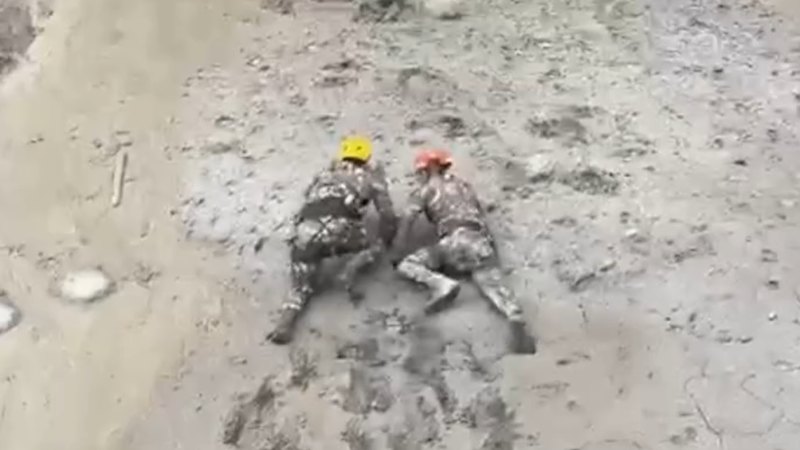
Rescue operations spearheaded by the Nepali Army have managed to extract hundreds of workers and locals from the dark, water-choked bowels of these engineering complexes. Yet, more than one hundred individuals remain unaccounted for or trapped deep inside the tunnel networks. The primary bottleneck is not merely a lack of will, but the sheer topological nightmare of locating compromised entry points carved into unstable Himalayan rock faces.
To understand why this catastrophe unfolded with such terrifying velocity, one must examine the intersection of high-altitude infrastructure expansion and accelerating climate volatility. For decades, the Himalayas have experienced an unprecedented boom in hydropower construction. Energy-hungry South Asia looks to these steep river valleys as clean-power goldmines. However, building massive subterranean tunnels and diversion dams right beneath fragile, melting glaciers creates an invisible hazard profile. When the upper slopes fail—often due to sudden glacial lake outbursts or massive debris flows—the descending wall of water finds an easy funnel in the very riverbeds and tunnels engineered to harness it.
Survivors airlifted from the disaster zone report an environment where traditional safety protocols were rendered obsolete within seconds. Workers inside the deep tunnels experienced a sudden, violent displacement of air and water as the torrent rushed through intake structures. While some operators working on lateral sections were swept away instantly, others survived by sealing themselves into structural pockets or climbing onto high-level maintenance platforms, waiting out grueling days in pitch-black, oxygen-depleted isolation before military choppers could pinpoint their coordinates.
Compounding the subterranean crisis is the constant threat of secondary disasters. Upstream, immense piles of debris have formed unstable barrier lakes. These makeshift dams threaten to breach at any moment, sending subsequent waves of slurry cascading down toward the exact valleys where search-and-rescue teams are operating. Meteorological authorities have issued urgent warnings, forcing military command to temporarily pause ground extraction efforts when water levels spike unpredictably.
The broader geopolitical and humanitarian fallout extends far beyond the immediate valley walls. Hundreds of workers, including foreign nationals from neighboring countries, remain missing. Downstream communities across districts like Chitwan are grappling with the grim task of identifying bodies carried hundreds of kilometers by the swollen currents. Emergency funds released by international bodies will provide short-term medical aid and shelter, but they do little to answer the structural questions facing high-altitude construction.
Engineers and disaster management specialists are now forced to confront an uncomfortable truth. As global temperatures continue to alter high-mountain cryosphere dynamics, standard flood models are failing. The margins of error in narrow mountain gorges have shrunk to zero. Designing subterranean infrastructure without factoring in catastrophic glacial outburst frequencies means treating structural longevity as a gamble against rapidly changing geological physics.
For the families waiting near landing zones in Nuwakot and Kathmandu, statistics offer cold comfort. The immediate focus remains locked on the remaining pockets of the Trishuli tunnel network where life detectors and military spotters search for signs of movement. Every helicopter rotation against the gray monsoon sky represents a calculated risk taken by pilots navigating turbulent updrafts and obscured mountain passes, racing against an environment that has not finished shifting.