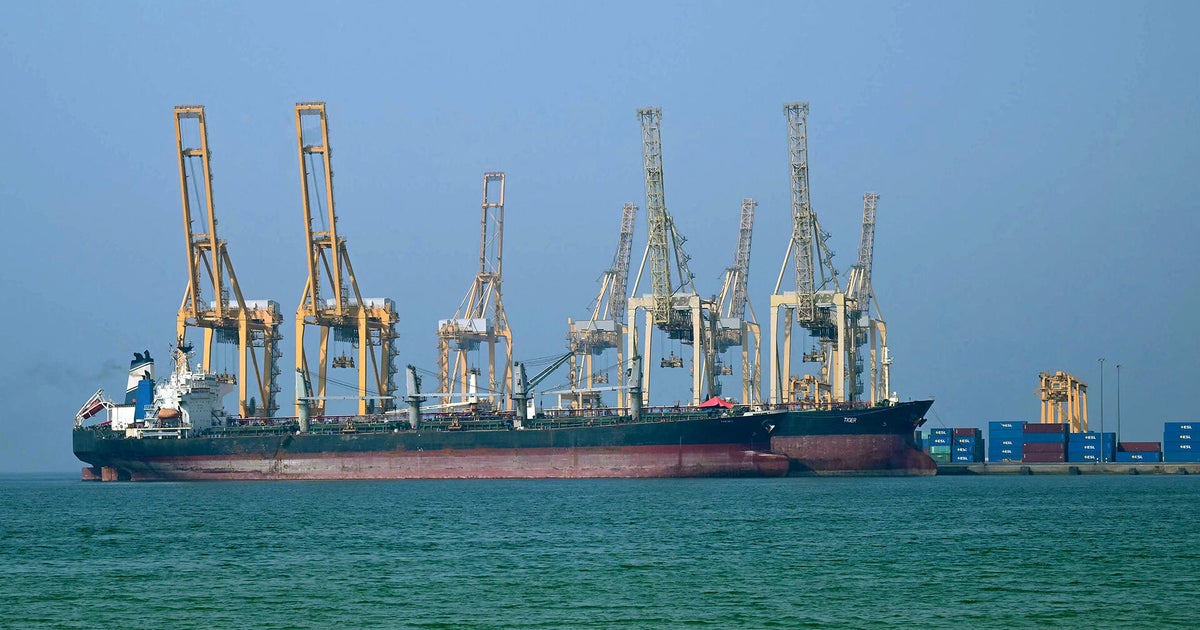
The United States Department of the Treasury’s recent warning to the global shipping industry regarding Iranian transit tolls represents a fundamental shift from monitoring cargo to monitoring the financial architecture of maritime passage. Shipping firms operating in the Strait of Hormuz now face a binary choice: fulfill coastal state requirements for transit or maintain access to the US-dominated financial system. This tension is not merely a diplomatic friction point; it is a structural risk that alters the cost-benefit analysis of every vessel transiting the Persian Gulf.
The Financial Architecture of the Hormuz Transit
To understand the legal trap currently facing maritime operators, one must first categorize the payment of "tolls" or "service fees" within the framework of the Office of Foreign Assets Control (OFAC) regulations. When a shipping firm pays a fee to an Iranian entity for passage, pilotage, or security, that transaction enters the Three-Tiered Risk Matrix: Don't miss our previous article on this related article.
- Entity Identification: The recipient of the funds. In the Strait of Hormuz, maritime services are frequently managed by the Ports and Maritime Organization (PMO) of Iran or entities linked to the Islamic Revolutionary Guard Corps (IRGC). Both are subject to comprehensive US sanctions.
- Currency Denomination: The medium of exchange. While many of these tolls are requested in non-USD denominations to circumvent the Clearing House Interbank Payments System (CHIPS), the "U-Turn" regulation ban remains a barrier. Even if the transaction is executed in Euros or Dirhams, any touchpoint with a US-affiliated bank triggers a violation.
- The Nexus of Knowledge: The "reason to know" standard. Under current enforcement protocols, a shipping firm cannot claim ignorance regarding the ultimate beneficiary of a port fee. The burden of due diligence has shifted from the regulator to the private enterprise.
This creates a Compliance Asymmetry. While international law (UNCLOS) provides for the right of transit passage through international straits, US domestic law—specifically the Comprehensive Iran Sanctions, Accountability, and Divestment Act (CISADA)—imposes penalties on the financial mechanisms required to facilitate that passage.
The Cost Function of Non-Compliance
Shipping firms often view toll payments as a negligible operational expense, a "cost of doing business" to ensure the safety of the crew and cargo. However, a data-driven analysis of the consequences reveals that the actual cost of a single $10,000 toll payment can escalate into the millions when the Secondary Sanctions Penalty Function is applied. To read more about the context of this, Business Insider offers an in-depth breakdown.
The Loss of Correspondent Banking Access
The primary weapon of US sanctions is not the fine, but the "death penalty" of losing access to USD correspondent accounts. If a shipping line is designated as a "foreign financial institution" (FFI) under certain executive orders for facilitating transactions for sanctioned entities, it loses the ability to clear any dollar-denominated trades. For a global carrier, this is an existential threat that halts payroll, fuel procurement, and insurance premiums.
The Insurance Decoupling Effect
Marine insurance, particularly Protection and Indemnity (P&I) clubs, is heavily concentrated in Western markets (the International Group of P&I Clubs). These clubs include "Sanction Limitation and Exclusion" clauses. The moment a vessel pays an illicit toll to a sanctioned entity, its insurance coverage can be voided mid-voyage. This transforms the vessel into a "pariah ship," unable to dock at any major port due to the lack of liability coverage.
Acceleration of the "Dark Fleet" Premium
The US warning forces a bifurcation of the shipping market. Legitimate Tier-1 carriers will likely refuse toll payments, risking harassment or seizure by Iranian naval forces. Conversely, "shadow" or "dark" fleet operators—those already outside the Western financial system—will absorb these tolls as a standard premium. This increases the operational overhead for compliant firms while narrowing their competitive edge in high-risk corridors.
The Institutional Failure of UNCLOS in Geopolitical Friction
The legal basis for Iran’s toll collection is often rooted in its interpretation of the 1982 United Nations Convention on the Law of the Sea (UNCLOS). Iran has signed but not ratified the treaty, and it maintains that the "transit passage" regime applies only to states that are also parties to the convention.
From a strategic consulting perspective, the conflict arises from the Legal Loophole of "Service Fees." Iran argues these are not "tolls" (which are generally prohibited in international straits) but charges for services rendered, such as navigational aids and pollution control. The US counter-argument is that these fees are a pretext for state revenue generation for a sanctioned regime.
The mechanism of coercion here is clear:
- Step 1: Iran asserts sovereignty over the shipping lanes.
- Step 2: Tolls are demanded from transiting vessels.
- Step 3: Non-payment results in "safety inspections" or "environmental holds" by the IRGC Navy.
- Step 4: Payment results in a US Treasury investigation.
Structural Bottlenecks in Due Diligence
The primary difficulty for a compliance officer at a global logistics firm is the Opaqueness of the Beneficial Ownership Chain. The entity requesting the toll is rarely labeled "IRGC Revenue Office." Instead, it is often a third-party agency, a local port handler, or a shell company based in a neutral jurisdiction like Dubai or Singapore.
A rigorous audit of these transactions must utilize the Four-Point Verification Protocol:
- Ultimate Beneficial Ownership (UBO) Screening: Identifying the humans behind the corporate entity receiving the wire.
- Geospatial Tracking: Correlating the time of the toll demand with the vessel’s proximity to Iranian territorial waters.
- Invoice Discrepancy Analysis: Identifying "hidden" fees in port invoices that don't match standard international rates (e.g., a "security surcharge" that exceeds 500% of the market average).
- Financial Path Mapping: Tracing the routing instructions. If the bank is a regional bank with limited AML (Anti-Money Laundering) oversight, the risk level moves to "Red."
The Geopolitical Revenue Loop
The United States is not just concerned with the legality of the transaction, but with the Macroeconomic Impact of Micro-Payments. While an individual toll might be small, the cumulative volume of the 20,000+ vessels transiting the Strait of Hormuz annually creates a significant hard-currency revenue stream. For a sanctioned economy, these "micro-revenues" are vital for bypassing broader oil export restrictions.
By cutting off these payments, the US aims to achieve Financial Attrition. The strategy is to make the cost of maintaining the Strait’s infrastructure greater than the revenue derived from it, forcing the Iranian state to either subsidize the channel or allow its maintenance to degrade, which further complicates international maritime law.
Strategic Response Requirements for Global Carriers
The shift in US policy requires a complete overhaul of maritime risk management. Standard operating procedures that previously treated port fees as clerical entries must now be elevated to high-level compliance reviews.
The first tactical move is the Clause of Force Majeure Re-evaluation. Shipping contracts and Bills of Lading must be updated to explicitly include "Sanctions-Induced Transit Interruption." This allows the carrier to deviate from the Hormuz route or refuse toll demands without being held liable for breach of contract by the cargo owner.
The second move involves Escalation Protocols with Flag States. If a vessel is pressured to pay a toll under duress, the carrier must establish a "No-Pay, Notify" policy. This involves notifying the flag state and the US Maritime Administration (MARAD) immediately upon the demand. This creates a documented trail of extortion that can be used to mitigate OFAC penalties if a payment is eventually made under "threat of life or limb."
The third move is the Internal Financial Fireboarding. Carriers must ensure that all funds used for Middle Eastern operations are strictly siloed from their US-based accounts and USD-denominated credit lines. This does not eliminate the risk of secondary sanctions, but it prevents the "Contagion Effect" where a single suspicious payment triggers a freeze on the entire corporate treasury.
Tactical Realignment
The Strait of Hormuz is no longer a simple geographic passage; it is a contested financial zone. Shipping firms must stop viewing the US warning as a suggestion and start viewing it as a structural change to the maritime economy. The era of "grey-zone payments" to ensure smooth transit has ended.
Companies that fail to integrate Real-Time Sanctions Screening into their vessel-level procurement systems are operating with a massive unhedged liability. The strategic imperative is to prioritize financial system access over short-term transit convenience. If a vessel cannot transit without paying a sanctioned entity, the vessel must not transit. The alternative is a total lockout from the world's most liquid capital markets, a price no maritime enterprise can afford to pay.