The 13 Percent Trap
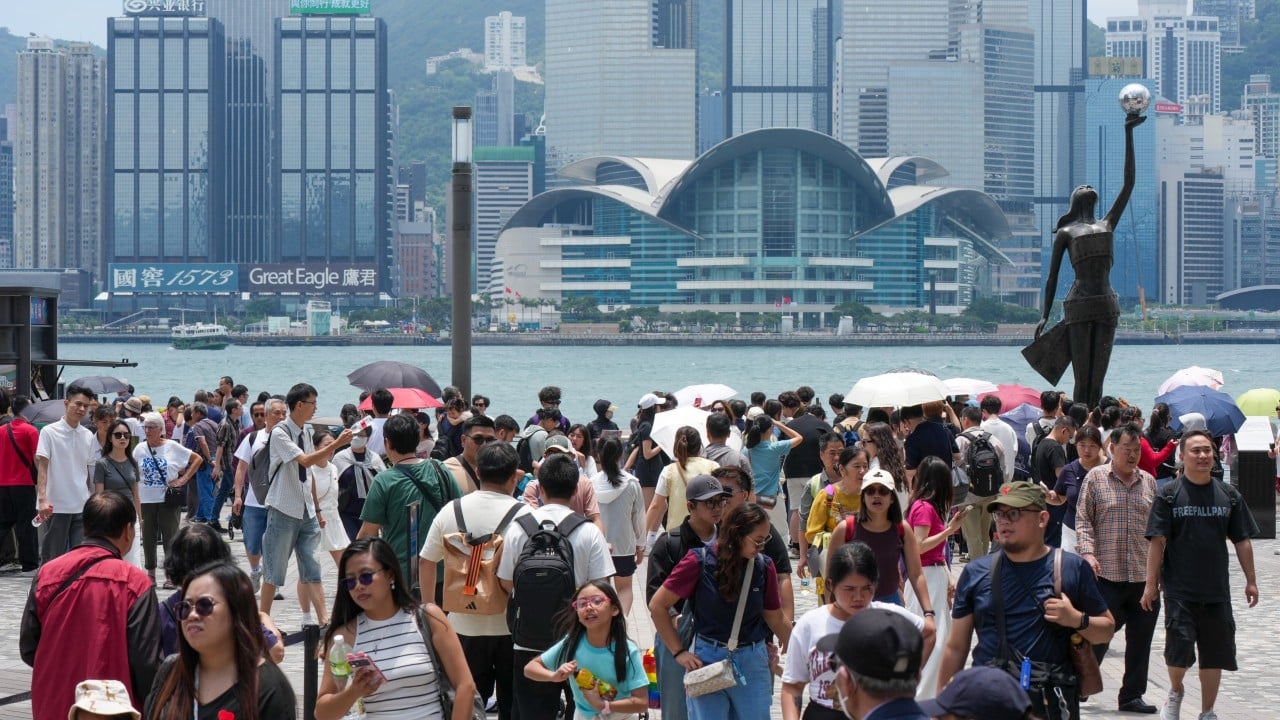
Headlines are trumpeting a 13% surge in mainland Chinese visitors to Hong Kong on the first day of the Golden Week holiday. On paper, it looks like a recovery. In reality, it is a desperate attempt to find growth in a spreadsheet that is fundamentally broken.
Counting heads is the laziest way to measure economic health. If 100 people walk into a store and buy nothing, the foot traffic is up, but the business is dying. Hong Kong is currently obsessed with the "13%," ignoring the fact that the profile of the visitor has shifted from high-spending luxury hunters to "city walk" enthusiasts who carry their own water bottles and spend more time on Xiaohongshu than in the checkout line at Lane Crawford.
The raw data is a mask. We are seeing a high-volume, low-value migration that puts more strain on the city's infrastructure than it puts cash into its registers.
The Death of the Luxury Arbitrage
For two decades, Hong Kong thrived on a simple premise: price disparity. People came here because it was cheaper and easier to buy a Chanel bag or an iPhone than it was in Shanghai or Beijing. That world is gone.
Between the rise of Hainan’s duty-free zones and the aggressive price-matching strategies of global brands within the mainland, the "shopping paradise" incentive has evaporated. When you look at that 13% increase, you aren't looking at a return to the glory days of 2014. You are looking at a crowd that is increasingly price-sensitive.
The industry refers to this as the "Day-Trip Dilution." Mainland travelers are now more likely to cross the border for a few hours, snap photos of the M+ Museum or the Monster Building in Quarry Bay, and head back to Shenzhen for dinner because the value proposition for food and beverage in Hong Kong has plummeted.
- Hong Kong Dining: High rent translates to high prices and rushed service.
- Shenzhen Dining: Competitive pricing, better service, and massive variety.
If you are a retail landlord in Tsim Sha Tsui, that 13% isn't your savior. It's a ghost.
Stop Asking About Foot Traffic
The "People Also Ask" sections of travel forums are filled with questions like "Is Hong Kong still good for shopping?" and "How busy is Golden Week?"
These are the wrong questions. The right question is: "Does Hong Kong still offer a unique value proposition that justifies its premium cost?"
Right now, the answer is a shaky "maybe," leaning toward "no."
The city is stuck in a middle-ground purgatory. It is no longer the exclusive gateway to the West, and it hasn't yet figured out how to compete with the lifestyle-centric tourism of cities like Tokyo or Bangkok. By focusing on volume—that 13% figure—the government and tourism boards are chasing a metric that actively harms the brand.
Overtourism by low-spending visitors leads to local resentment, crowded public transport, and a "cheapening" of the city's image. It’s a race to the bottom. I have watched luxury malls in Central pivot to "lifestyle experiences" and "pop-up art," which is code for: We can't sell $5,000 watches anymore, so please take a photo with this giant inflatable duck.
The Mathematics of the Spend
Let's look at the actual mechanics of the Golden Week spend.
Historically, the per-capita spending of mainland overnight visitors was the engine of the economy. However, recent data from the Census and Statistics Department shows a clear trend: while visitor arrivals are climbing back toward pre-2019 levels, the total retail sales value remains decoupled.
In a thought experiment, imagine two scenarios for a local restaurant:
- Scenario A: 100 customers spend $10 each. Total: $1,000.
- Scenario B: 40 customers spend $50 each. Total: $2,000.
Hong Kong is aggressively celebrating Scenario A while the rent is priced for Scenario B. This is a recipe for a systemic retail collapse. Small and medium enterprises (SMEs) are closing at an alarming rate because they cannot survive on "likes" and "shares." They need transactions.
The New Traveler Profile: "The Experience Seekers"
The 13% growth is driven by Gen Z mainlanders. Unlike their parents, they don't care about gold jewelry from Chow Tai Fook. They want:
- Authenticity: Local cha chaan tengs that haven't been "sanitized."
- Aesthetics: Locations that look good on a social media feed.
- Minimal Spend: High engagement, low transaction.
This is a cultural shift, not a temporary dip. Treating it as a "recovery" is a strategic error.
Why the "Greater Bay Area" Integration is a Double-Edged Sword
The convenience of the High-Speed Rail and the Hong Kong-Zhuhai-Macao Bridge was supposed to bring the masses. It worked. But it also made it too easy not to stay.
The "Golden Week" was originally designed to encourage long-haul domestic travel within China, forcing overnight stays. With the integration of the Greater Bay Area (GBA), Hong Kong has become a "commuter tourism" destination.
When you can get from Futian to West Kowloon in 14 minutes, why would you pay $3,000 HKD for a cramped hotel room in Causeway Bay? You wouldn't. I wouldn't. Nobody is.
Hotel occupancy rates might look decent, but they are often propped up by slashed room rates. This is the "Occupancy-Rate Mirage." If you fill a hotel by dropping the price by 40%, you haven't won; you've just delayed the inevitable.
Dismantling the Narrative
The consensus says: "The 13% rise proves Hong Kong is back."
The reality says: "The 13% rise proves Hong Kong is becoming a high-volume transit hub."
To survive, the city needs to stop acting like a discount outlet for the mainland and start acting like a global capital again. That means:
- Abandoning Volume Metrics: Stop reporting on how many people crossed the border. Start reporting on the Average Transaction Value (ATV) of those visitors.
- Killing the "Shopping Paradise" Myth: You cannot out-price the internet or Hainan. Hong Kong must pivot to being a specialized service hub—high-end healthcare, wealth management, and niche culture.
- Accepting the High-Cost Reality: Hong Kong is expensive. Trying to attract budget travelers is a waste of resources. It’s like Ferrari trying to market to people looking for a used Honda. It confuses the brand and alienates the core customer.
The Brutal Truth for Retailers
If your business model depends on a 13% increase in foot traffic to break even, you are already dead. You just haven't closed the doors yet.
The "Golden Week" is no longer a gold mine. It is a stress test that the city's current retail and service model is failing. The visitors are coming, yes. But they aren't bringing the economy back with them. They are coming to see the funeral of the old Hong Kong, taking a selfie, and catching the 9:00 PM train back to a city where their money goes twice as far.
Stop celebrating the 13%. Start worrying about the 87% of the spending power that didn't show up.