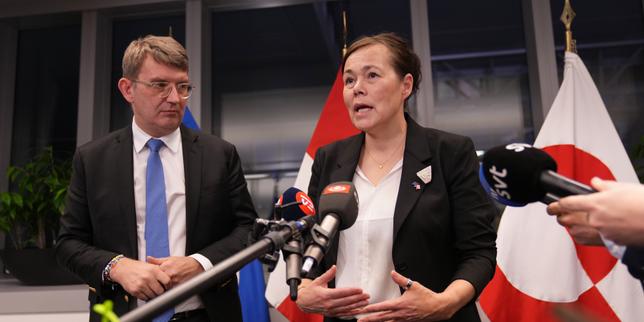
The mainstream media is currently hyperventilating over a "crisis" in Nuuk. Pele Broberg’s exit from the Naleraq party and the subsequent resignation of Foreign Minister Vivian Motzfeldt is being framed as a collapse of stability. They see a fractured government. They see a setback for independence. They see chaos.
They are looking at it completely wrong.
What we are witnessing isn't a meltdown; it is the necessary, painful friction of a nation finally deciding whether it wants to be a protected ecological museum for the West or a global industrial powerhouse. This isn't a "political crisis." It’s a market correction for a country that has been overvalued on sentiment and undervalued on raw economic utility.
The Myth of the Fragile Coalition
The lazy consensus suggests that ministerial turnover in Greenland signals a "weak" state. That is a colonial-era hangover. In any emerging economy with massive untapped resources, political volatility is a sign of high stakes, not low capability.
When a Foreign Minister leaves over disagreements regarding the speed of independence or the management of fishing quotas, it means the democratic process is actually working. It means the debate is no longer about if Greenland should be autonomous, but how it will pay for it.
I’ve seen this play out in emerging markets from the Caspian to Sub-Saharan Africa. The "stability" that Brussels or Copenhagen craves is often just another word for stagnation. If your cabinet isn't arguing, you aren't doing anything important. Greenland is currently deciding how to leverage the most valuable real estate on the planet. If that doesn't cause some political bruising, you’re doing it wrong.
Stop Asking if Greenland is Ready for Independence
The most common "People Also Ask" query is some variation of: "Can Greenland survive without Danish subsidies?"
This is the wrong question. It’s a trap designed to keep the status quo in place. The real question is: "How much is the world willing to pay for a seat at the table in Nuuk?"
The Danish block grant—roughly $600 million annually—is a rounding error in the context of global energy and mineral demands. Greenland holds the keys to the critical minerals necessary for the "green transition" that European elites claim to care about.
You want electric vehicles? You need Greenland's rare earth elements. You want high-performance magnets? You need Kvanefjeld. You want a secure Arctic flank against Russian or Chinese expansion? You need the cooperation of the Inatsisartut (the Greenlandic Parliament).
By framing the current political reshuffle as a "crisis," critics are trying to devalue Greenland's bargaining chip. If the government looks unstable, the Danish crown looks like the only "adult in the room." That is a narrative trick. The current friction is actually Greenlandic politicians realizing they don't need a subsidy; they need a royalty structure that reflects their 21st-century geopolitical value.
The Fishing Quota Trap
The specific trigger for much of this internal strife is fishing—the backbone of the Greenlandic economy. The Naleraq party’s departure from the coalition often circles back to how the sea’s wealth is distributed.
Mainstream analysts call this "protectionist" or "shortsighted." I call it the only logical move for a nation trying to avoid the "resource curse."
If Greenland sells out its territorial waters to massive international trawlers for a quick cash infusion, it loses its leverage. The internal bickering over quotas isn't "petty politics." It is a sophisticated debate over nationalizing wealth versus inviting foreign direct investment (FDI).
Most Western pundits want Greenland to play by the "Global Rules-Based Order," which is code for "Let our companies take your fish and minerals while we give you a small percentage and a pat on the head." Pele Broberg and his ilk are being disruptive because they know the current deal is a bad one.
The Zero-Sum Game of Arctic Diplomacy
Let’s be brutally honest about why the world cares about a minister quitting in a country of 56,000 people. It’s not about democracy. It’s about the Thule Air Base (Pituffik Space Base) and the Northwest Passage.
The "crisis" narrative serves the interests of those who want Greenland to remain a quiet, predictable protectorate.
- Copenhagen wants to maintain its seat at the Arctic Council.
- Washington wants a predictable landlord for its northern defense assets.
- Beijing wants a foot in the door through infrastructure projects.
When the Greenlandic government goes through a period of "instability," it creates a vacuum. But for Greenland, that vacuum is a negotiation tactic. A unified, quiet government is easy to ignore. A loud, fractious government that keeps resigning is a government that forces the Great Powers to up their bids.
The Price of Professionalism
The downside to this contrarian view is obvious: it’s messy. It scares off "safe" institutional investors who want five-year projections and boring press releases. If you are looking for a 3% yield on a government bond, Greenland’s current political climate is a nightmare.
But if you are a strategic actor—a mining conglomerate, a sovereign wealth fund, or a defense contractor—this is where the real money is made. You don't buy into a market when it's "stable" and the price is high. You buy in when the cabinet is resigning and everyone else is running for the exits because they don't understand that the "crisis" is actually a rebranding.
How to Actually Read the Greenlandic Situation
Stop following the "who's in, who's out" horse race. It's noise. Instead, track these three metrics:
- The Mineral Resources Act updates: These tell you who Greenland is actually courting.
- Infrastructure Bonds: If they are building bigger airports in Nuuk and Ilulissat (which they are), they aren't planning on staying a quiet Danish outpost.
- Bilateral talks with the US State Department: The US is opening a consulate and pumping in "development aid." That isn't charity; it’s a down payment.
The End of the "Postcard" Nation
For decades, the West has treated Greenland as a beautiful backdrop for climate change documentaries—a land of melting ice and struggling polar bears. This political shift is the moment the "backdrop" starts demanding a speaking role and a cut of the box office.
The resignation of a minister or the exit of a party isn't a sign of failure. It is a sign that the "postcard" version of Greenland is dead. In its place is a volatile, aggressive, and increasingly self-aware Arctic power that knows exactly how much the rest of the world needs its soil and its seas.
The "crisis" isn't that the government is falling apart. The crisis is that the rest of the world isn't ready for a Greenland that knows its own worth.
Stop mourning the stability of the old guard. The volatility is the point.
Buy the dip.