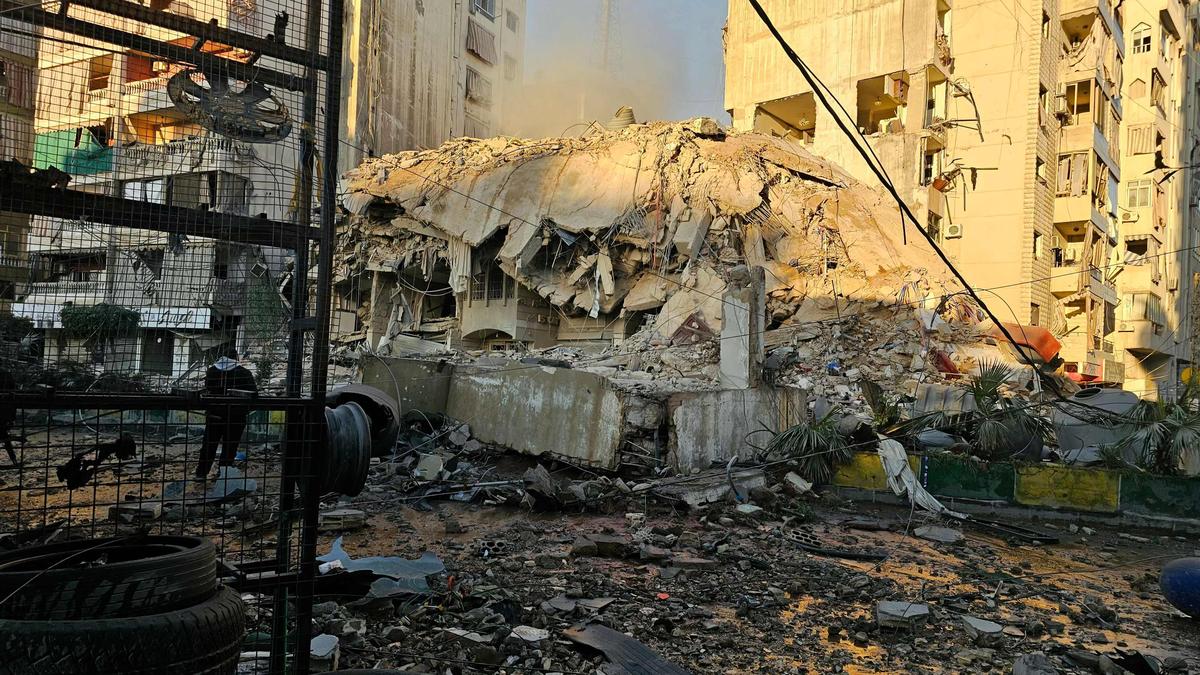
While the skies over Iran crack with the thunder of Israeli and American ordinance, a quieter, more intimate war is being waged inside the country’s borders. The Islamic Republic’s intelligence apparatus is currently conducting one of the most aggressive internal purges in its 47-year history, branding hundreds of its own citizens as "monarchist" saboteurs and foreign assets. On Wednesday, March 18, 2026, the Ministry of Intelligence announced the dismantling of 111 "cells" across 26 provinces—a staggering admission of just how porous the regime’s internal security has become.
This is not a simple law-and-order operation. It is the desperate reflex of a system that has lost its Supreme Leader, its regional standing, and its grip on the narrative. By framing every domestic dissenter as a "monarchist" or a "spy," the state is attempting to transform a legitimate, broad-based uprising into a neat byproduct of foreign espionage. It is a gamble that may backfire.
The Geography of Discontent
The scale of these arrests—spanning nearly every province in the country—reveals a government fighting a hydra. The Ministry of Intelligence, whose agents are known by the messianic title "Unknown Soldiers of the Imam of Time," claims to have seized everything from firearms to batons. But the most significant "weapons" recovered weren't ballistic. They were Starlink terminals and mobile phones.
In the 2026 conflict, information is treated as a high-explosive. Security forces have designated the act of filming a missile strike or a bombed-out IRGC headquarters as "espionage." Sending that footage to London-based Persian-language news outlets like Iran International—now officially labeled a "terrorist organization"—is a crime punishable by death.
The strategy is clear.
- Enforce a total Information Dark Age through internet blackouts.
- Criminalize documentation to ensure that only the state's version of the war exists.
- Rebrand protesters as traitors to justify the use of live ammunition.
The Ministry’s claim that these 111 cells were plotting specifically for Chaharshanbe Suri—the ancient Persian Fire Festival—is telling. This festival, which precedes the Persian New Year, has long been a flashpoint for anti-regime expression. By preemptively arresting hundreds, the state isn't just stopping "spies"; it is trying to kill a culture of defiance before it can ignite during a moment of traditional celebration.
The Phantom of the Pahlavis
The regime’s obsession with "monarchists" serves a specific propaganda function. By invoking the Pahlavi dynasty, which was toppled in 1979, the current leadership attempts to paint the 2026 protesters as reactionaries seeking to return to a U.S.-backed past.
The reality on the ground suggests something far more complex. The "Phase II" protests that reignited in February 2026 were sparked not by a longing for a King, but by a collapsing rial and a government that prioritized regional proxy wars over the price of bread. When the U.S. and Israel launched "Operation Epic Fury" on February 28, killing Supreme Leader Ali Khamenei, the internal pressure didn't dissipate—it mutated.
Some Iranians reportedly celebrated the vacuum of power, while others hunkered down in fear. The state’s response was the "Finger on the Trigger" order issued by police chief Ahmadreza Radan. Under this doctrine, any gathering is a military target. The distinction between a political activist and a Mossad agent has been erased.
The Cost of the Crackdown
The human toll of this internal offensive is becoming difficult to hide, even with the internet shuttered. Reports from the UN Independent International Fact-Finding Mission suggest that repression has reached levels that may constitute crimes against humanity. In January alone, documented deaths from security force fire exceeded 7,000.
The state has turned its hospitals into traps. Nurses have been detained for treating wounded protesters, and there are harrowing reports of sexual violence used as a tool of interrogation in secret detention centers. This is the "war behind the war"—a systematic effort to break the spirit of the Iranian people while the military remains occupied with external threats.
The judicial system is moving with lethal speed. The recent execution of Kourosh Keivani, an Iranian-Swedish national accused of spying for Mossad, serves as a grim warning. Keivani was convicted of passing "images and information of sensitive locations" to the enemy. In the eyes of the Revolutionary Court, your smartphone is now a weapon of war.
A Fractured Apparatus
Perhaps the most overlooked factor in this wave of arrests is the state of the intelligence community itself. The recent killing of Intelligence Minister Esmail Khatib in an overnight strike has left a power vacuum. The ministry is currently competing with the IRGC’s Intelligence Organization to prove its "vigilance."
This competition often results in "over-reporting"—inflating the number of arrested "spies" to demonstrate loyalty and effectiveness to the new leadership under Mojtaba Khamenei. When the Ministry of Intelligence thanks the "Unknown Soldiers" for catching 111 cells in a single night, it is as much a PR exercise for the new Supreme Leader as it is a security announcement.
The Islamic Republic is currently a house with its doors barred and its curtains drawn, while the roof is on fire. It is arresting the neighbors for looking through the windows, convinced that every set of eyes belongs to an assassin.
Would you like me to analyze the specific impact of the Starlink terminal seizures on the Iranian underground's ability to coordinate protests during the upcoming Nowruz holiday?