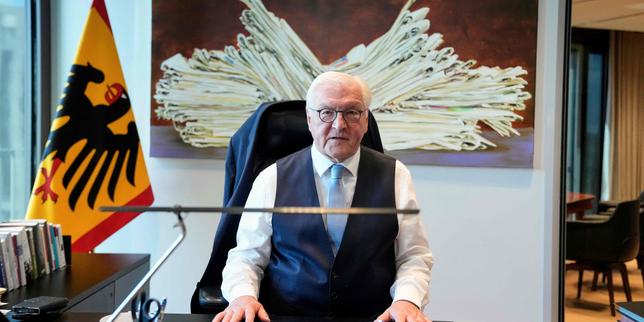
Germany is facing a political reality that its post-war founders didn't fully anticipate. For decades, the German president sat above the political fray. The role was strictly protocol, a moral compass, a referee who stepped in only when the government collapsed. But German President Frank-Walter Steinmeier knows those days are over. The steady rise of the far-right Alternative for Germany (AfD) is forcing a massive rethink of how the country defends its democratic guardrails. Steinmeier is openly signaling that the head of state can't just be a professional ribbon-cutter anymore.
When you look at the Basic Law, Germany’s constitution, the president’s lack of executive power is a direct reaction to the Nazi era. The creators of the modern German state deliberately stripped the presidency of the sweeping powers that allowed Paul von Hindenburg to appoint Adolf Hitler in 1933. They wanted a weak head of state and a strong parliament. It worked perfectly for seventy years. Now, that deliberate weakness is turning into a vulnerability.
The Neutrality Trap in Times of Political Extremism
The traditional expectation is that a German president must remain strictly neutral. You don't take sides in daily partisan bickering. But what happens when one of the political sides actively aims to dismantle the democratic system from within? That is the dilemma Steinmeier is confronting.
Staying neutral when democratic norms are under attack isn't objectivity. It’s complicity. Steinmeier has recognized that the office needs to shift from a passive moral authority to an active defender of the democratic constitution. This doesn't mean the president starts endorsing specific political parties or meddling in tax policy. It means the presidency must become the vocal, public counterweight to extremist rhetoric.
Look at the regional elections in eastern Germany, where the AfD achieved historic gains. The old playbook of ignoring the fringes or relying on traditional political taboos failed. When extremist parties win significant shares of the vote, they gain real institutional power. They can block judicial appointments, disrupt parliamentary procedures, and control regional budgets. A president who merely gives polite speeches about unity is bringing a knife to a gunfight.
How Steinmeier is Changing the Playbook
Steinmeier is already changing how he uses the bully pulpit. He isn't just speaking to elites in Berlin boardrooms. He is traveling out to small towns, meeting voters who feel abandoned by the mainstream coalition, and confronting uncomfortable truths head-on.
His strategy relies on a few distinct shifts in presidential protocol.
- Ditching the safe script: Presidential speeches are becoming sharper and more direct, naming threats to democracy without hiding behind bureaucratic language.
- Engaging the disillusioned: The presidency is moving its focus away from international diplomacy and toward internal mediation, setting up town halls in regions where political polarization is highest.
- Weaponizing the moral veto: While the president rarely refuses to sign a law, Steinmeier is making it clear that the constitutional review power of the presidency will be used strictly to protect democratic institutions.
This isn't about entering the partisan mudslinging. It is about drawing a hard line between legitimate political disagreement and systemic democratic subversion. If a party wants to alter the basic democratic order, the president's job is to call them out, plainly and repeatedly.
The Risks of a Politicized Presidency
This shift isn't without danger. The moment the president steps out of the traditional ceremonial box, critics will accuse the office of weaponizing the state against political opponents. The AfD already uses the narrative that the entire political establishment is rigged against them. A highly vocal, aggressive president risks feeding right into that victim mentality.
If the public begins to see the presidency as just another partisan weapon, the office loses its unique value. The entire point of the head of state is to represent all Germans, even those who vote for radical parties. Striking the balance between defending the system and alienating millions of voters is an incredibly thin tightrope to walk.
Historical precedents show how quickly things can go wrong when a head of state oversteps. But Steinmeier’s calculation is simple: the risk of doing nothing and watching democratic norms erode from within is far greater than the risk of being accused of partisanship.
Defending Democracy Requires More Than Protocols
You can't defend a modern democracy using rules written for a completely different political era. The rise of populism and extremism across Europe proves that institutions are only as strong as the people willing to defend them.
Germany’s political stability was built on consensus. That consensus is fracturing. Mainstream political parties are struggling to find answers, and voters are increasingly frustrated by gridlock and economic anxiety. In this environment, the president cannot remain a distant, symbolic figure.
Steinmeier’s push to evolve the presidency is a wake-up call for the entire German political system. It is an admission that the old ways of managing political dissent aren't working anymore. The office must adapt to survive, and that means stepping directly into the ideological storm to defend the constitutional values that allowed modern Germany to prosper in the first place.


