The floorboards of the apartment smell faintly of old wool and floor wax, a comforting, mundane scent that belongs to a Tuesday afternoon. Then comes the sound of claws clicking against the laminate. Fast. Heavy. Purposeful.
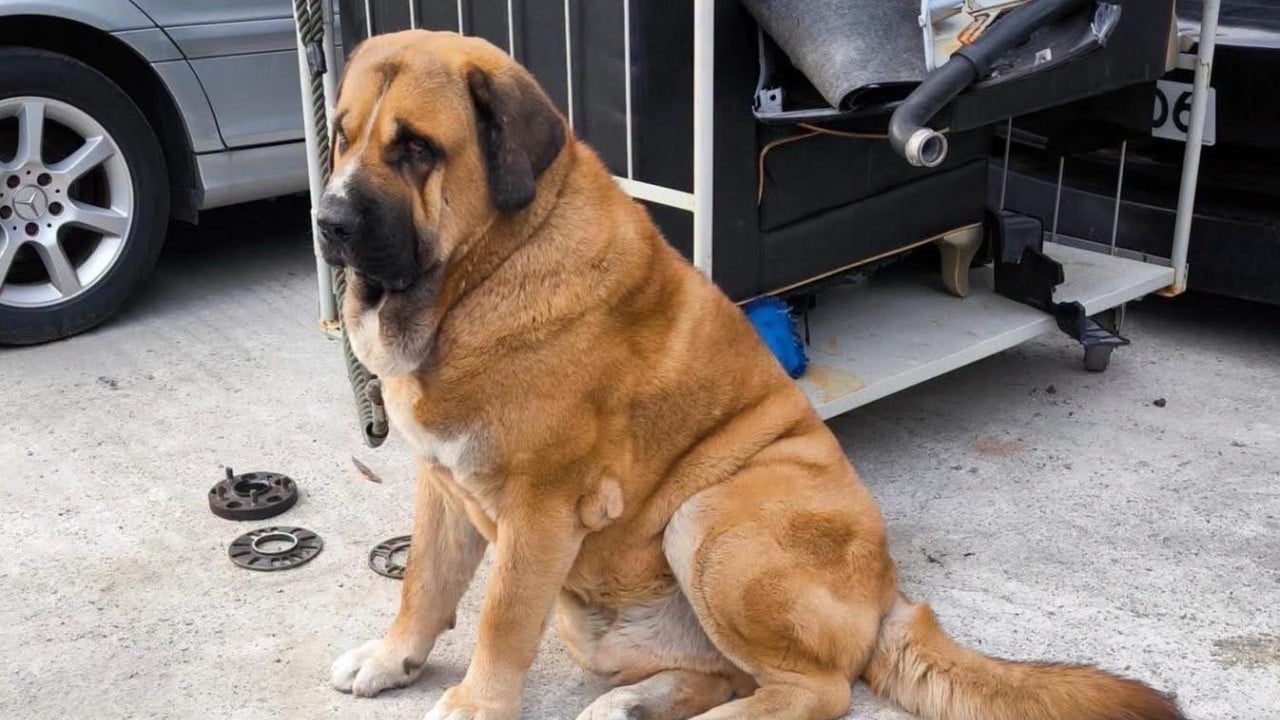
Meet Buster. He is a block-headed, broad-chested Staffordshire Bull Terrier mix with eyes the color of warm honey and a tail that wags with such violent enthusiasm it can clear a coffee table of loose change in two seconds flat. To his owner, Sarah, Buster is the creature that greets her at the door after a ten-hour shift at the hospital, planting a wet, unceremonious kiss squarely on her chin. He is a couch warmer. A shadow. A family member.
To the law in Hong Kong, however, Buster is something else entirely. He is a silhouette on a silhouette chart. He is a legal liability waiting to happen.
In a densely packed city where skyscrapers scrape the clouds and millions of residents live stacked upon one another in high-rise towers, space is not the only thing in short supply. Peace of mind is, too. When a dog looks a certain way—muscular jaw, short coat, stocky frame—the city’s bureaucracy stops seeing an individual animal with a distinct personality. It starts seeing a category. Specifically, it starts seeing a "fighting dog."
Hong Kong has long maintained strict controls over designated fighting dog breeds and their crosses, grouping animals like American Staffordshire Terriers, Bull Terriers, and Tosa fighting dogs under heavy regulatory scrutiny. Muzzles in public. Leash requirements. Strict insurance policies. The system operates on a simple, blunt premise: if you look like a weapon, you must be treated like one.
But what happens when the visual math fails?
Genetics are not a photocopy machine. They are a chaotic, beautiful soup of recessive traits, random mutations, and ancestral echoes. You can take two dogs that look identical to the untrained eye—or to an overworked municipal inspector—and find that their DNA tells two entirely different stories. One might possess the genetic markers associated with high reactivity or guardian drives. The other might be ninety percent Labrador retriever with an unfortunate blocky skull.
Right now, authorities in Hong Kong are seriously considering a shift that could change everything for pet owners like Sarah: the introduction of DNA testing to determine a dog’s classification, moving away from subjective visual assessments alone.
It sounds like a win for common sense. Science, after all, is supposed to be objective. A cheek swab instead of a policeman's guess. A laboratory report instead of a nervous bureaucrat's snap judgment.
Yet, as anyone who has ever stared down a bureaucratic process knows, the devil lives in the laboratory details.
Consider what happens next in this unfolding reality. (Note: The following scenario is a hypothetical reconstruction based on current municipal policy debates and genetic testing realities).
Imagine opening a registered mail envelope on a rainy Thursday morning. Inside is a notice from the Agriculture, Fisheries and Conservation Department. Your rescue dog, adopted from a shelter three years ago and certified on veterinary paperwork as a mixed-breed hound, has been flagged following a routine neighborhood dispute over barking. Because of his muscular chest, animal control officers mandate a genetic panel.
Two weeks later, the results arrive. The lab report features a complex breakdown of percentages. Fifty percent Staffordshire Terrier. Twenty percent Boxer. Thirty percent "unknown terrier group."
Suddenly, the paperwork doesn't matter. The three years of obedience training, the gentle way he lets neighborhood toddlers pull his floppy ears, the terrified whines he makes during summer thunderstorms—none of it matters to the classification software. The genetic threshold has been crossed. The label sticks.
This is where the human element collides with molecular biology. We want science to give us clean answers. We want a divine pointer that says safe or dangerous, good or bad. But DNA does not measure temperament. It measures ancestry.
A dog's behavior is a mosaic. It is built from the tiles of early socialization, maternal care, human training, trauma, environment, and daily routine. To reduce an animal's right to exist in a home down to a percentage calculation of its great-great-grandparents is to misunderstand how biology actually works. A genetic predisposition is not a destiny written in stone; it is merely an inclination, often overridden entirely by a life spent sleeping on a plush rug and eating chicken-flavored kibble.
Yet, the alternative is arguably worse. Right now, without DNA testing, visual identification rules supreme. And visual identification is notoriously flawed, plagued by human bias and optical illusion. Studies across the globe have repeatedly shown that shelter workers, veterinarians, and animal control officers routinely misidentify dog breeds based purely on physical appearance. If a dog has a wide head and a short muzzle, it gets slapped with a restricted breed label, regardless of its actual lineage.
This means that sweet-natured mutts are routinely subjected to harsh municipal restrictions, forced muzzling, or worse, simply because they lost the genetic lottery of facial geometry.
So when Hong Kong looks toward DNA testing, it is looking for an escape hatch from a broken system. The desire for objectivity is real, urgent, and deeply human. Nobody wants to live in fear of their best friend being confiscated. No municipal official wants to rely on guesswork when public safety is on the line.
The question isn't whether science should be involved. The question is how much weight we give to a string of genetic code compared to the living, breathing reality of an animal right in front of us.
If a dog has lived for eight years without a single aggressive incident, does it matter if its genome contains a trace of an ancient fighting breed? If a rescue animal is rehabilitated from a life of neglect and learns to lean its heavy head against its owner’s knee every single evening, does a laboratory printout invalidate that history?
The debate in Hong Kong forces us to confront our deep-seated need to categorize the world. We crave safety through simplicity. We want to divide things into boxes so we know how to react when we pass them on a crowded sidewalk. But living things refuse to stay inside neat cardboard containers. They spill over the edges. They defy expectations.
Sarah looks down at Buster. He has finally stopped wagging his tail and is now snoring softly, paws twitching as he presumably chases phantom squirrels across some digital dreamscape. She thinks about the swab test. She thinks about the possibility of a government official knocking on her door, clipboard in hand, ready to reclassify her family based on the shape of a skull or the sequence of a base pair.
The afternoon light shifts across the hardwood floor, casting long, amber shadows. Outside, the distant hum of the city continues—trams clanging, horns honking, millions of lives brushing past one another in a frantic urban dance.
The test tubes are waiting in the lab. The policy papers are being drafted in air-conditioned offices. But the dog on the floor knows none of this. He only knows that the room is warm, the floor is solid, and the hand resting gently on his flank is not going away.