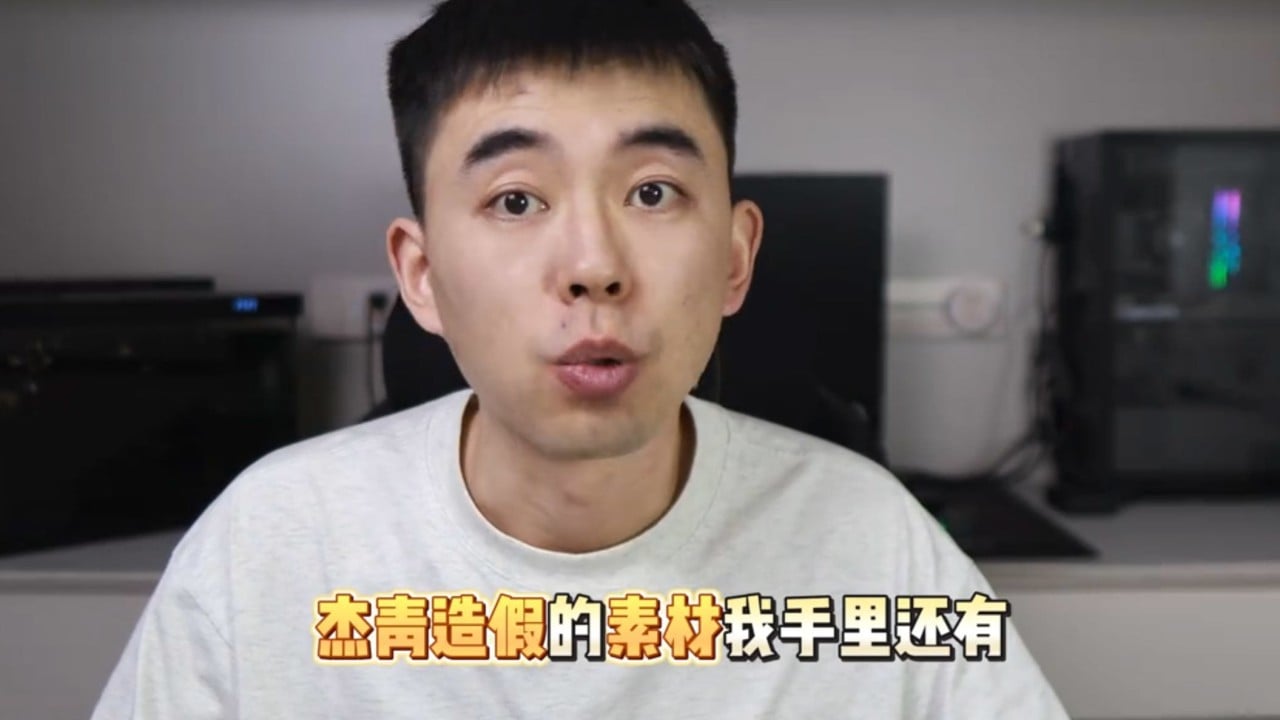
A lone video blogger with an open-source image analysis tool did what billions of dollars in state funding and institutional peer review failed to do. He brought down elite deans, shook the foundation of China's higher education system, and forced an unprecedented reckoning over systemic data fabrication.
When Geng Hongwei—known widely online as Student Geng—began publishing video breakdowns of anomalous biomedical papers on social media platforms, he targeted more than just sloppy graphics. A former doctoral candidate who walked away from his postgraduate studies at Beihang University rather than participate in compromised research workflows, Geng exposed how top-tier institutions routinely rewarded fabricated data. The resulting firestorm swept through elite labs at Tongji University, Nankai University, and Sun Yat-sen University, stripping distinguished scholars of their administrative titles and triggering the largest academic misconduct sweep the nation has ever witnessed. You might also find this connected coverage insightful: Inside the Cross-Channel Gamble Rewriting Anglo-French Relations.
Yet, celebrating this enforcement wave as a final victory misses the structural rot beneath the surface. The crisis is not merely a story of a few corrupt actors getting caught. It is an indictment of an evaluation matrix that values quantity over truth, turning laboratories into paper mills where survival depends on impossible metrics.
The Metrics Trap and the Death of Inquiry
Modern academic output in major economies suffers from a hyper-quantified addiction. Promotion, funding, and prestige hinge on high-impact journal placements. For a laboratory director in Beijing or Shanghai, missing publication targets means losing grants, lab space, and institutional standing. As reported in recent reports by BBC News, the results are widespread.
Consider a hypothetical lab director managing dozens of graduate students under tight funding cycles. The pressure to publish in prestigious international outlets creates an environment where negative results are treated as professional failures. When experiments fail to yield clean, publication-ready conclusions, the temptation to manipulate Western blot bands, duplicate control images, or massage statistical significance becomes an occupational hazard.
Geng’s forensic videos revealed that many compromised papers shared glaring visual signatures of duplication. These were not sophisticated fabrications hidden behind layers of encrypted code. They were lazy cut-and-paste jobs that institutional gatekeepers and international peer reviewers completely ignored.
Why did peer reviewers miss them? Because the global publishing apparatus is overwhelmed. Millions of papers flood submission portals annually, turning peer review into a superficial rubber stamp. When local evaluation committees care only about the brand name of the journal on a curriculum vitae, the actual content of the research becomes secondary to its packaging.
The Power Dynamic Inside the Laboratory
The relationship between a principal investigator and a graduate student remains feudal. In many elite science and engineering departments, senior academics hold absolute authority over a student's graduation timeline, degree conferral, and future employment recommendations.
This asymmetry creates fertile ground for misconduct. Students are frequently weaponized as cheap intellectual labor, pressured to produce results that match the career ambitions of their supervisors. Refusing an order to alter data often carries a heavy personal cost. When Geng chose to abandon his doctoral track instead of complying with questionable data practices, he exercised an option available to very few. Most students lack the financial safety net or the institutional backing to blow the whistle on a powerful mentor without destroying their own futures.
The recent disciplinary actions targeted high-profile figures such as college deans and National Outstanding Young Scholars. These individuals were not isolated rogues operating in basements. They were central nodes in prestigious networks, sitting on grant committees and editorial boards. Punishing them after viral public shaming highlights a deeply reactive regulatory model. Integrity enforcement should not rely on a former PhD student spending his nights running image-processing software for an audience of millions.
Restructuring the Architecture of Proof
Fixing this systemic failure requires dismantling the hyper-competitive key performance indicator culture that dominates university administration.
First, funding bodies must decouple grant renewals from sheer publication volume. Evaluating researchers on the quality, reproducibility, and societal impact of a select few primary studies rather than a bloated bibliography changes the incentive structure overnight.
Second, universities must establish independent, anonymous channels for research integrity reporting that bypass internal politics. Right now, whistleblowers face immense retaliation risks unless their claims go viral enough to force the hand of university presidents. A bureaucratic apparatus that only responds to public embarrassment is inherently unstable.
Third, scientific publishing must modernize its verification layers. Automated screening for image duplication and statistical anomalies should happen at the submission portal, long before manuscripts reach human reviewers who lack the time or tools to spot digital alterations.
The state-backed investigations rolling out across Chinese campuses signal a political will to clean house. Ministry officials have pledged harsher penalties, including integration into social credit databases and lifetime bans from research funding. Yet, penalties alone will not change behavior if the underlying pressure cooker remains pressurized. As long as careers are built on the illusion of flawless data, the incentive to manufacture perfection will outlast any temporary crackdown.
Integrity cannot be restored through periodic panics triggered by internet sleuths. It requires structural redesign, protecting junior researchers who speak truth to power, and accepting that genuine scientific progress is messy, slow, and frequently built on failed hypotheses.