The sound starts as a low-frequency thud, a rhythmic percussion that vibrates through the steering wheel and into your wrists. If you are driving along the Gardiner Expressway or navigating the narrow veins of Etobicoke, you know the rhythm. It is the sound of a city losing its skin.
Every spring, Toronto wakes up from its "brutal winter" and looks in the mirror to find a map of scars. We call them potholes. The word itself feels too cute, too small for the jagged, rim-bending craters that wait like landmines under gray slush. To the City of Toronto, they are a logistical metric. To the person driving a decade-old sedan to a night shift, they are a financial catastrophe.
The Physics of a Breaking City
Water is a patient architect. During a Toronto winter, the temperature doesn't just drop and stay there; it breathes. It oscillates. One afternoon the sun hits the asphalt, melting the snow into a thin, shimmering tea that seeks out every hairline fracture in the road. It seeps deep. Then, the sun vanishes. The temperature plummets.
That trapped water expands as it turns to ice, exerting a silent, immense pressure that pushes the pavement apart from the inside out.
Imagine a balloon inflating inside a cardboard box. Eventually, something has to give. When the ice thaws, it leaves behind a hollow void where solid ground used to be. The next time a five-ton delivery truck or a crowded TTC bus rolls over that weakened spot, the surface collapses.
A crater is born.
This year, the cycle was relentless. The city has already seen two massive "blitzes," and now, the third is underway. It is a desperate race against the physics of decay.
The Human Cost of a Six-Inch Drop
Consider a hypothetical commuter named Elena. She isn’t a statistic. She is a nurse finishing a twelve-hour shift at St. Michael’s, driving home through a persistent drizzle that turns the road into a black mirror. She doesn’t see the hole on Dundas Street because it is filled with water, looking exactly like the flat pavement around it.
The impact is violent. It’s not just a bump; it’s a metallic crack that echoes in the cabin.
In that single second, the internal geometry of her car is rewritten. The tire loses air. The rim is bent. The alignment is thrown into a chaotic skew. For the city, fixing that hole might cost a few dozen dollars in labor and cold-patch asphalt. For Elena, the bill at the mechanic is $800—money meant for rent or a daughter’s braces.
This is the invisible tax of a Toronto winter. We talk about the "brutal" weather in terms of wind chill and snowfall totals, but we rarely talk about the way it erodes the bank accounts of the people just trying to get from point A to point B.
The Irony of the Blitz
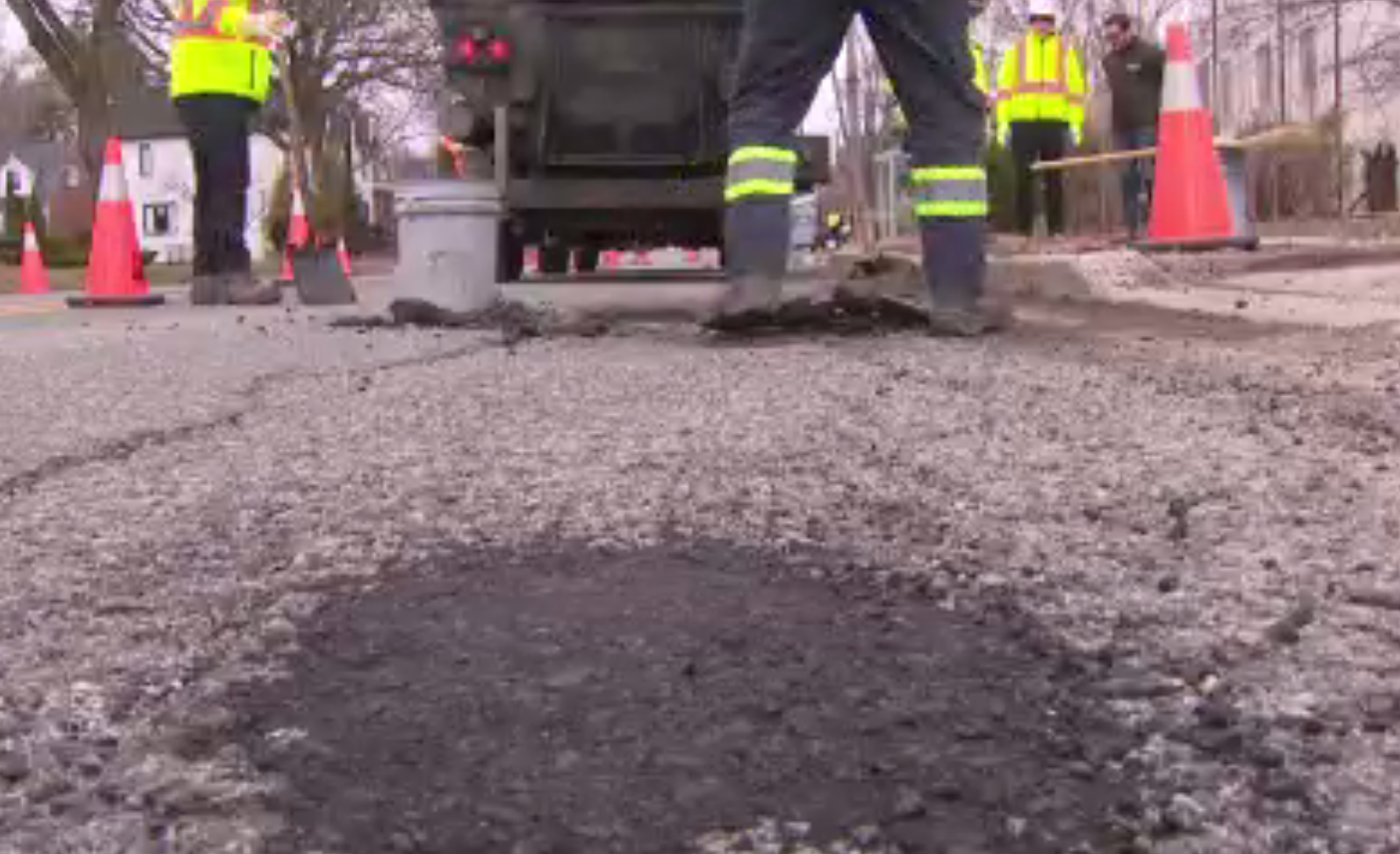
The city’s response is the "pothole blitz." It sounds like a military operation. Large crews, specialized trucks, and thousands of tons of asphalt are deployed across the GTA. Since the beginning of the year, crews have already filled over 50,000 holes.
There is a strange, fleeting satisfaction in watching a crew work. You see the hot, steaming black mix shoveled into the jagged mouth of the road. You see the heavy rollers press it flat, smoothing over the trauma. For a moment, the street looks whole again.
But there is a catch.
During these early spring blitzes, the ground is often still saturated with moisture. The asphalt used is often a "cold patch," a temporary fix designed to hold the line until the permanent paving season begins in the heat of summer. It is a bandage on a wound that requires stitches.
We are caught in a loop. We fix the roads so we can drive on them, and the act of driving on them, combined with the erratic climate, ensures they will break again. It is a Herculean task that never truly ends.
Why This Year Feels Different
The frustration in the city is palpable. It isn't just that there are more holes; it's that the infrastructure feels increasingly fragile. As Toronto grows denser, the weight on our roads increases. Heavier vehicles and more frequent transit trips mean the pavement never gets a rest.
The "brutal winter" is the convenient villain, but the aging skeleton of the city is the true victim. We are asking 20th-century roads to handle 21st-century loads, all while a changing climate makes the freeze-thaw cycle more erratic and more destructive.
If you look closely at a road crew in the middle of a blitz, you see more than just maintenance. You see a frantic attempt to keep the city’s circulatory system from failing. The crews work through the night, under the orange glow of construction lights, filling holes as fast as the earth can create them.
The Road Ahead
There is a specific kind of anxiety that comes with driving in Toronto right now. It’s a constant scanning of the horizon, a tension in the shoulders, a readiness to swerve. We have become a city of slalom drivers.
We check the weather apps not just to see if we need a coat, but to guess how many new traps will open up on the commute. A heavy rain followed by a flash freeze is the omen of a bad week for tires.
The third blitz is a necessary defense, but it is also a reminder of our vulnerability. We live in a place that is constantly trying to shake off the things we build. The frost heaves, the salt corrodes, and the traffic grinds.
Eventually, the sun will stay out long enough to dry the sub-base of the roads. The heavy machinery will come out for the permanent resurfacing. The "brutal" part of the year will fade into a humid memory.
Until then, we watch the asphalt. We listen for the thud. We hope the dark patch in the middle of the lane is just a shadow, and not the mouth of a void waiting to take a piece of our day.
The city is a living thing, and right now, it is covered in Band-Aids.