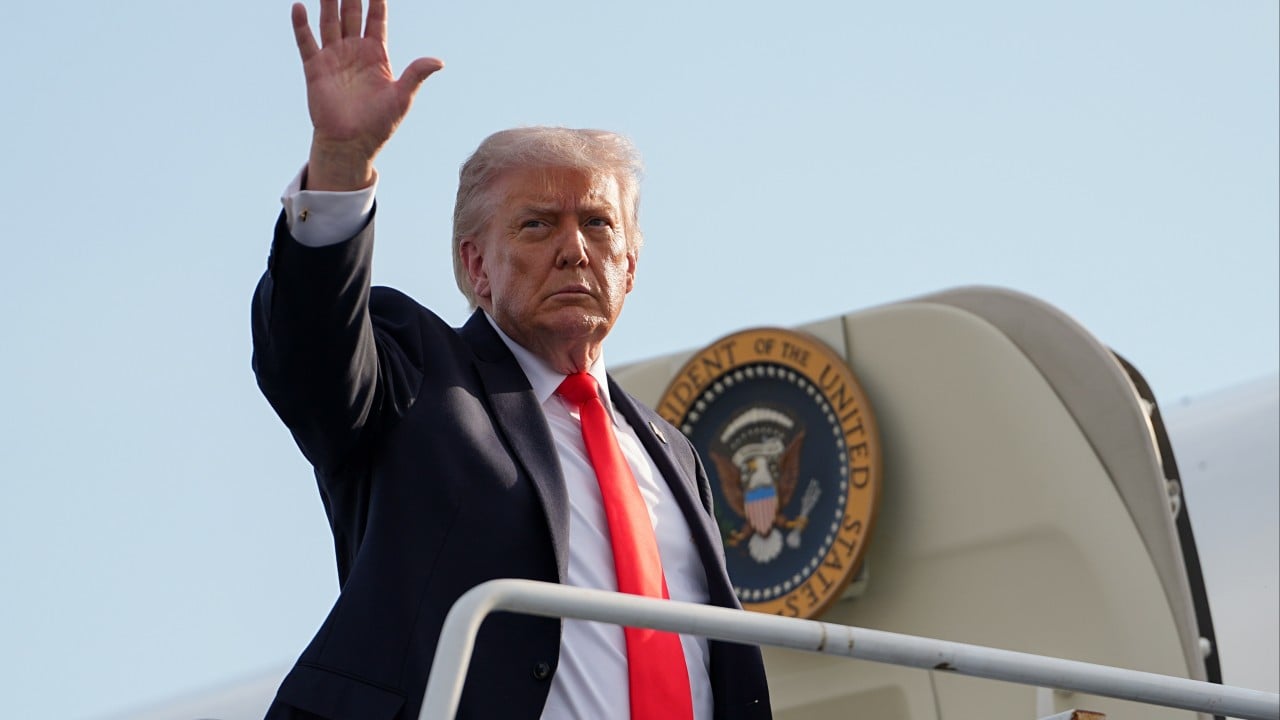
The official word from the White House is that the long-delayed state visit to Beijing will proceed exactly as planned on May 14 and 15, and that the results will be spectacular.
That is the public posture. Behind the diplomatic curtain, the upcoming summit between Donald Trump and Xi Jinping is a high-stakes salvage operation. What was originally framed as a triumphant victory lap following the October 2025 Busan trade truce has been pushed back, complicated by a dragging military intervention in Iran and a quiet but devastating economic counter-offensive by Beijing.
The core objective of the visit is not to celebrate cooperation, but to prevent a fragile bilateral framework from collapsing entirely before the Busan truce officially expires in November. To understand the reality of the upcoming summit, one has to look past the handshake optics and examine the raw leverage each side is bringing to the table.
The Busan Illusion and the New Economic Battlefield
When the two leaders met in Busan, South Korea, in October 2025, the American administration claimed a clear victory. A sudden pause in aggressive tariff escalations kept markets calm. In exchange, the public was told that China would ease up on critical supply chain restrictions.
The reality on the ground has been vastly different.
Beijing did not halt its campaign to systematically insulate its economy from American policy. Instead, it accelerated a quiet campaign of technological and industrial decoupling.
While the United States was preoccupied with deploying 12 naval vessels and 100 aircraft to enforce a blockade along the Iranian coastline, China spent the spring constructing a legal and structural wall against American firms. Consider the specific measures Beijing has enacted since the Busan meeting:
- Systematic exclusion: Banning foreign AI chips from state-funded data centers and critical infrastructure.
- Supply chain lockdowns: Prohibiting domestic entities from utilizing American and Israeli cybersecurity software.
- Targeted retaliation rules: Implementing strict regulations that penalize companies attempting to move their manufacturing operations out of the country.
These actions do not resemble a cooperative partner preparing for a historic peace summit. They reflect a state digging in for a long-term economic war of attrition.
American business leaders on the ground have watched this shift with growing alarm. Multinational companies now operate under a severe asymmetry. A Chinese enterprise can easily drop an American supplier with full state backing. Conversely, any American firm attempting to diversify its supply chain away from the mainland risks immediate, opaque regulatory investigations by Beijing authorities.
The Chokepoints of 2026
The true agenda for the May 14 summit is not about broad commitments to fair trade. It is a transactional tug-of-war centered on critical bottlenecks.
The administration wants access to rare earth elements. Specifically, it needs yttrium for jet engine production and a steady supply of lithium-ion components. China controls the processing capacity for these materials, and it has already demonstrated a willingness to tighten licensing requirements to squeeze American industrial production.
Beijing's primary goal is the dismantling of American export controls on advanced semiconductors and the removal of over 1,000 Chinese firms from the Department of Commerce entity list. They are also demanding a definitive freeze on high-tech arms sales to Taiwan. The historic $11.1 billion arms package authorized by Washington in December 2025 infuriated Beijing's military leadership. Foreign Minister Wang Yi made it clear to Secretary of State Marco Rubio that Taiwan remains the absolute red line.
To break the deadlock, a direct exchange is on the table.
The Proposed Transactional Framework
| What the United States Wants | What China Demands in Return |
|---|---|
| Guaranteed supply of yttrium and rare earths | Immediate rollback of semiconductor export controls |
| Substantial purchases of Boeing commercial aircraft | Direct cancellation or scaling back of Taiwan arms packages |
| Stabilization of the Strait of Hormuz oil routes | Sanction waivers for buyers of Iranian petroleum |
This trade-off is highly controversial. If Washington eases technology curbs to secure airplane orders and raw materials, it effectively surrenders its long-term technological advantage.
The Iran Complication
The most volatile variable hanging over the Beijing summit is the ongoing American military intervention in Iran. The conflict was expected to wrap up within four to six weeks. It has dragged on, tying down significant American military and diplomatic capital.
China has capitalized on this distraction. While avoiding direct condemnation of the military action, Beijing has positioned itself as an indispensable mediator through its diplomatic channels in Pakistan.
Beijing holds significant leverage over global energy flows. As the world's largest importer of crude, 38 percent of China's oil supplies pass through the Strait of Hormuz. While the American blockade has disrupted regional transit, Beijing has managed to secure safe passage for Chinese-linked vessels, often transacting directly in yuan.
By keeping Iranian oil moving into its own reserves while global prices fluctuate, China has shielded its industrial sector from the worst of the energy shock. This leaves the American delegation in the uncomfortable position of needing China’s help to keep energy markets stable, even as they attempt to negotiate from a position of economic dominance.
The Strategy Behind the Delays
The scheduling of the trip itself tells a story. Originally planned for March, the summit was postponed to May.
The White House blamed the delay on the need to oversee the Iran conflict. Observers in Beijing, however, suggest that both sides welcomed the extra time. The Chinese Vice Premier, He Lifeng, has been engaged in intense preparatory video calls with Treasury Secretary Scott Bessent and Trade Representative Jamieson Greer.
The goal of these working-level talks has not been to reach a comprehensive agreement, but to construct a minimal package of deliverables that both leaders can present as a success. This includes restoring the reciprocal 10-year multiple-entry visas for corporate executives and expanding flight slots for American airlines at Beijing Daxing International Airport.
These operational achievements are valuable to the business community, but they are a far cry from the structural economic reset the administration promised.
The Inevitable Reckoning
The summit in Beijing will almost certainly yield positive headlines. There will be announcements of large-scale agricultural purchases, agreements to keep talking, and handshakes in the Great Hall of the People.
But the reality remains unchanged.
The Busan truce expires in November 2026. The structural contradictions between the world's two largest economies cannot be resolved by a two-day visit or personal chemistry between leaders.
The United States is attempting to repatriate critical manufacturing and restrict China’s technological ascent. China is simultaneously using its dominance in critical minerals and green energy supply chains to make decoupling too painful for Washington to sustain. Both nations are preparing for the next phase of the trade war, building up domestic alternatives while testing the other's industrial vulnerabilities.
The upcoming trip to Beijing is not a resolution. It is merely a temporary pause in a long-term struggle for global economic and technological supremacy.