The return of American oil giants to Venezuelan soil is not a story of sudden political thaw or a newfound belief in Caracas's stability. It is a cold calculation rooted in the exhaustion of easier options elsewhere. After years of branding the country "uninvestable" due to hyperinflation, state seizures, and crushing US sanctions, the industry's heavyweights are quietly reclaiming their stakes. They are doing so because the global supply of heavy crude is tightening, and Venezuela sits on the largest proven reserves on the planet.
For companies like Chevron, and more recently those eyeing the periphery like ConocoPhillips, the shift is driven by the reality that the US Gulf Coast refinery complex was built specifically to process the thick, sulfurous sludge that Venezuela produces in abundance. When sanctions cut off that flow, those refineries had to settle for more expensive or less efficient substitutes. Now, with the Biden administration granting specific licenses to operate, the pragmatism of the counting house has overruled the idealism of the State Department. For a closer look into similar topics, we recommend: this related article.
The Crude Reality of Infrastructure
Refineries are not modular toys. You cannot simply flip a switch and turn a plant designed for heavy Venezuelan crude into one that efficiently handles the light, sweet oil coming out of the Permian Basin in Texas. The massive facilities in Louisiana and Texas require "heavy" feedstock to balance their output of diesel and jet fuel. Without it, they run sub-optimally.
This technical necessity created a vacuum that rivals were happy to fill. When the US pulled back, Russia and China stepped in, trading debt for oil and securing a foothold in the Western Hemisphere. American executives watched from the sidelines as their former assets sat idle or were bled dry by mismanagement. The current re-entry is an attempt to salvage what remains of decades of infrastructure investment before it rusts into the ground or falls permanently into the hands of geopolitical adversaries. For additional information on this development, comprehensive reporting is available at Financial Times.
The Sanctions Seesaw
Washington’s approach to Venezuela has shifted from "maximum pressure" to a transactional "calibrated relief." This isn't because the underlying political situation in Caracas has fundamentally changed. Instead, the global energy map was redrawn by the conflict in Ukraine. When Russian barrels became toxic to Western markets, the world suddenly needed a new source of heavy oil.
Venezuela was the only logical candidate with the capacity to scale.
The General License 41, granted to Chevron, was the turning point. It allowed the company to resume exports to the US, but with a catch: the proceeds must go toward paying down the billions of dollars in debt the Venezuelan state-owned firm, PDVSA, owes to Chevron. It is a debt-collection exercise disguised as an energy policy. This arrangement allows the US to increase global supply without technically putting fresh cash directly into the pockets of the Venezuelan government, though the secondary benefits to the local economy are unavoidable.
Why Wall Street Stopped Screaming
Three years ago, any CEO mentioning Venezuela on an earnings call would have been laughed out of the room. The risk profile was considered radioactive. Today, the tone has shifted toward "managed exposure." Investors have grown weary of the boom-and-bust cycle of US shale, which requires constant, heavy capital expenditure just to keep production flat.
Venezuela offers the opposite: old-fashioned conventional fields. Once the initial repairs are made to pumps and pipelines, these wells can produce for decades with relatively low decline rates. For a public company looking to prove long-term value, the "uninvestable" tag is being replaced by a "high-risk, high-reward" label. The math has simply become too hard to ignore.
The Cost of Entry
Re-entering a broken state is not cheap. The electrical grid in the Orinoco Belt is a shambles. Rolling blackouts are frequent, and the theft of copper wiring and equipment is rampant. To get the oil moving, American firms have to act as more than just drillers; they have to become infrastructure providers, bringing in their own power generation and security.
- Logistics: Pipelines that haven't been maintained in years are prone to leaks and pressure drops.
- Labor: Much of the skilled workforce has fled the country, leaving a massive talent gap that requires expensive expatriate oversight.
- Compliance: The legal bills alone for navigating the overlapping layers of US Treasury Department regulations are enough to sink a smaller player.
Only the "Supermajors" have the balance sheets to absorb these shocks. This has created a bifurcated market where the giants are moving in to secure the future, while mid-sized firms remain locked out by the sheer complexity of the legal and physical environment.
The Geopolitical Buffer
There is a quiet consensus in the boardrooms of Houston that being "out" of Venezuela is now riskier than being "in." If the US remains absent, the vacuum is filled by entities that do not adhere to Western environmental or transparency standards. By maintaining a presence, American companies serve as a tether to Western markets and influence.
The strategy is essentially a hedge against a tightening global market. With OPEC+ maintaining strict control over production quotas and the "easy oil" in the US maturing, the industry is looking for the next frontier. Ironically, the next frontier is an old one that they were forced to leave a decade ago.
The Fragility of the Deal
Nothing in this arrangement is permanent. The licenses granted by the US Treasury's Office of Foreign Assets Control (OFAC) are temporary and can be revoked at any moment if the political winds in Washington or Caracas shift. This creates a "just-in-time" investment strategy. Companies are not pouring in billions for long-term projects; they are spending just enough to get the existing oil flowing and the debt paid down.
It is a mercenary relationship.
The Venezuelan government needs the technical expertise and the hard currency that only Western firms can provide to keep their economy from total collapse. The oil companies need the heavy barrels to satisfy their refineries and their shareholders. Both sides are dancing on a floor made of thin glass, fully aware that a single political crackdown or a change in the White House could shatter the entire setup.
The Hidden Winners
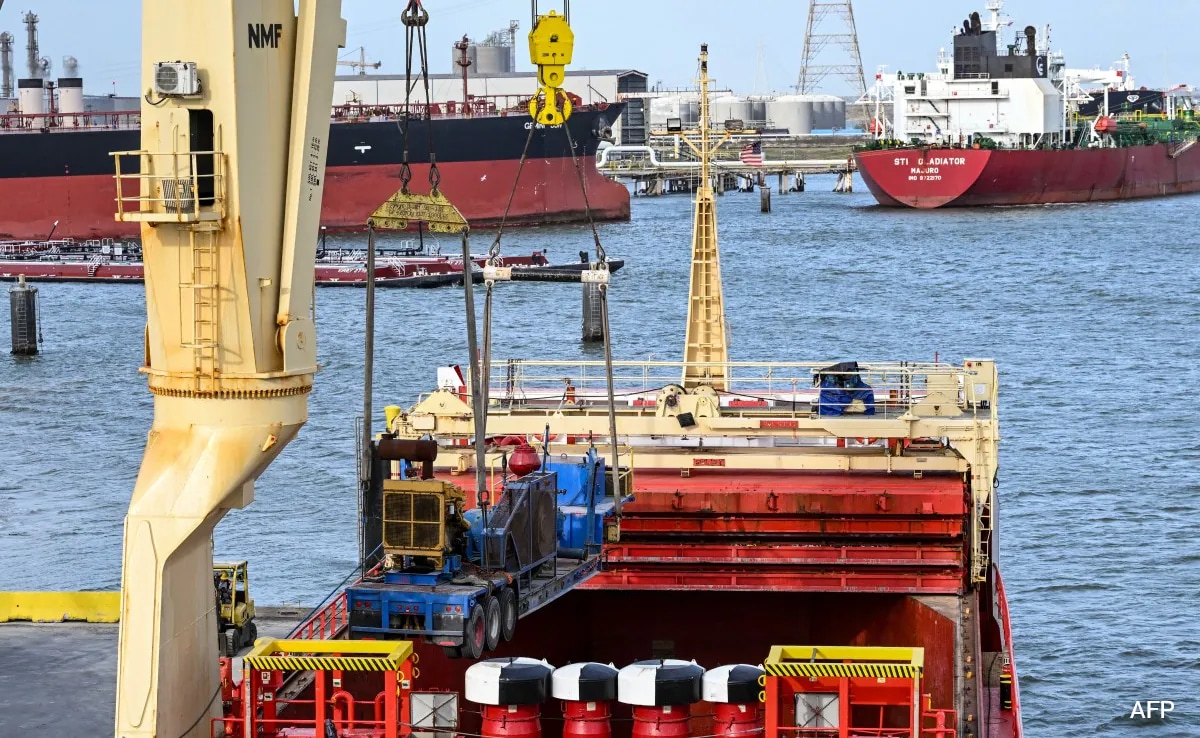
While the focus remains on the oil majors, the real winners are the service providers and the specialized shippers. These are the companies that move the rigs, fix the pipes, and manage the tankers. They operate in the shadows of the big headlines, taking their cuts in a market where competition is scarce and the need is desperate. They are the ones who turn the "uninvestable" into the profitable, charging premiums for the risk of working in a territory where the rule of law is a suggestion rather than a mandate.
The shift back to Venezuela is the ultimate proof that in the energy business, geology eventually beats ideology. You can sanction a country, but you cannot sanction the chemical requirements of a multi-billion dollar refinery. The American return to the Orinoco is not an olive branch; it is an admission that the world still runs on heavy oil, and the US cannot afford to leave the world’s biggest gas station to its rivals.
Watch the rig counts in the Zulia region. They tell a story that the press releases try to hide: the race is on to extract as much value as possible before the next inevitable crisis hits.