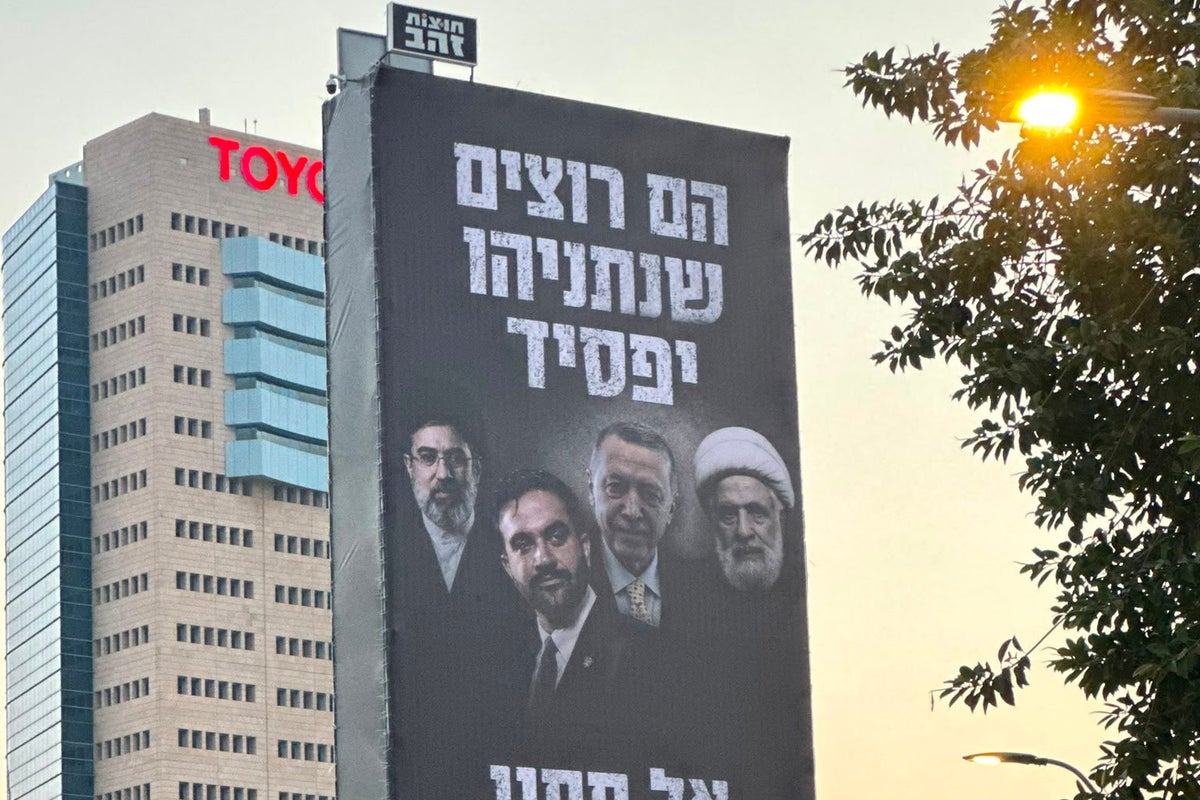
When a sitting Israeli prime minister plasters the mayor of New York City onto a massive Tel Aviv highway billboard next to Iran's supreme leadership, international politics has officially entered a bizarre new era.
Benjamin Netanyahu's Likud party launched this high-stakes campaign poster ahead of the upcoming October election, grouping NYC Mayor Zohran Mamdani alongside Iranian Ayatollah Mojtaba Khamenei, Turkish President Recep Tayyip Erdogan, and Hezbollah chief Naim Qassem. The bold banner spanning the Ayalon Highway carries a stark message: "They want Netanyahu to lose; don't let them win." Also making headlines recently: The Anatomy of Litigious Defense Why Subpoenaing the Executive Family Redefines Media Liability.
It is a stunning escalation. Domestic political survival in Israel is now being directly tied to transatlantic municipal squabbles and regional Mideast foes. But how did a New York City politician end up in the crosshairs of Israeli campaign strategists?
The Clash Between City Hall and Jerusalem
The feud didn't materialize out of thin air. It stems from a direct collision over international law, local jurisdiction, and starkly opposing stances on the Gaza conflict. Further insights into this topic are detailed by The New York Times.
Mamdani, who assumed office as New York's mayor earlier this year, recently ignited a firestorm by declaring that Netanyahu should face arrest if he visits Manhattan for the United Nations General Assembly. Pointing to the International Criminal Court arrest warrant issued against the Israeli leader for alleged war crimes, Mamdani stated bluntly that neither Netanyahu nor any other war criminal at large is welcome in New York City.
Netanyahu didn't let the remark slide. He fired back immediately, accusing the New York mayor of fomenting hate.
By elevating these municipal threats onto a national electoral billboard, Netanyahu's campaign is doing something very deliberate. They are trying to frame the upcoming vote as an existential referendum. If foreign leaders and progressive American mayors want him out, the logic goes, loyal Israelis should keep him in.
The Politics Behind the Poster
Israel's political landscape right now is fiercely volatile. Polls show Netanyahu's Likud party fighting hard for survival against surging opposition movements, such as Gadi Eisenkot’s Yashar party, which has been making major gains.
When a leader faces tough poll numbers, manufacturing an external enemy is a classic playbook move. By linking Mamdani to regional adversaries like Iran and Hezbollah, Likud is attempting to consolidate right-wing nationalist sentiment. It blurs the lines between a local American mayoral critic and armed militant groups, creating a unified narrative of external opposition.
Unsurprisingly, the stunt triggered instant pushback within Israeli politics. Rival politicians took to social media to mock and remix the billboard design. Opposition figures posted satirical alternatives highlighting domestic scandals and military concerns, proving that the poster's polarizing effect works both ways domestically.
What This Means Moving Forward
This campaign strategy signals a permanent merging of local American identity politics with Middle Eastern geopolitical warfare. When municipal leaders in Western capitals start weighing in on ICC arrest warrants, and foreign prime ministers feature those mayors in national election ads, the diplomatic boundaries are gone.
The immediate fallout will likely shadow any upcoming diplomatic visits to New York. Security protocols for international summits are already complex, but adding a local municipal government openly threatening the arrest of visiting heads of state turns routine UN logistics into a legal thriller.
Netanyahu is betting that hardline voters will rally around the image of a leader standing defiant against a global chorus of critics. Whether that gamble pays off at the ballot box remains to be seen, but the billboard has already guaranteed that the intersection of New York and Tel Aviv politics will stay fiercely contested for months.