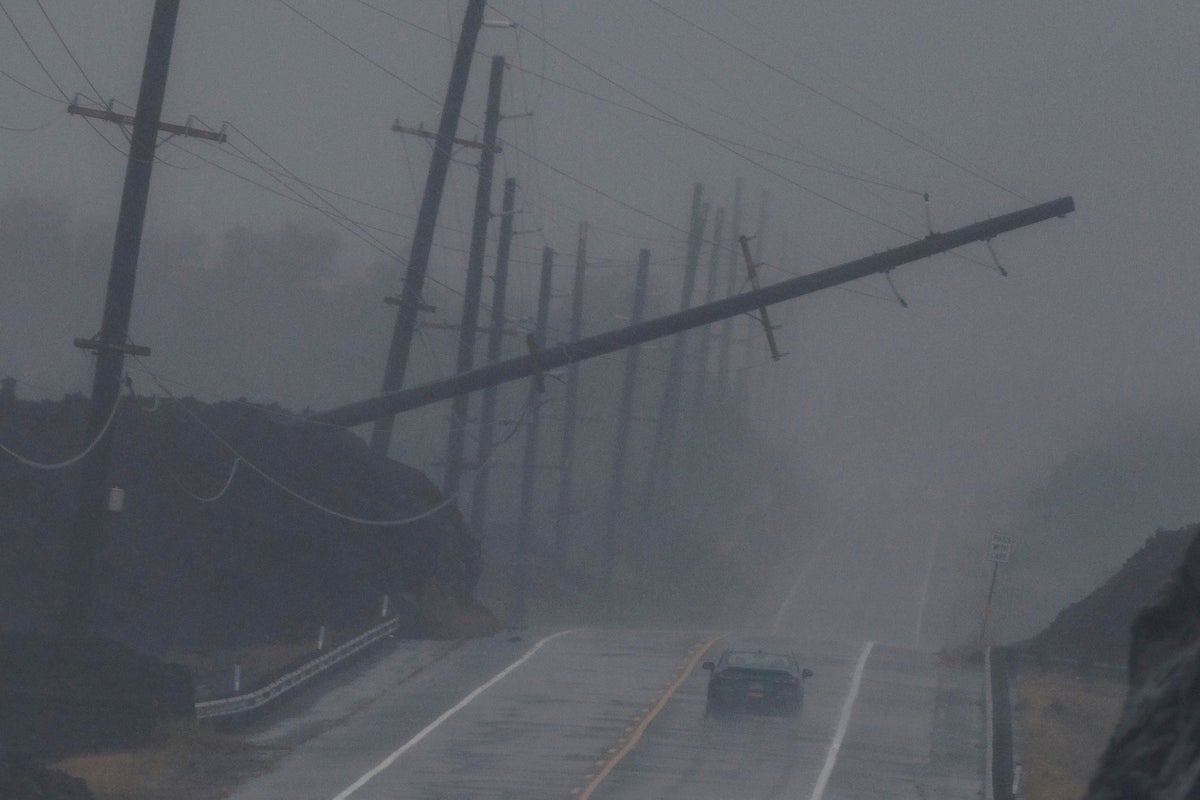
Hurricane Lala swept past Hawaii, leaving 180,000 residents without power and dozens of homes structurally compromised. But the storm was only half the catalyst. When tropical systems brush the Hawaiian archipelago, the resulting devastation is rarely just a meteorological event. It is an infrastructure reckoning. Decades of deferred maintenance, reliance on imported fossil fuels, and a fragile distribution network create a compounding disaster long before the first gale-force winds touch the coastline.
Power outages of this scale disrupt everything from hospital operations to municipal water pumps within hours. Understanding why Hawaii remains so vulnerable requires looking past the wind speeds and rainfall totals. The real story lies in the structural design of isolated island grids. You might also find this related story insightful: Inside the Strait of Hormuz Chokehold Where Diplomacy Meets Naval Brinkmanship.
The Geography of Vulnerability
Grid isolation changes every rule of disaster response. Unlike mainland utility companies that can draw power from neighboring states through vast transmission superhighways, Hawaiian utilities operate on synchronized micro-grids confined to individual islands. When a major transmission line goes down in rural Oahu or Maui, operators cannot simply reroute power from California or Oregon.
Maintenance costs run exceptionally high due to saltwater corrosion, mountainous terrain, and the need to ship every replacement transformer or utility pole across thousands of miles of ocean. Utility companies face an ongoing balancing act between maintaining affordable rates for consumers and hardening infrastructure against increasingly severe weather patterns. As discussed in detailed articles by USA Today, the effects are significant.
The geography creates a dangerous bottleneck. Single points of failure dictate the stability of entire regions. If a storm surge washes out the access road leading to a primary substation, repair crews remain grounded until heavy machinery clears the path. This physical isolation turns localized wind damage into prolonged territorial blackouts.
Grid Modernization and the Transition Stalemate
For years, state officials have pushed ambitious mandates for renewable energy integration. Solar adoption rates soar across residential rooftops, and wind farms dot the ridgelines. Yet, generation capacity does not equal grid resilience.
Adding intermittent renewable sources without simultaneously upgrading the underlying transmission backbone introduces complex management challenges. Traditional power plants act as heavy flywheels that stabilize grid frequency. As those facilities age or face decommissioning, system operators must rely on advanced software and battery storage to maintain stability.
Progress moves slowly. Bureaucratic hurdles, environmental reviews, and community pushback frequently stall major transmission upgrade projects. Residents want clean energy, but nobody wants high-voltage transmission towers cutting through their scenic valleys. This friction leaves the grid caught halfway between a centralized 20th-century fossil fuel model and a decentralized 21st-century micro-grid ideal. During a hurricane like Lala, that halfway state proves exceptionally costly.
The Cost of Deferred Maintenance
Undergrounding power lines solves many weather-related outages. It protects cables from falling eucalyptus branches and high-velocity wind gusts. Yet, undergrounding across the Hawaiian islands presents staggering financial and engineering hurdles. Volcanic rock formations require heavy blasting for every trench. Tropical moisture and shallow water tables accelerate corrosion in buried conduit systems.
Utilities routinely prioritize overhead line clearance, trimming trees and replacing aging wooden poles. But budget constraints often mean crews treat symptoms rather than systemic vulnerabilities. A wooden utility pole erected in the 1970s might pass a routine visual inspection while suffering from interior rot caused by constant humidity and termite activity. When a hurricane packs sustained winds exceeding eighty miles per hour, those hidden weaknesses trigger domino-effect failures across entire circuits.
The economic fallout hits tourism, local commerce, and emergency services simultaneously. Small businesses without backup generators lose thousands of dollars in spoiled inventory daily. Tourists stranded in resort areas face communication blackouts, complicating evacuation logistics and straining local municipal resources.
Toward a Hardened Archipelago
Rebuilding after Hurricane Lala requires more than replacing downed lines with identical hardware. True resilience demands structural decentralization. Microgrids capable of islanding—operating independently from the central grid during emergencies—must become the standard for critical infrastructure facilities like hospitals, water treatment plants, and emergency shelters.
Investment must shift toward smart-grid technologies that automatically reroute power around damaged sections before human operators can even assess the field damage. Battery storage facilities strategically placed across different regions can bridge the gap when central generation fails.
The storm has passed, but the structural flaws remain exposed. Fixing them demands capital, political will, and a hard look at the physical limits of island life.