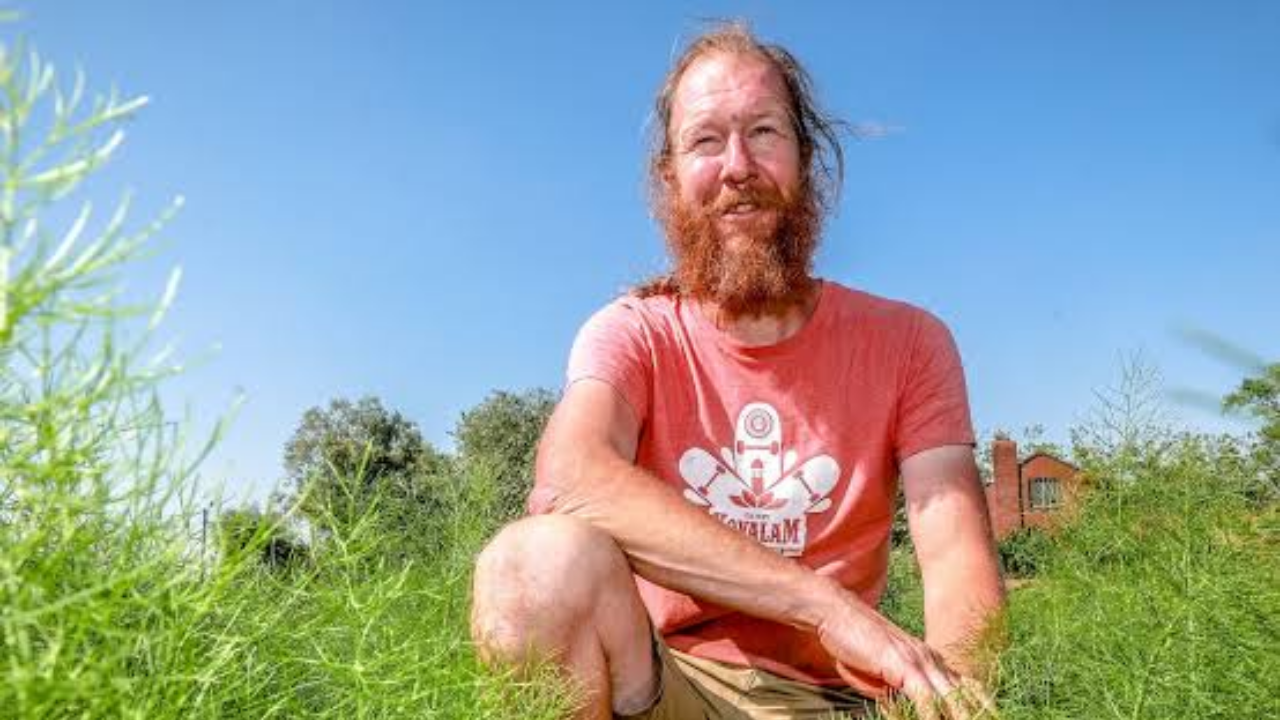
Scorching summer heatwaves usually send farmers scrambling for irrigation hoses and panicking over shrinking water quotas. Yet, on an 11-hectare organic farm in Ruddervoorde, Belgium, Diederik Steyaert watches the drought with absolute calm. He hasn't given his outdoor crops a single drop of extra water in 26 years. Walk across his fields on a blistering afternoon and the surface looks bone-dry and cracked. But push your fingers just five to ten centimeters deep into the earth, and you will find soil that is shockingly cool, dark, and moist.
Most modern agriculture relies on a broken premise. We treat soil like a sterile medium that simply holds a plant upright while chemical fertilizers and constant irrigation do all the heavy lifting. Steyaert proves that approach is completely backwards. By focusing entirely on living soil biology rather than battling nature, he maintains a self-sustaining underground water reservoir that laughs at seasonal droughts.
The Mechanics of Soil That Never Dries Out
You can't just turn off the water tomorrow and expect your garden or farm to survive. Steyaert's system at Bioboerderij De Zaaier took decades of strict, deliberate management to build. The core philosophy centers on maximizing organic carbon and protecting the complex web of earthworms, fungi, and bacteria beneath your boots.
When you plough fields every year, you rip apart fungal networks and expose buried organic matter to the scorching air, burning it off rapidly. Steyaert refuses to plough. Minimal soil disturbance keeps tiny air channels and biological pathways intact. Rainwater can plunge deep into the profile instead of sliding off a baked, compacted crust.
Instead of synthetic fertilizers, he relies on a specific type of organic amendment. He piles up grass clippings and lets them decompose for one to two years. This carbon-rich, low-nitrogen material absorbs rainfall like a giant sponge before it even hits the field. He spreads a modest amount—roughly 125 kilos per hectare—onto his land. That carbon acts as an anchor for moisture, trapping water through freezing winters and scorching summers alike.
Rethinking Weeds and Evaporation
Most growers wage a relentless, miserable war against weeds. Steyaert looks at them entirely differently. He views spontaneous green growth as natural ground cover that shields the earth from the sun and contributes to organic water storage rather than acting as an enemy.
Water management also comes down to stopping capillary action. When the sun beats down on bare soil, it draws moisture upward from the depths through tiny capillary tubes, where it evaporates into thin air. Steyaert uses a shallow hoeing bar with blades that slice through just the top two centimeters of soil. This tiny mechanical interruption breaks those capillary pathways. The top crust dries out completely, forming a natural thermal blanket that locks the vital moisture safely down below where plant roots can actually use it.
He even practices what he calls his jungle plot. Every decade, he lets a specific field lie completely fallow, allowing whatever native plants and wild species want to grow to take over. This lets the ecosystem reset itself entirely, proving that healthy land knows how to drink when it rains and hold onto that moisture without human intervention.
What You Can Learn From This Approach
You don't need eleven commercial hectares in West Flanders to apply these principles. Whether you manage a suburban backyard vegetable patch or a large homestead, the underlying math of soil carbon is impossible to ignore. Every single percentage point of organic matter you add to your soil increases its water-holding capacity by massive margins—translating to hundreds of thousands of liters of natural water retention per hectare.
Stop turning your garden soil over with a rototiller every spring. Leave your crop roots in the ground to rot naturally and feed the local earthworms. Cover your beds with carbon-heavy mulches like aged straw, chopped leaves, or decomposed grass clippings instead of leaving bare dirt exposed to the summer sky.
Building resilient earth takes years of patience, observation, and structural changes. But the payoff is worth every bit of effort. Stop fighting dry weather with endless watering cans and start building soil that can hydrate itself.