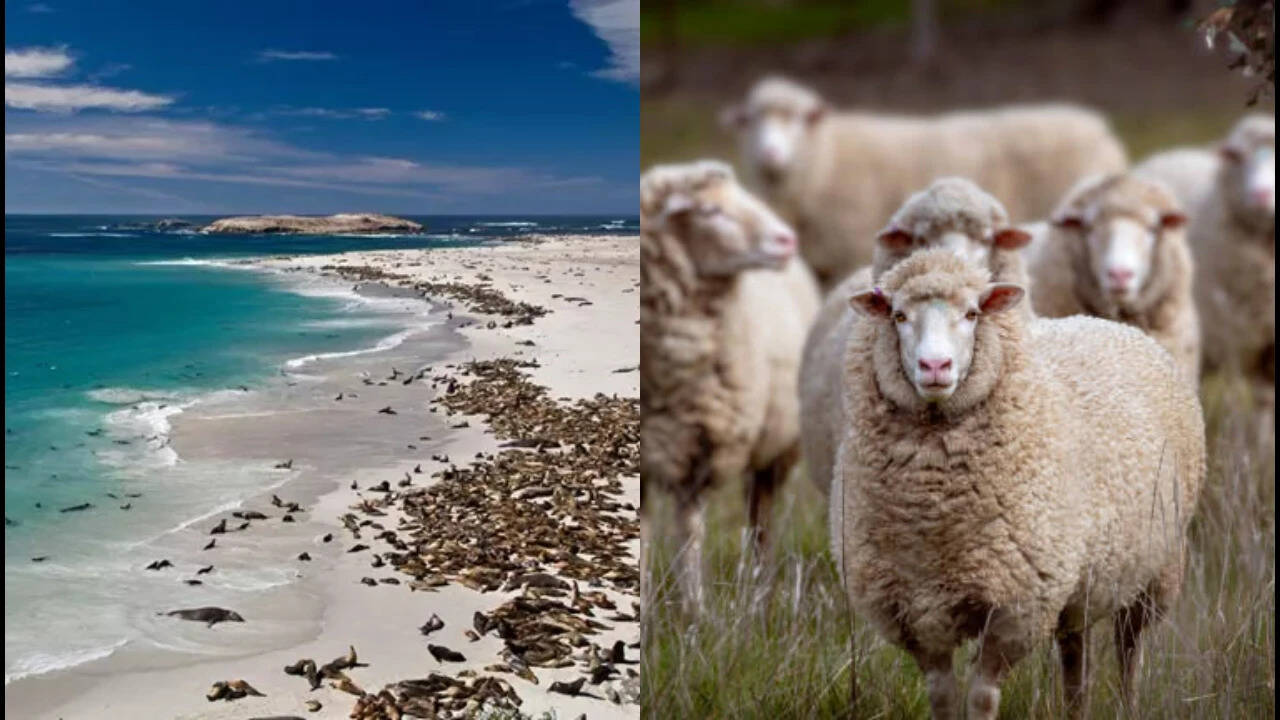
Forty-five sheep stepped onto San Miguel Island in 1850. By 1862, that tiny herd exploded into six thousand animals.
That is not just a quirky statistic from California history. It's a masterclass in how fast an ecosystem can unravel when you introduce the wrong species without any predators to keep them in check. If you look at the Channel Islands today, you see a heavily managed landscape. You rarely hear about the sheer biological devastation those early livestock ventures caused.
Let's look at what actually happened out there in the wind-whipped Pacific.
The Setup on San Miguel Island
San Miguel Island sits at the westernmost edge of the Channel Islands chain off the coast of Southern California. It is brutal out there. High winds blow constantly, fog rolls in off the cold ocean currents, and fresh water is scarce.
Early ranchers didn't care about the harsh climate. They saw wide-open grasslands and smelled profit. In 1850, a local rancher shipped forty-five sheep across the Santa Barbara Channel.
The sheep didn't just survive. They thrived.
Why? Because San Miguel had zero natural predators for sheep. No wolves, no coyotes, no mountain lions. Food was plentiful, space was wide open, and the climate was mild enough for year-round grazing.
The Math of Biological Explosion
Growth rates in closed ecosystems get scary fast. When a population faces zero resistance, exponential curves take over.
Forty-five sheep became hundreds within a couple of seasons. By 1862, roughly twelve years after the initial drop-off, census estimates put the population at six thousand.
Think about the physical impact. Six thousand hungry sheep eating everything in sight on an island only about eight miles long and four miles wide. They didn't just graze. They ate plants down to the bare dirt, ripped up root systems, and loosened the fragile topsoil.
Without plant roots to hold the ground together, the famous island winds took over.
Dust Storms and Moving Sand
The environmental collapse happened in slow motion and then all at once.
The denuded landscape turned into moving sand dunes. Huge tracts of San Miguel Island transformed into shifting deserts. Historic shell middens left behind by the Indigenous Chumash people were unearthed, scattered, and destroyed by the wind because the protective vegetative cover was gone.
Ranching operations tried to adapt, but the island was literally blowing away beneath their feet. The carrying capacity crashed because the sheep ate their own food supply out of existence.
It's a brutal reminder that nature doesn't negotiate with overpopulation.
What We Learned the Hard Way
Eradicating introduced grazers from fragile islands became a massive conservation priority decades later. Organizations like the National Park Service, which now manages San Miguel as part of Channel Islands National Park, had to spend millions of dollars and decades of hard labor reversing the damage.
Removing feral livestock from islands across the world taught biologists a hard truth. Getting rid of the animals is only step one. Restoring the native flora and stopping massive soil erosion takes generations of active intervention.
Next time you hear about a simple introduction of livestock to a new territory, remember the forty-five sheep. Small numbers mean nothing when the conditions are right for an explosion. Keep a close eye on how human activity disrupts natural balances, because nature always sends the bill eventually.