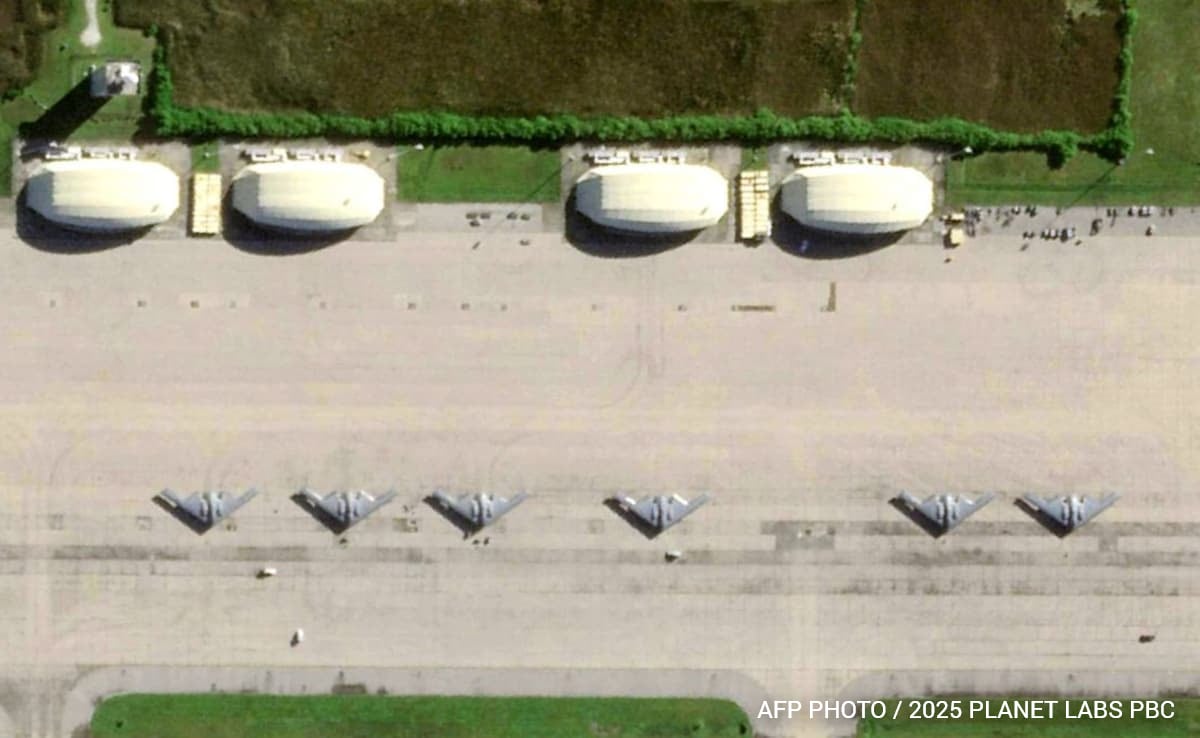
The recent deployment of long-range ballistic missiles and loitering munitions toward maritime targets in the Indian Ocean represents a fundamental shift in the geography of Middle Eastern proxy conflicts. This is not merely a localized flare-up; it is a calculated stress test of the "Blue Water" insulation that has historically protected Western logistical hubs. When land-based strike capabilities from the Iranian plateau or Houthi-controlled territories extend their reach beyond 1,500 kilometers, the traditional sanctuary of the central Indian Ocean—specifically the Diego Garcia complex and the surrounding sea lanes—enters a zone of contested denial.
The strategic calculus behind these strikes rests on three operational pillars: the expansion of the threat envelope, the degradation of the intercept-to-cost ratio, and the signaling of "Deep Strike" parity.
The Triad of Maritime Interdiction
To understand the mechanics of this expansion, one must deconstruct the specific technologies enabling these long-range engagements. The transition from short-range tactical rockets to mid-range ballistic missiles (MRBMs) and high-endurance Unmanned Aerial Vehicles (UAVs) changes the risk profile for commercial and military shipping.
1. Kinetic Reach and the 2000km Threshold
The primary constraint on non-state or regional actors has historically been the "horizon of influence." By utilizing platforms like the Kheibar Shekan or similar long-range variants, an actor can now hold targets at risk that were previously considered "Rear Area" assets.
- Guidance Systems: Modern iterations of these missiles utilize Global Navigation Satellite Systems (GNSS) combined with Inertial Navigation Systems (INS). While Western electronic warfare (EW) can spoof GNSS, the INS provides enough terminal accuracy to threaten large, stationary targets or slow-moving carrier strike groups.
- Terminal Maneuverability: The introduction of maneuverable reentry vehicles (MaRVs) complicates the math for Aegis-equipped destroyers. If a missile can adjust its flight path in the final seconds of descent, the probability of a successful intercept drops significantly.
2. The Economic Attrition of Air Defense
There is a widening delta between the cost of the effector and the cost of the interceptor. A Shahed-type loitering munition may cost between $20,000 and $50,000. In contrast, an RIM-162 Evolved SeaSparrow Missile (ESSM) or an SM-2 interceptor costs several million dollars per unit.
The strategy here is not necessarily to sink a vessel with every shot, but to deplete the magazine depth of Western naval assets. Once a destroyer exhausts its Vertical Launch System (VLS) cells, it is forced to retreat to a friendly port for a multi-day rearming process, creating a "protection vacuum" in the theater.
3. Logistical Chokepoint Pressure
The Indian Ocean serves as the connective tissue between the Strait of Hormuz, the Bab el-Mandeb, and the Malacca Strait. By demonstrating the ability to strike targets near the Chagos Archipelago or the Maldives, an adversary signals that there is no safe harbor for energy transit. This forces shipping companies to bake a "conflict premium" into insurance rates, effectively imposing a tax on global trade without requiring a full-scale naval blockade.
The Diego Garcia Vulnerability Matrix
Diego Garcia has long functioned as the "Unsinkable Aircraft Carrier" for US-UK operations. Its value lies in its isolation. However, isolation becomes a liability when the adversary achieves long-range precision.
Functional Bottlenecks
- Runway Density: The base relies on a limited number of runways. A successful strike using sub-munitions—designed to crater tarmac rather than destroy buildings—could mission-kill the entire facility for weeks.
- Fuel Storage Saturation: The vast fuel farms required for B-52 and B-2 bomber operations are soft targets. Unlike hardened bunkers, large-scale petroleum, oil, and lubricant (POL) facilities are difficult to defend against simultaneous swarm attacks from multiple vectors.
- Supply Line Fragility: The base is not self-sustaining. It requires constant replenishment via sea. If the approach corridors are contested by anti-ship ballistic missiles (ASBMs), the base’s operational tempo decays.
The Intelligence-Strike Contradiction
A significant gap exists between the ability to launch a missile and the ability to find, fix, and finish a moving target at 2,000 kilometers. This is the "kill chain" problem. To hit a moving ship in the Indian Ocean, an actor needs real-time Over-the-Horizon (OTH) targeting.
This is currently achieved through three primary mechanisms:
- Commercial Satellite Imagery: The democratization of high-resolution SAR (Synthetic Aperture Radar) data allows actors to track large vessel movements with a latency of only a few hours.
- AIS Spoofing and Monitoring: The Automatic Identification System (AIS) used by commercial ships is easily monitored. Even when ships go "dark," their last known position and projected speed allow for the calculation of a "box of uncertainty" that can be searched by a UAV's onboard sensors.
- Human Intelligence (HUMINT) and Coastal Observation: Small, innocuous fishing dhows equipped with modern radio and radar can act as forward observers, passing coordinates back to land-based missile batteries.
Evaluating the Escalation Ladder
We are witnessing a transition from "Grey Zone" warfare to "Open Theatre" contested logistics. The shift is defined by a move away from deniability. When a state or its direct proxies fire missiles at a sovereign base or its surrounding waters, they are testing the threshold of the "Red Line."
The current Western response—Operation Prosperity Guardian and similar task forces—is reactive. It prioritizes the defense of the asset over the destruction of the source. This creates a strategic imbalance where the attacker holds the initiative and chooses the timing of every engagement, while the defender must remain at 100% readiness indefinitely.
The Failure of Conventional Deterrence
Traditional deterrence fails in this scenario because the cost of retaliation is disproportionately high. If the US or UK conducts a massive strike on the launch sites, they risk a regional conflagration that could close the Persian Gulf entirely. The adversary understands this hesitation and uses it as a shield to continue low-frequency, high-impact provocations.
Strategic Realignment Requirements
The expansion of the war to the Indian Ocean necessitates a structural shift in maritime security. Relying on carrier strike groups for static defense is an inefficient use of force.
Hardening the Indian Ocean Assets:
Future operations must prioritize the deployment of Directed Energy Weapons (DEW) to reset the cost-curve of air defense. High-power lasers and microwave systems offer a "near-infinite magazine" for countering drone swarms and subsonic cruise missiles at a fraction of the cost of kinetic interceptors.
Decentralized Logistics:
The reliance on single-point hubs like Diego Garcia must be mitigated by "Distributed Maritime Operations." This involves utilizing smaller, mobile lily-pads and pre-positioned supply ships rather than massive, fixed installations that serve as magnet targets for ballistic strikes.
Kinetic Source Suppression:
The only way to break the cycle of maritime interdiction is to transition from an "intercept-at-sea" posture to a "strike-at-source" doctrine. This requires the clear communication that any launch toward international shipping lanes or sovereign bases will trigger an immediate, automated kinetic response against the specific launch infrastructure, regardless of political sensitivities. The current model of "intercept and ignore" only invites the next iteration of escalation.
The security of the Indian Ocean is no longer guaranteed by distance. It must now be defended through a combination of technological superiority in terminal defense and a credible, rapid-response offensive capability that targets the sensor-to-shooter loop at its origin.