The traditional automotive economy of scale has broken. For decades, the Volkswagen Group operated on a structural thesis: aggregate massive global volume across multiple distinct brands, unify the underlying architectures, and utilize the purchasing power to suppress marginal costs. That model has run into a mathematical wall. The company's recent operational updates reveal an 8.6% drop in second-quarter group sales to under 2.1 million vehicles, anchored by a severe 30% reduction in Chinese market volume.
In response, CEO Oliver Blume has initiated a structural consolidation designed to slash the group's global product portfolio by up to 50% and reduce offering complexity—the permutations of options and trims available to consumers—by up to 75%.
This is not a routine cyclical correction. It is an emergency re-engineering of an overcapitalized fixed-cost structure that can no longer find the margins required to finance a dual-powertrain transition.
The Cost Function of Overcapacity
To understand why a major automaker must contract its catalog, one must analyze its fixed asset utilization. Volkswagen is evaluating a reduction in annual production capacity from 10 million vehicles to 9 million. In capital-intensive manufacturing, underutilized factories serve as severe cash drains due to fixed depreciation, maintenance, and structural labor costs.
The automotive cost function is governed by the Minimum Efficient Scale (MES)—the lowest point on the long-run average cost curve where a plant achieves maximum economies of scale. When global volume drops, plants slip to the left of the MES curve, causing the average cost per unit to spike.
The structural bottlenecks are concentrated in four core areas:
- Platform Proliferation without True Commonality: While Volkswagen pioneered shared architectures like the MQB and MEB, the sheer volume of regionalized exterior sheets, unique interior components, and localized software configurations eroded the expected purchasing synergies. Every custom component introduces validation, tooling, and supply chain management costs.
- The Chinese Margins Disconnect: Volkswagen’s joint ventures in China historically acted as a high-margin cash engine that cross-subsidized lower-margin domestic operations. The domestic shift in China toward local electric vehicle ecosystems has permanently broken this dynamic, causing a 20% decline in Q1 sales revenue from equity-accounted Chinese entities.
- The Dual-Powertrain Capex Burden: Managing a legacy internal combustion engine (ICE) business alongside a capital-heavy battery electric vehicle (BEV) rollout effectively doubles the product development lifecycle cost. The delayed Software-Defined Vehicle (SDV) platform architecture, managed under the CARIAD unit, lost €420 million in Q1 alone, highlighting the immense cost of replicating software engineering stacks.
- Structural Labor Inelasticity: Volkswagen's operating model is historically bound to German co-determination laws, meaning labor representatives hold significant power on the supervisory board. This creates a highly inelastic cost structure where labor cannot easily be scaled down in response to softening market demand.
The proposed strategy to downsize global headcount by up to 100,000 positions and target the closure of major German facilities—including Zwickau, Emden, and Audi's Neckarsulm plant—is a direct attempt to reset the corporate break-even point.
The Portfolio Complexity Matrix
The primary lever for this corporate turnaround is portfolio rationalization. A historical breakdown of Volkswagen’s brand architecture reveals a highly cannibalistic product mix:
| Brand Group | Key Manifestation | Operational Vulnerability | Strategic Remedy |
|---|---|---|---|
| Core (VW, Skoda, SEAT/Cupra) | Overlapping compact and mid-size hatchbacks/SUVs | Extreme internal margin compression; low pricing power against Chinese imports | 75% reduction in option configurations; elimination of low-volume nameplates |
| Progressive (Audi) | Premium executive saloons and electric crossovers | Slower EV software iteration; 8% volume drop in key quarters | Platform sharing with Porsche; scaling down specialized domestic factory footprints |
| Sport Luxury (Porsche, Lamborghini) | High-margin performance vehicles and luxury SUVs | High vulnerability to supply chain component limits and luxury sector cool-downs | Insulation of core capital; protection of unique engineering architectures |
This portfolio structure demonstrates that as complexity scales linearly, the associated overhead scales exponentially. A 75% reduction in offering complexity frees up engineering hours, reduces factory floor tooling switch-over times, and shrinks the capital tied up in replacement parts inventory.
Structural Trade-offs and Strategic Pitfalls
The strategy of aggressive product pruning carries deep structural risks that a standard financial analysis often ignores.
First, closing specialized EV hubs like Zwickau—which was converted to electric-only production at great capital expense—creates massive stranded assets. Writing off modern infrastructure while simultaneously investing billions into upcoming software platforms degrades immediate return on invested capital (ROIC).
Second, narrowing product variance can alienate specific regional buyer segments. The United States, Europe, and China demand distinctly different vehicle dimensions, infotainment features, and suspension tunings. Moving toward highly standardized "global models" risks creating vehicles that are optimized for corporate balance sheets but poorly matched with localized consumer preferences.
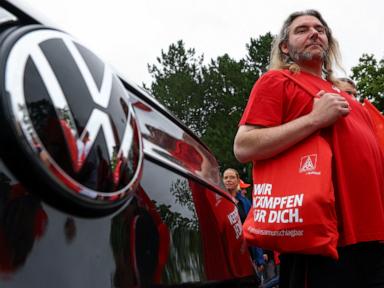
Finally, the impending conflict with the IG Metall union introduces severe execution risks. Inelastic labor agreements mean that any attempt to push through 100,000 global job cuts will likely result in prolonged strikes, production stoppages, and political friction with the state of Lower Saxony, a major shareholder. This friction delays cost-saving benefits, burning through valuable net liquidity.
The Capital Allocation Directive
To survive this transition, executive leadership must bypass superficial cost-cutting and execute a precise, three-part capital allocation play:
- Impose a Hard Ceiling on ICE R&D: Halt all foundational internal combustion engine development. Legacy platforms must be placed on a strict maintenance-only budget, using free cash flow entirely to defend core European market share and finance the EV architecture.
- Enforce Platform Monism across Premium Brands: Audi and Porsche must completely unify their software and powertrain architectures, eliminating separate brand-specific engineering paths. The luxury tier must rely strictly on unique software skins and exterior design to preserve brand equity, while using identical internal hardware.
- Execute an Aggressive Sourced-Platform Strategy in China: Rather than spending billions attempting to out-engineer native Chinese digital ecosystems, Volkswagen must scale up its utilization of local partnerships—such as its investment in Xpeng—to source competitive EV platforms directly for the Asian market.
Squeezing out marginal overhead in Europe is irrelevant if the company continues to lose its primary volume engine abroad.
This deep-dive video into Volkswagen's structural overhaul offers additional context on the internal corporate debates surrounding factory closures, union standoffs, and potential brand spinoffs.