The Anatomy of a Shipping Panic
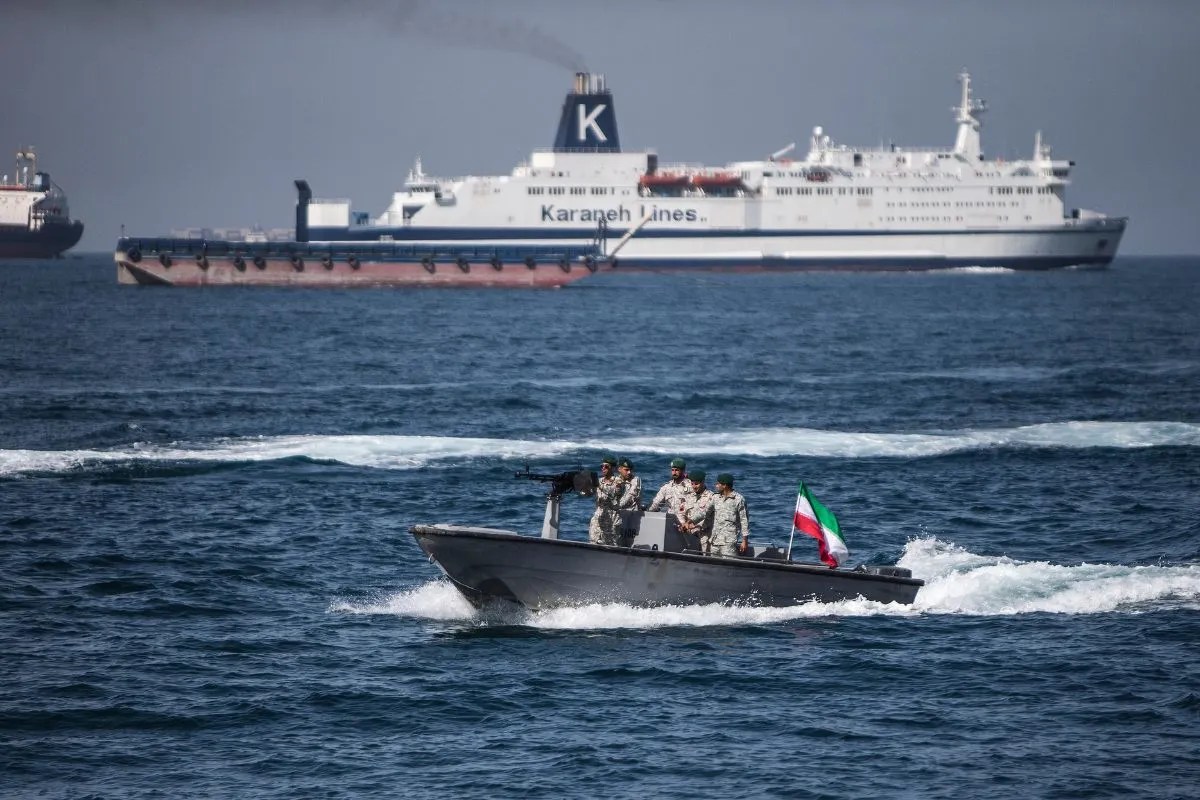
Mainstream media loves a good apocalypse. When geopolitical friction flares up in the Middle East, the immediate reaction is to scream that the sky is falling on global trade. The recent breathless reporting on the US-Iran friction and the supposed trapping of nine Indian vessels in the Strait of Hormuz is a prime example of this lazy consensus. The narrative is always the same: Hormuz closes, Indian energy supplies vanish, and the economy grinds to a halt.
It is a completely flawed premise. For a closer look into similar topics, we suggest: this related article.
The panic merchants want you to believe that a physical choke point dictates the absolute survival of a trillion-dollar economy. They look at a map, see a narrow strip of water, and assume it functions like a medieval castle gate. I have spent two decades analyzing maritime supply chains and energy infrastructure. If there is one thing the modern global economy excels at, it is routing around damage. The idea that nine stranded vessels—or even thirty-seven—will trigger an unmitigated disaster for India is a fundamental misunderstanding of modern commodity markets, logistics, and statecraft.
Let's dissect the reality behind the noise. For further background on this issue, in-depth analysis is available on MarketWatch.
The Illusion of the Stranded Fleet
First, we need to address the definition of an "Indian ship." The public hears that phrase and imagines a vessel owned by the Indian government, crewed entirely by citizens, carrying goods solely for domestic use.
The shipping industry does not work this way.
Maritime trade relies on a complex web of flags of convenience, open registries, and fractional ownership. A ship trapped in the Gulf might be flagged in Panama, owned by a Greek conglomerate, chartered by a Swiss trading house, and carrying crude destined for an international refinery cluster that may or may not end up in Mumbai.
When commentators calculate the immediate threat based on the physical location of specific hulls, they miss the systemic elasticity of international shipping.
- The Fleet Displacement Factor: Shipping assets are highly fungible. If a specific corridor faces a temporary halt, charterers do not simply sit on their hands. They utilize swap agreements. Cargoes already outside the conflict zone are redirected to destinations facing deficits, while trapped vessels are written off as temporary operational delays covered by hull and machinery insurance.
- The War Risk Premium Realities: Lloyd’s Market Association Joint War Committee regularly updates its listed areas of perceived risk. When a region is flagged, insurance premiums spike. This is an economic friction, not a physical barrier. Higher premiums alter the margins; they do not halt the flow of commodities.
During the Tanker War of the 1980s, despite hundreds of strikes on merchant vessels, oil exports through the Gulf never dropped to zero. The market priced in the risk, the crews took the bonuses, and the oil kept moving. To suggest that the current scenario will completely sever India's energy lifeline ignores forty years of maritime logistical evolution.
The Diversification Weapon
The argument that India is uniquely vulnerable to a Hormuz shutdown assumes the country’s energy procurement strategy is still stuck in the year 1999. It is not.
For the past decade, Indian state-owned refiners and private giants have systematically decoupled themselves from a singular dependence on the Persian Gulf.
India's Crudes Sourcing Shift (Approximate Structural Allocation)
+-------------------+-------------------+-------------------+
| Region            | Historic Share    | Modern Share      |
+-------------------+-------------------+-------------------+
| Middle East       | ~70-75%           | ~45-50%           |
| Russia/CIS        | <2%               | ~35-40%           |
| Americas/Africa   | ~20%              | ~15-20%           |
+-------------------+-------------------+-------------------+
The rapid restructuring of oil imports over the last few years proves that the domestic refining complex can adapt to massive geopolitical shocks within weeks, not months. The massive inflows of discounted Urals and ESPO crude demonstrated that the physical configuration of Indian refineries—specifically advanced complexes like Jamnagar and Vadinar—can handle highly varied crude assays. They are not locked into regional Middle Eastern grades like Arab Light or Basrah Medium.
If Hormuz closes tomorrow, the immediate response will not be fuel rationing at domestic pumps. The response will be an automated pivot to Atlantic Basin crudes, West African grades, and expanded volumes from Latin America. The global spot market is deep, liquid, and entirely unsentimental. Price arbitrage solves supply deficits far faster than politicians can write press releases.
Dissecting the Strategic Petroleum Reserve Fallacy
A common counterargument is that India's Strategic Petroleum Reserve (SPR) capacity is insufficient compared to Western nations. Critics point out that India holds roughly 5.33 million metric tonnes of crude in underground rock caverns—equivalent to less than 10 days of net imports. They claim this short window means any prolonged disruption will cause immediate economic collapse.
This criticism relies on a basic misunderstanding of how strategic reserves operate during a trade disruption.
An SPR is not designed to replace 100% of national consumption during a crisis. It is used to smooth out sudden supply shocks while alternative logistics are arranged. Imagine a scenario where a sudden blockade cuts off a specific trade route. The state does not drain the caverns to maintain business-as-usual consumption.
Instead, a coordinated response occurs:
- Commercial Inventory Drawdown: Private and state-run refiners maintain substantial operational inventories (often 30 to 60 days of feedstock) that are separate from the government's SPR.
- Demand Destruction Mitigation: Minor price adjustments at the retail level naturally curb non-essential consumption, buying additional operational runway.
- High-Seas Diversion: Hulls already en route to non-disrupted regions are bought out on the water via high-sea sales and diverted to Indian ports.
The SPR is a bridge, not a permanent substitute. Comparing India's reserve days to the US Strategic Petroleum Reserve ignores the structural differences in how the two countries consume and refine energy. The US is a massive producer and exporter; India is a processing hub that extracts immense economic value from refining raw crude and exporting high-value products.
Why Iran Cannot Afford to Seal the Strait
The entire fear narrative rests on the assumption that Iran will simply turn off the tap at the Strait of Hormuz like a garden hose. This point of view ignores the absolute economic reality of the Iranian state.
Iran's economy, even under severe international sanctions, depends entirely on its ability to move commodities through maritime routes. A total closure of the Strait of Hormuz is an act of economic self-immolation.
- The Chinese Factor: A massive portion of Iran's illicit and official oil exports goes directly to independent refiners in China. Closing the strait means blocking its own primary source of hard currency and deeply angering its most powerful geopolitical patron. Beijing will not tolerate a total halt to regional shipping that threatens its own economic stability.
- The Domestic Pressure: The Iranian regime requires constant cash flow to fund its internal security apparatus and regional proxies. A self-inflicted blockade cuts off that revenue instantly.
When Tehran threatens to close the strait, it is practicing asymmetric deterrence, not outlining a viable operational strategy. They know that the threat of closure drives up premium prices and causes panic in Western capitals, giving them leverage. Actually executing a permanent closure invites a devastating conventional military response from a global coalition that includes every major consuming nation, not just the West.
The Infrastructure Alternatives No One Talks About
Even if we accept the worst-case scenario of a temporary physical disruption in the strait, the energy architecture of the Middle East is not entirely dependent on that single body of water. Over the last three decades, hundreds of billions of dollars have been spent building bypass infrastructure specifically designed to mitigate this exact risk.
Consider the physical pipelines that cut across the Arabian Peninsula:
- The East-West Crude Pipeline (Petroline): Saudi Arabia operates a massive 1,200-kilometer pipeline system that moves crude from its eastern oil fields directly to the port of Yanbu on the Red Sea. This system can move up to 5 million barrels per day completely bypassing Hormuz.
- Abu Dhabi Crude Oil Pipeline: The UAE operates a pipeline with a capacity of 1.5 million barrels per day that connects the Habshan fields directly to the port of Fujairah, which sits safely outside the Persian Gulf on the Gulf of Oman.
Major Hormuz Bypass Infrastructure Capacity
+---------------------------------------+--------------------------+
| Pipeline System                       | Operational Capacity     |
+---------------------------------------+--------------------------+
| Saudi East-West Petroline             | ~5.0 Million bpd         |
| Abu Dhabi Habshan-Fujairah Pipeline    | ~1.5 Million bpd         |
| Iraq-Turkey Pipeline (Northern Route) | ~0.5 Million bpd         |
+---------------------------------------+--------------------------+
While these systems cannot absorb the total daily volume that normally moves through Hormuz, they ensure that a significant baseline of production remains accessible to the Indian Ocean. Indian buyers, with their geographical proximity to Fujairah and Yanbu, are perfectly positioned to capture these bypassed volumes before they ever have to travel around Africa or into the Atlantic.
The Real Risk is Financial, Not Physical
If you want to worry about something, stop looking at the number of ships stuck in the mud or idling outside Oman. The real vulnerability for India during a conflict of this nature is not a physical shortage of molecules; it is the financial volatility of the global banking system and the price transmission mechanism.
When geopolitical anxiety spikes, the price of Brent crude surges due to a fear premium, not an actual deficit in supply. This price surge hits India through its current account deficit and the depreciation of the Rupee.
The mechanism is straightforward:
- Dollar Strength: Global capital flees to safety, strengthening the US Dollar.
- Import Bill Inflation: Since oil is priced in greenbacks, India's import bill expands exponentially even if the volume of imported oil remains completely flat.
- Domestic Inflation: The increased cost of transport fuels filters through the domestic supply chain, raising the cost of basic goods and forcing the central bank to maintain high interest rates.
This is a structural financial challenge, not a logistical crisis involving trapped cargo ships. Treating it as a physical supply problem leads to flawed policy prescriptions, like panic-buying expensive spot cargoes or hoarding inventory at the wrong point in the market cycle.
The Flawed Questions We Keep Asking
The public discourse around energy security remains stuck in a zero-sum, twentieth-century mindset. People keep asking: How will we get our oil if the ships are stuck?
The correct question is: How quickly can our financial and refining systems reprice risk and shift supply chains?
The media's focus on nine Indian ships in Hormuz is a classic example of looking at the finger pointing at the moon rather than looking at the moon itself. Those ships are minor line items on a global corporate balance sheet. They are not the arbiters of national destiny.
Stop analyzing geopolitical crises through the lens of localized logistics. The global energy network is an adaptive, self-healing organism driven by price signals. When one node goes dark, the rest of the network reconfigures at lightning speed to exploit the new arbitrage opportunities. India's energy security is protected by its massive refining capability, its financial agility, and the sheer diversity of the global oil market—not by the clear passage of a single shipping lane.