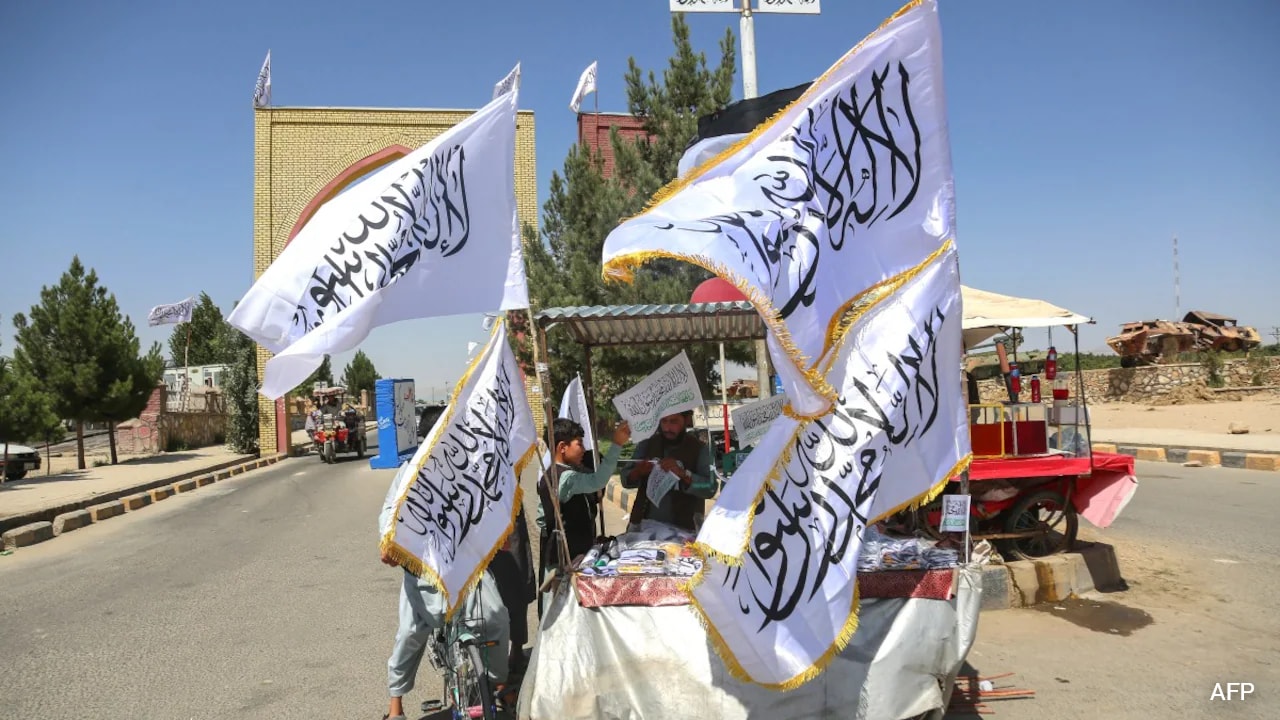
Five years after the collapse of the Islamic Republic of Afghanistan, the de facto authorities have institutionalized a system of governance defined by strict ideological centralization, the systematic extraction of internal revenue, and the complete structural exclusion of half the population from public life. Analyzing this period requires moving past generalized political commentary to examine the hard mechanics of state survival, economic contraction, and demographic strain. The administration in Kabul operates not as a temporary emergency council, but as a consolidated theocratic regime attempting to balance domestic fiscal self-sufficiency with total international diplomatic non-recognition.
The Fiscal Architecture and Macroeconomic Reality
The macroeconomic framework of contemporary Afghanistan functions under a severe structural contradiction. On one hand, the central administration has demonstrated unexpected efficiency in domestic revenue collection, largely driven by centralized customs enforcement at trade borders and rigid internal tax administration. These collections have historically funded the baseline operations of the public security apparatus and basic civil administration without collapsing into hyperinflation. Low domestic inflation and stabilized currency exchange rates in urban centers present an illusion of monetary health.
On the other hand, this nominal stability masks a profound structural deficit. Afghanistan's trade deficit expanded significantly, driven by an overwhelming reliance on imported goods coupled with stagnant domestic industrial output. Real GDP growth remains outpaced by rapid population expansion, resulting in a persistent contraction of real GDP per capita.
The macroeconomy relies on two external buffers that are actively eroding:
- The Humanitarian Aid Pipeline: Despite steep international funding cuts, multilateral assistance remains the primary mechanism preventing total caloric collapse across rural and urban settlements.
- Informal Remittances and Cross-Border Flows: Financial transfers from the diaspora and cross-border trade networks sustain basic household liquidity in the absence of a functional domestic banking sector.
When foreign assistance contracts, the internal purchasing power of households disintegrates immediately. More than three-quarters of the population faces severe subsistence insecurity, with household debt levels exceeding eighty percent as families resort to negative coping mechanisms to purchase basic food items.
The Human Capital Cost Function
The long-term trajectory of the Afghan state is constrained by the systematic dismantling of its human capital. The administrative mechanism for this dismantling rests on nearly one hundred restrictive decrees issued since August 2021, which target the educational and economic mobility of women and girls.
From an economic perspective, this policy functions as a self-imposed supply-side shock. The exclusion of women from secondary schools, universities, and the formal labor market creates an immediate productivity loss and precipitates a multi-generational decline in potential gross domestic product. The restriction of female professionals within non-governmental organizations and healthcare facilities directly inhibits service delivery, particularly in maternal and child health sectors. Consequently, health indicators are deteriorating, and hundreds of primary healthcare clinics have shuttered due to a combination of funding shortfalls and operational constraints imposed on female staff.
The cost function of this human capital destruction involves three compounding variables:
- Erosion of Institutional Knowledge: The flight of educated and skilled personnel following the 2021 transition left a permanent administrative vacuum that lower-level civil servants cannot fill.
- Healthcare Vulnerability: Reduced clinical footprints across underserved provinces leave millions without primary medical access, spiking acute malnutrition rates among children.
- Demographic Strain via Returnees: The forced or voluntary mass return of millions of refugees from neighboring states like Pakistan and Iran places an unsustainable burden on housing, water tables, and local labor markets where formal employment sits near zero.
Security Centralization and the Legitimacy Deficit
Domestically, the regime has prioritized absolute security monopolies, utilizing its internal security forces to suppress armed opposition and eliminate rival militant factions, most notably the Islamic State Khorasan Province. This security model relies on total surveillance, restrictions on public assembly, and the subordination of the judiciary to executive directives rooted in a hardline interpretation of Islamic law.
However, this internal security does not translate into political legitimacy on the global stage. No sovereign government—including regional allies and Muslim-majority nations—has formally recognized the Islamic Emirate of Afghanistan. While several nations maintain functional diplomatic presences, exchange ambassadors, and manage bilateral trade in Kabul, formal recognition is withheld pending structural concessions regarding human rights, inclusive governance, and educational access.
This diplomatic isolation creates a permanent ceiling on foreign direct investment. Global financial institutions, multinational corporations, and development banks cannot deploy capital into a jurisdiction lacking a recognized legal framework, transparent regulatory oversight, or adherence to international financial standards.
Strategic Trajectory for Institutional Monitoring
Observe the intersection of foreign aid contraction, climate-driven drought patterns, and the rate of cross-border migration from neighboring host nations. As long as domestic agricultural yields remain suppressed by environmental shocks and the external aid umbrella shrinks, the de facto authorities will face acute liquidity pressures that internal tax collection alone cannot resolve. The structural viability of the administration depends entirely on whether regional trading partners are willing to absorb a greater share of Afghanistan's trade deficit in exchange for mineral extraction and security assurances, bypassing the Western-led financial system entirely.