The salt on the windshield of a tanker feels like fine grit after three weeks at sea. Out here, the water is the color of a bruised plum, thick and heavy with heat. You watch the radar screen. You watch the grey silhouette of the coast rise out of the haze. Then, you enter the bottleneck.
Twenty-one miles wide at its absolute broadest. Just two miles of safe, navigable channel for deep-draft vessels going either way, split down the middle like a narrow highway through a mountain pass. On one side, the jagged cliffs of Oman. On the other, the dry, baked ridges of Iran. This is the Strait of Hormuz.
I stood on the bridge of a bulk carrier years ago, looking at that narrow strip of water, and the captain told me something I never forgot. He pointed a scarred finger out the window toward the northern shore. "Every drop of blood in the global engine pumps right through this needle," he said. He wasn't exaggerating. Roughly a fifth of the world's petroleum supply squeezes through this exact pinch point every single day. If you want to choke the modern world, you don't need armies marching across borders. You just need to drop an anchor in the right place.
Now, imagine the rhetoric turning the volume up to a deafening roar.
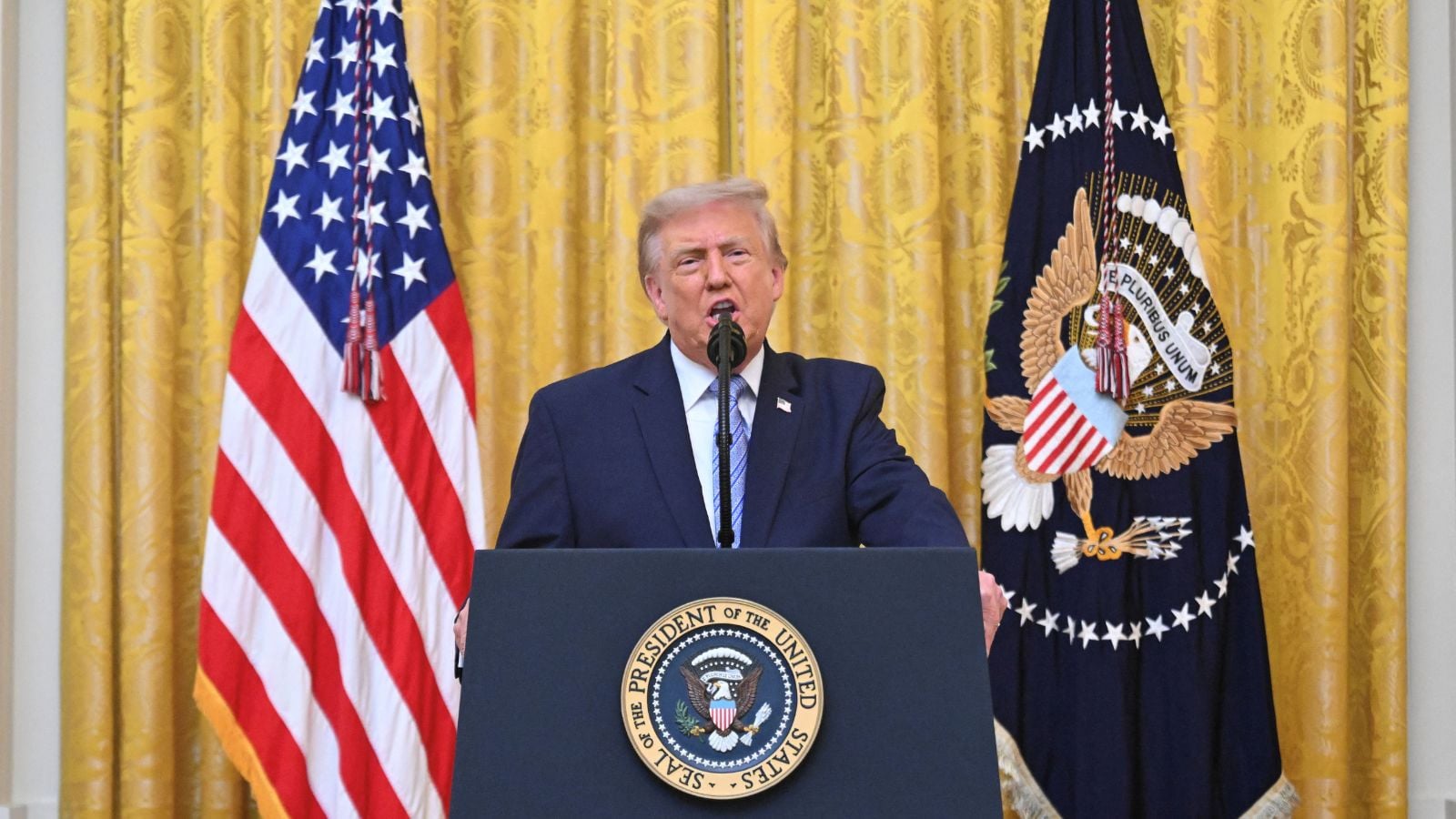
Recent statements from Donald Trump have thrust this anonymous stretch of water back into the center of the geopolitical storm. The core declaration is stark: he has suggested that if Iran is ever definitively defeated, the United States should step in and declare the Strait of Hormuz sovereign American territory.
To the casual observer scanning a news ticker, it sounds like another loud quote in a crowded room. A hyperbolic talking point designed to grab headlines. But when you have spent your life smelling the heavy diesel exhaust of tankers waiting out geopolitical storms in the Persian Gulf, you read those words differently. You look past the bluster and stare straight at the map. You think about what sovereignty actually means when applied to an international strait, and the shockwaves it would send across every ocean.
Let us be entirely clear about the mechanics here. This is not a hypothetical debate about maritime law. It is a collision between raw imperial ambition and the delicate architecture of global trade.
Consider what happens on an ordinary Tuesday in the Gulf. Tankers fly flags of convenience—Panama, Liberia, the Marshall Islands—while carrying crude oil owned by multinational conglomerates, destined for refineries in Asia, Europe, and North America. They move through international waters governed by the United Nations Convention on the Law of the Sea. This framework guarantees transit passage, meaning warships and commercial vessels alike have a legal right to move through international straits used for international navigation without interference.
To declare the Strait of Hormuz United States territory is to tear up that UN convention and throw the pieces into the Gulf.
It is a proposal that ignores the sheer friction of reality. Iran does not need to control the entire Middle East to disrupt this passage; they sit directly on its northern shoulder, possessing an arsenal of anti-ship missiles, fast attack craft, and sea mines that have turned these waters into a permanent high-stakes chess match. To claim ownership of the strait after a hypothetical defeat of the Iranian state assumes that a vacuum can be filled without a fight, and that regional powers like Saudi Arabia, the United Arab Emirates, and global competitors like China would simply watch the United States plant a flag and take control of the world's most sensitive energy valve.
China imports a massive share of its oil from the Persian Gulf. Picture Beijing watching Washington claim exclusive jurisdiction over the maritime throat through which its energy lifeblood flows. It is an invitation to a permanent naval standoff. It transforms a regional flashpoint into a planetary fracture line.
We have lived through trailers of this movie before.
Recall the tanker wars of the 1980s, when Operation Earnest Will saw the U.S. Navy escorting reflagged Kuwaiti tankers through the same narrow waters while mines bloomed in the dark water like iron lilies. Crew members on those ships were not thinking about grand political strategies. They were listening to the constant hum of the radar, wondering if the next small blip on the screen was a fishing boat or a remote-controlled explosive launch. I remember talking to an engineer who survived an engine room fire after a strike; he told me the silence after the explosion was worse than the blast itself, because in that silence, you realized how far from home you were, and how thin the hull of your ship felt against the entire weight of an ocean.
When politicians talk about claiming territory, they are speaking in the clean, abstract language of maps and press conferences. They use words that sound permanent and absolute. But territory is not just a colored polygon on a classroom globe. Territory is human bodies standing watch in eighty-degree humidity. Territory is the cost of insurance skyrocketing for every cargo ship on the planet, driving up the price of a gallon of gasoline in Chicago or a loaf of bread in Seoul within forty-eight hours of a raised voice.
The irony is that the world is already trying to slip out of this trap.
For decades, nations have looked for ways to bypass the Strait of Hormuz entirely. Pipelines have been laid across the Arabian Peninsula to move oil to the Red Sea or the Gulf of Oman, avoiding the bottleneck. Yet, those pipelines have finite capacity. They are bypass surgery on a patient who needs a whole new heart. The global economy remains fundamentally tethered to those twenty-one miles of water.
So why float an idea like claiming the strait as American territory?
Because power loves a dramatic narrative. It feeds on the fantasy of absolute control. In the political imagination, problems are solved by dominance, by drawing a hard line and daring anyone to cross it. It is the old story of the sheriff planting a flag in the dust and declaring the town his.
But the modern world is too tangled for old westerns. You cannot simply annex a global crossroads without inviting total economic indigestion. If the United States were to occupy or claim sovereignty over the Strait of Hormuz, it would instantly assume the sole financial and military burden of policing every drop of oil that moves through it. Every security threat, every insurance claim, every diplomatic insult would land squarely on American shoulders. It transforms a shared international headache into a permanent, unilateral occupation zone.
The sun goes down fast in the Persian Gulf. One minute the horizon is a pale, blinding glare, and the next, the dark rolls in like heavy velvet, swallowing the oil rigs and the container ships until all that remains are their running lights, blinking red and white against the void.
Out there, far from the podiums and the camera lenses, the water doesn't care who claims ownership. The tide comes in. The crude oil flows through the dark pipes. The engines thrum beneath the feet of exhausted crews who just want to make port without a missile dropping from the sky.
When a leader says they will draw a new boundary across the water after a war that hasn't happened, they are offering a simple answer to a terrifyingly complex question. But the water remains deep, the channel remains narrow, and the world remains bound to a fragile throat it cannot live without.