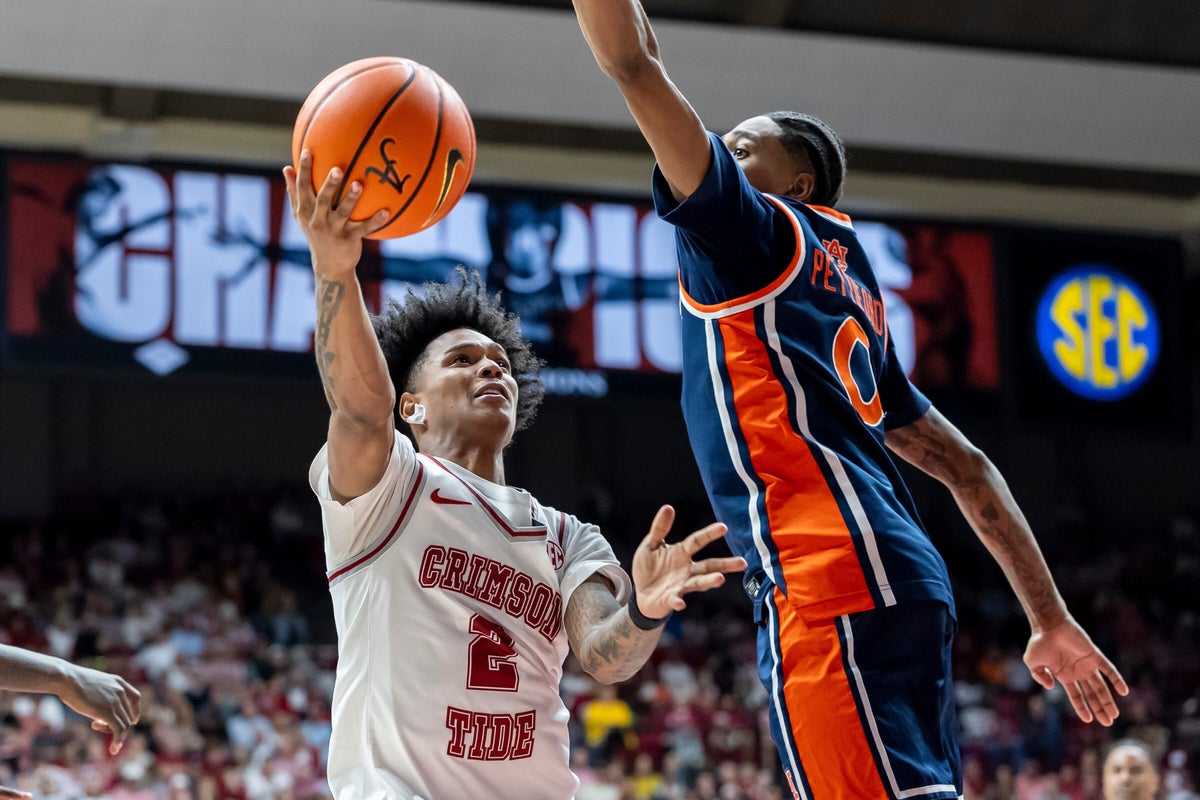
Nate Oats is making a bet that talent outweighs the optics of a police report. The Alabama head coach confirmed that a scholarship spot remains open for Auburn transfer Aden Holloway, provided the guard navigates the legal fallout of a recent marijuana possession charge. It is a calculated move that highlights the friction between high-stakes roster construction and the shifting legal standards of the Deep South. While the headlines focus on the arrest, the real story lies in how a powerhouse program managed by a pragmatist like Oats views player risk in the NIL era.
Holloway was arrested in May following a traffic stop where authorities discovered more than 20 grams of marijuana. In many states, this would be a non-issue or a civil citation. In Alabama, it is a Class B felony for anything other than personal use, though first-time offenders often see these charges reduced or diverted. For Oats, the wait-and-see approach isn’t just about being a supportive coach. It is about a roster that has national championship aspirations and a specific need for a high-ceiling playmaker who can ignite a fast-break offense.
The Pragmatism of the Second Chance
College basketball has moved past the era of the moralizing coach who cuts a player at the first sign of trouble. The stakes are too high. Alabama has invested heavily in becoming a basketball school, and that transformation required a culture that prioritizes output over traditional optics. When Oats says the scholarship is "dependent on the outcome," he is signaling to the fan base and the boosters that the program is willing to hold a seat for a blue-chip talent, regardless of the noise.
This isn't about charity. Holloway is a former five-star recruit who struggled with his shooting splits at Auburn but remains one of the most dynamic ball-handlers in the portal. Alabama’s system thrives on spacing and guards who can create their own shots. If Holloway clears his legal hurdles, he provides a depth of talent that most SEC programs can't match. If he doesn't, Oats simply moves to the next name on the list. It is a cold, efficient way to run a program, and it mirrors the way NFL front offices handle similar personnel risks.
Legal Limbo and the NCAA Gap
The NCAA has largely stepped back from policing "conduct detrimental to the team" when it involves state laws that are currently in flux across the country. Marijuana remains a prohibited substance in Alabama, but the NCAA recently removed it from the list of banned substances for postseason championships. This creates a strange paradox where a player can be a felon in the eyes of the local sheriff but a perfectly eligible athlete in the eyes of the governing body of college sports.
Oats is navigating this gap. By keeping the door open, he is daring the public to criticize the move while knowing that winning cures almost every PR headache. The investigative reality here is that Alabama has done its homework on the likelihood of the charges being dropped or reduced to a misdemeanor. They aren't waiting on a miracle; they are waiting on a procedural inevitability.
The Auburn Defection Factor
There is a subtext to the Holloway situation that goes beyond a traffic stop. Holloway is a former Tiger. Moving from Bruce Pearl to Nate Oats is the ultimate intra-state betrayal in the eyes of the fans. This adds a layer of pressure to Holloway’s arrival. He isn't just a player coming off a legal scare; he is a player who has to prove to the Tuscaloosa faithful that he is worth the headache he’s already caused before even stepping onto the court.
Inside the program, the focus remains on the "system fit." Oats doesn't recruit players based on their past shooting percentages alone; he recruits based on their projected metrics in his specific "Blue Collar" analytics model. Holloway’s speed and vision are elite. Even during a freshman year at Auburn where his three-point shot deserted him, his "gravity"—the way defenders reacted to his presence on the floor—remained high. Alabama believes they can fix his jump shot. They believe they can manage his off-court issues.
The NIL Variable
We have to talk about the money. In the current landscape, a player facing a felony charge isn't just a liability for the school; he is a risk for the collective. Alabama’s NIL infrastructure is robust, but donors are often wary of attaching their brands to players with pending court dates. By delaying the official scholarship and enrollment, the program allows the heat to die down. It gives the legal system time to move through its sluggish gears so that when Holloway finally signs, the narrative has shifted from "arrested guard" to "rehabilitated playmaker."
This is a sophisticated form of crisis management. By being transparent about the "contingency" of the scholarship, Oats has effectively shifted the burden of proof onto Holloway. The coach isn't the one making the decision; the judge is. It’s a masterful way to avoid accountability while keeping the talent within reach.
The Shadow of 2023
You cannot discuss Alabama basketball and legal issues without mentioning the Brandon Miller situation from 2023. That season defined the Oats era, for better or worse. The program learned how to handle intense national scrutiny while maintaining a high level of play on the court. That experience hardened the athletic department. They no longer flinch at a negative cycle in the news.
The Holloway case is significantly less severe than the events of 2023, but the playbook remains the same. Gather the facts, wait for the legal process to provide a shield, and keep the focus on the basketball. Critics will call it a lack of institutional integrity. Supporters will call it giving a young man a path forward. In reality, it is simply the cost of doing business at the top of the SEC.
The Roster Math
Alabama’s roster is currently a jigsaw puzzle of returning starters and high-profile transfers like Clifford Omoruyi. Every scholarship is a precious commodity. If Oats is willing to leave one empty in July, it speaks volumes about what he thinks Holloway can do for this team in March. Most coaches would have filled that spot with a "safe" veteran by now. Oats is holding out for the home run.
- Scoring punch: Holloway provides a secondary scoring option that takes the pressure off Mark Sears.
- Pace of play: His transition numbers are among the best in the country for his age group.
- Defensive versatility: Despite his size, his lateral quickness allows Alabama to switch more effectively on the perimeter.
If the case is dismissed, Holloway enters the season with a chip on his shoulder and something to prove. That is a dangerous combination for the rest of the conference.
Why This Strategy Works
The reason Alabama continues to thrive under this model is that they have eliminated the "distraction" factor. In the past, a story like this would hang over a locker room for months. Now, it is just another line item on a spreadsheet. The players are accustomed to the "pro" atmosphere where teammates come and go, and legal issues are handled by lawyers, not by team-building exercises.
Oats has built a program that is remarkably resilient to outside noise. He doesn't ask for permission to build his roster the way he sees fit. By openly stating that the scholarship is waiting, he has removed the mystery. He told the truth, but a specific version of the truth that serves the program's interests. It's not about whether marijuana possession is a character flaw; it's about whether the legal system will allow Aden Holloway to suit up in November.
The Fallout of a "No"
What happens if the legal outcome isn't favorable? Alabama has a backup plan. They always do. The portal doesn't truly close for a program with Alabama's resources. There are always talented players looking for a home late in the summer, often due to coaching changes or academic hurdles elsewhere.
But the "Plan A" remains Holloway. The coaching staff sees a lottery-level talent who had a bad month. They see a kid who can help them get back to the Final Four. In the high-stakes world of elite college athletics, that potential is worth the risk of a few bad headlines in June.
The move to keep Holloway on the hook is a signal to every other recruit in the country. It says that Alabama will have your back if you have the talent. It says that the program is willing to fight the optics if the internal metrics suggest a high return on investment. It is a bold, controversial, and entirely logical strategy for a team that is tired of being "just good" and wants to be the new standard of the sport.
The judge’s gavel will ultimately decide the lineup for the Crimson Tide’s backcourt. Until then, the scholarship sits empty, a silent testament to the fact that in Tuscaloosa, the scoreboard is the only moral compass that truly matters.