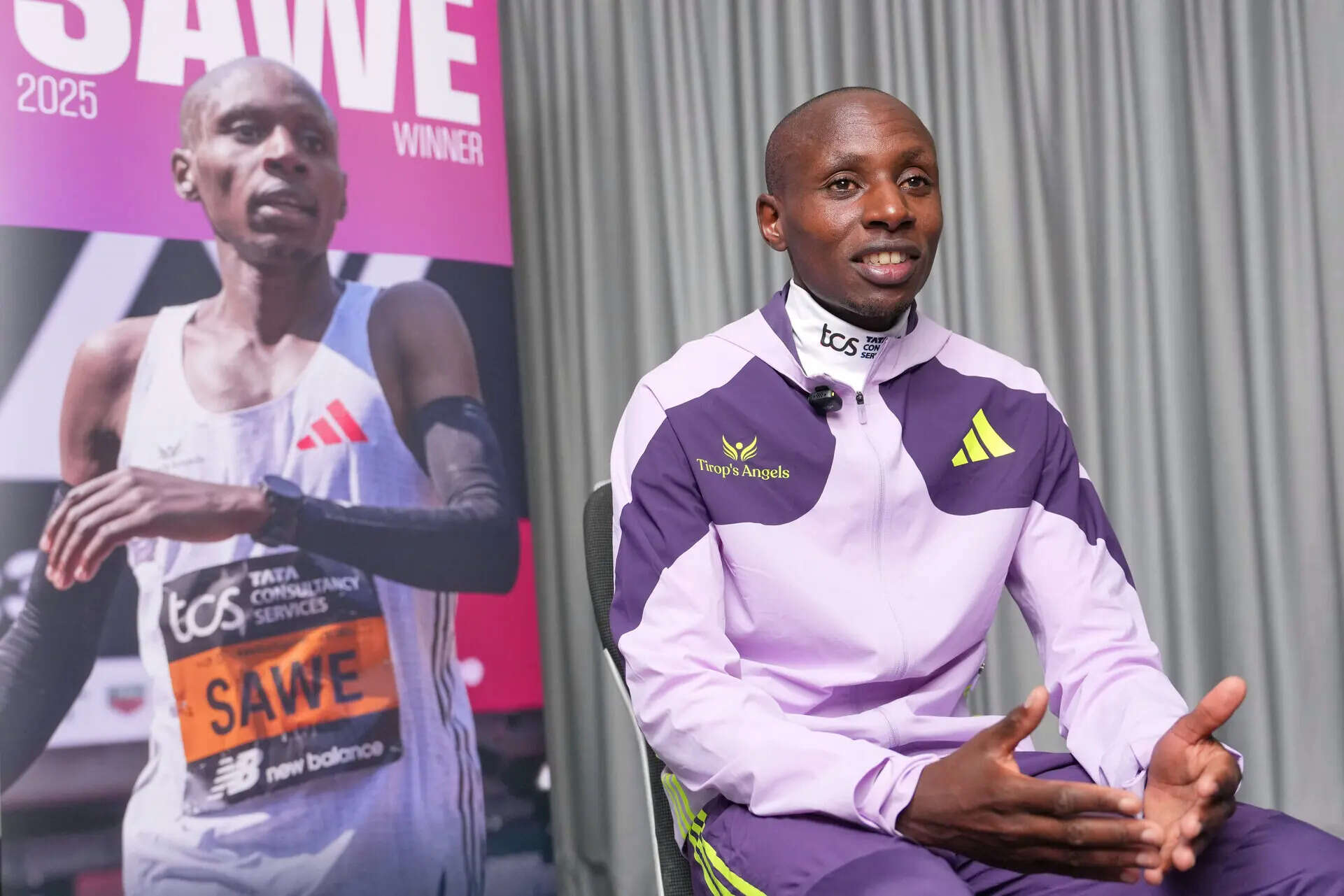
Running 26.2 miles in under two hours isn't just a physical miracle. It's a massive financial pivot point. When Sabastian Sawe crossed the finish line at the 2026 London Marathon, he didn't just break the tape; he shattered the glass ceiling of distance running by clocking a mind-bending 1:59:30. While the world stared at the clock in disbelief, the bean counters were already adding up a prize pot that looks more like a lottery win than a race stipend.
You'd think a man who just did the impossible would be dreaming of Ferraris or a private island. Instead, Sawe’s first planned purchase is a grounded, heartbreakingly practical reminder of where he came from. He’s buying a car and building a house for his parents in Kenya so they "no longer have to walk everywhere."
Breaking down the million dollar run
Most people see the headlines and assume the "winner's check" is the whole story. It’s not even close. The base prize for winning the London Marathon sits at $55,000 (roughly £44,000). That’s a nice year’s salary for many, but for an athlete of this caliber, it’s basically the tip.
The real money lives in the performance triggers. Because Sawe didn't just win—he demolished every existing benchmark—his payout spiraled upward through a series of timed bonuses.
- The Sub-2:02 Bonus: Finishing under 2:02:00 banked him $150,000.
- The World Record Bonus: Crushing the previous record added another $125,000.
- The Course Record: Setting a new London best chipped in $25,000.
Combined, Sawe’s guaranteed prize money from the event organizers hit $355,000 (£263,000). But if you think that’s where it ends, you don't know the sports marketing world. Industry insiders and reports suggest that once his Adidas sponsorship clauses and commercial appearance fees are tallied, his total haul for those two hours of "work" will likely tick over the $1 million mark.
The shoes you probably can't buy
Sawe didn't do this in standard trainers. He was wearing the Adidas Adizero Adios Pro Evo 3. These aren't just shoes; they're high-tech foam and carbon-fiber stilts that weigh less than 100 grams. They retail for about $500, but good luck finding a pair.
The moment Sawe went sub-two, these shoes became the most coveted piece of tech in the running world. They’re sold out globally. It’s a genius, albeit frustrating, marketing move. Adidas proved their tech works on the biggest stage, yet the average jogger in Hyde Park will have to wait months to even smell a pair.
Equal pay is finally the standard
It’s worth mentioning that London has stayed true to its 2024 pledge of total prize parity. The $308,000 total division pot is split exactly the same way for elite men, elite women, and wheelchair athletes.
Tigst Assefa, who won the women’s race in a staggering 2:15:50, walked away with the same $55,000 base and her own set of record-breaking bonuses. This isn't just "fair"—it's a signal to the rest of the World Marathon Majors that the "gender gap" in sports pay is a choice, not a necessity.
Beyond the bank account
When Sawe’s father, Simion, spoke to the BBC, he didn't talk about the sub-two-hour mark or the physics of carbon plates. He talked about a promise. Sawe told his family before he left for London that if he won, their lives would change.
His priority list is incredibly specific:
- The House: Moving his parents into a modern home.
- The Car: Ensuring they have reliable transport in rural Kenya.
- The Church: Funding the completion of their local community church.
- The Travel: Helping his relatives fly abroad to see the world he now traverses for a living.
It’s a stark contrast to the flashiness we see in the Premier League or the NBA. In the world of elite marathon running, a "massive payday" isn't about luxury—it's about legacy and basic security for an entire village.
If you’re looking to follow in Sawe's footsteps, don't start by looking for those $500 shoes. Start by looking at your local race calendar. You might not bank a million dollars, but the discipline of the long run has a way of paying off in ways that don't show up on a bank statement. If you want to get serious, look into a structured 18-week marathon block and focus on "time on feet" rather than just pace. Consistency, not carbon fiber, is what actually builds a runner.