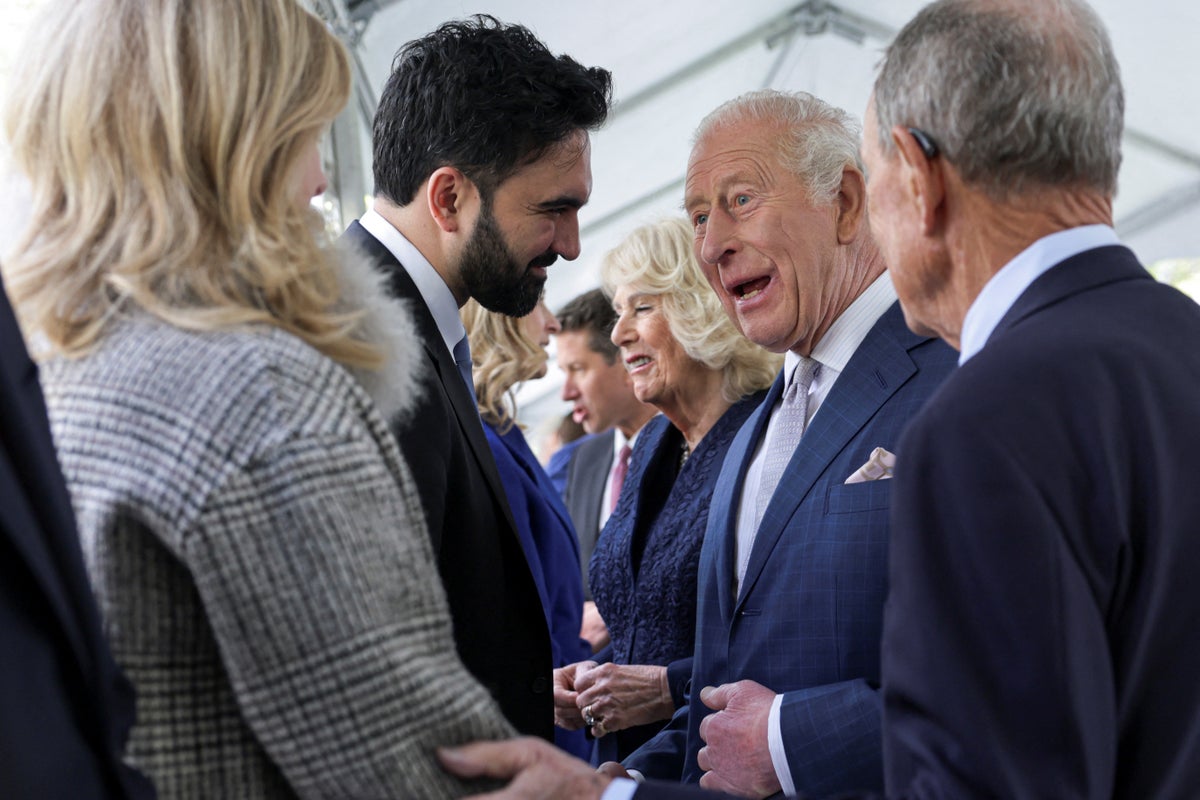
Zohran Mamdani isn't just making noise. The New York City mayoral candidate and state assemblyman recently shook the table by stating he would use his platform to ask King Charles III to return the Kohinoor diamond to India. It’s a bold move for a guy running to manage the five boroughs. You might wonder why a man campaigning for City Hall is talking about a 105 carat stone sitting in the Tower of London. It isn't just about jewelry. It's about a massive shift in how we view history, colonial theft, and the responsibility of modern leaders to address old wounds.
The Kohinoor diamond is one of the most famous gems on earth. It’s also one of the most controversial. For centuries, it passed through the hands of Mughals, Persians, Afghans, and Sikhs before the British East Island Company "acquired" it in 1849. I use that word loosely because, let's be real, it was part of a treaty forced upon a 10-year-old Maharaja. Mamdani's stance taps into a growing global movement demanding the restitution of cultural artifacts. He isn't just posturing for votes. He's highlighting a legacy of extraction that many New Yorkers, particularly those from the South Asian diaspora, feel in their bones.
The politics of the Kohinoor diamond and Mamdani’s stance
Mamdani’s demand isn't coming out of thin air. He’s been vocal about his identity as a democratic socialist and the son of Indian immigrants. By bringing up the Kohinoor, he’s connecting the dots between local struggles and global justice. People often think local politics should stay in its lane. Potholes, schools, and trash collection are the bread and butter of a mayor. But NYC is a global city. What happens in London or New Delhi resonates in Queens and the Bronx.
The British Crown claims the diamond was a gift. India says it was stolen. This isn't a minor disagreement over a receipt. It's a fundamental clash over the legitimacy of colonial rule. Mamdani understands that symbols carry weight. If he wins, he wants to represent a city that stands for equity. That means calling out historical wrongs even if they happened thousands of miles away. It’s about the principle.
Critics say he should focus on the MTA. They aren't entirely wrong, but they're missing the point. A leader can walk and chew gum at the same time. Talking about the Kohinoor doesn't mean he's ignoring the subway. It means he’s signaling what kind of moral compass he brings to the job. He’s looking at the bigger picture.
Why the Kohinoor belongs in India
The history of the stone is a chaotic timeline of power shifts. It was once the eye of a peacock in the famous Peacock Throne of the Mughal Empire. Later, Nader Shah took it to Persia. It eventually landed with the Sikh Empire in Lahore. When the British annexed the Punjab, they didn't just take land. They took the crown jewels.
The 1849 Treaty of Lahore stated the gem must be surrendered to the Queen of England. Calling a forced agreement a "treaty" is a bit of a stretch. The Maharaja Duleep Singh was a child. He didn't have much of a choice. This is the crux of the argument for India. You can't legally own something that was taken under duress.
Countries like Greece are fighting for the Elgin Marbles. Nigeria is getting some of its Benin Bronzes back. The momentum is shifting. The Kohinoor is the "big one" though. It’s the centerpiece of the Queen Mother’s Crown. Giving it back would be a massive admission of guilt by the British Monarchy. Mamdani knows this. He’s pushing for a world where "finders keepers" isn't a valid legal defense for empires.
What this means for the NYC mayoral race
You have to look at the demographics to understand the strategy here. New York City has one of the largest Indian and South Asian populations in the world. We're talking hundreds of thousands of voters. These folks aren't a monolith, but many feel a deep connection to their heritage. When a candidate talks about the Kohinoor, he's speaking their language.
Building a coalition beyond the five boroughs
Mamdani is trying to build a broad coalition. He’s leaning into his identity. He's also leaning into a specific type of anti-imperialist rhetoric that appeals to younger, more progressive voters. These voters care about decolonization. They care about how wealth was built.
- He's targeting the South Asian vote in Queens.
- He's appealing to the "woke" progressive base.
- He's differentiating himself from the "status quo" candidates.
It’s a smart play. Even if he can't actually force the King to do anything, he’s starting a conversation. He's making himself the candidate of "big ideas" and "radical honesty." That stands out in a crowded field.
The actual chances of the diamond moving
Let’s be honest. The chances of King Charles III packing the Kohinoor in a box and mailing it to New Delhi because a NYC mayor asked him to are slim. The British government has been very clear. They aren't interested in returning it. They claim that returning one item would open the floodgates. Every museum in London would be empty.
That’s exactly why people want it back.
The argument that "we can't give it back because we took too much" is a weak one. It’s basically admitting the British Museum is a crime scene. Mamdani’s demand adds another layer of pressure. It’s about the cumulative effect of global voices. When a high-profile American politician joins the chorus, it gets harder for the UK to ignore.
Moving toward a decolonized future
If you care about this issue, don't just wait for a politician to solve it. Educate yourself on the history of the objects in your local museums. Many institutions in NYC are starting to reckon with their own collections. The Metropolitan Museum of Art has returned items to Cambodia and Nepal recently.
Start by supporting organizations that track looted art. Look into the work of historians like William Dalrymple and Anita Anand, who wrote the definitive book on the Kohinoor. They lay out the bloody history in a way that makes it impossible to see the diamond as just a pretty rock. It’s a symbol of survival and loss.
Check out local community boards if you're in NYC. See how they're addressing the needs of immigrant communities. Voting for a mayor is about more than just their stance on international diamonds, but their values tell you how they’ll handle the small stuff too. Read the platforms. Show up to town halls. Ask the hard questions about where our city's loyalty lies.
The Kohinoor debate isn't going away. Whether it’s Mamdani or someone else, the pressure on the British Crown will only grow. It’s time to decide which side of history you want to be on. Pay attention to the candidates who aren't afraid to pick a side. They’re usually the ones worth watching. Supporting grassroots movements for repatriation is the best way to keep this momentum alive. Don't let the conversation stop at a headline. Make it a demand. Keep pushing for transparency in museum acquisitions and support local leaders who aren't afraid to speak truth to power, no matter how far away that power sits. This is how the world actually changes. One uncomfortable conversation at a time.