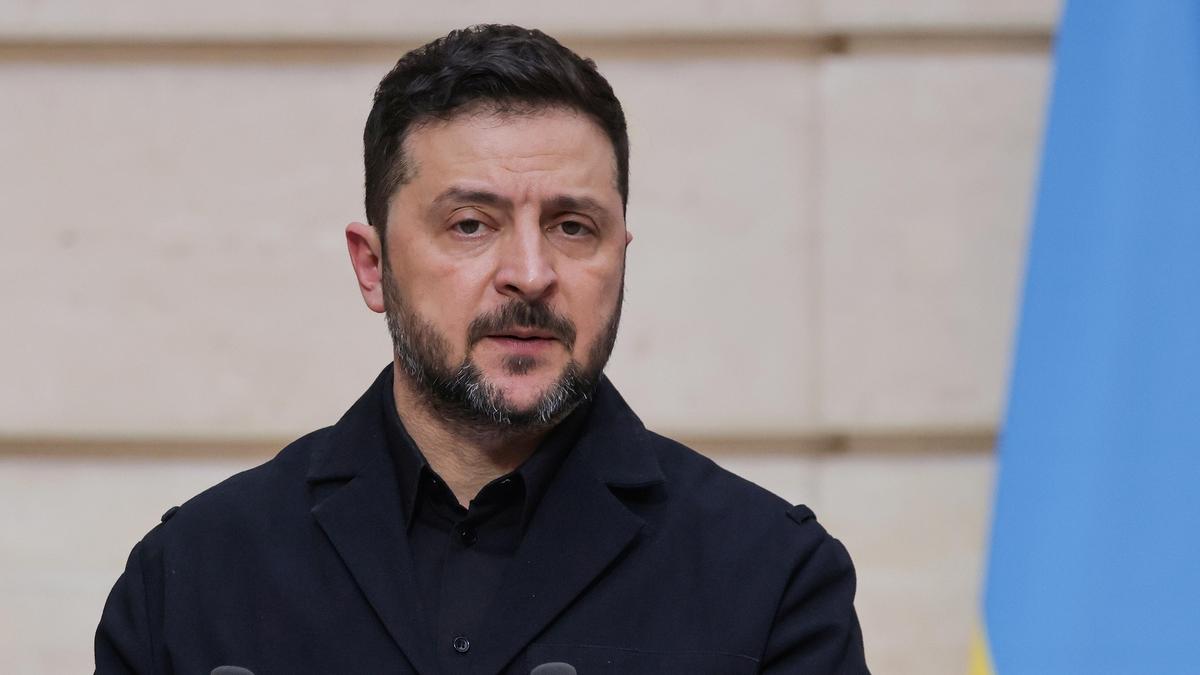
Volodymyr Zelenskyy isn't just fighting a war on the ground anymore. He's fighting for a dwindling share of the world's attention. As tensions between the United States and Iran threaten to boil over into a full-scale regional war, Kyiv is watching the clock. The math is simple and brutal. There's only so much political capital, air defense ammunition, and taxpayer money to go around in Washington. If the Middle East explodes, Ukraine knows it might just become yesterday’s news.
It's a nightmare scenario for the Ukrainian administration. For over two years, they've relied on the U.S. as their primary life support system. Now, that system is being tugged toward a different, perhaps more volatile, theater. Zelenskyy’s recent warnings aren't just diplomatic fluff. They're a desperate plea for the West to realize that these two conflicts are actually one and the same.
The Zero Sum Game of Western Military Aid
Washington likes to say it can "walk and chew gum at the same time." In reality, military logistics don't work that way. When Iran launched its massive drone and missile attacks against Israel, the world saw a flawless display of Western-backed air defense. Ukraine saw something else. They saw the exact same Iranian-made Shahed drones that terrorize Kharkiv being shot down by U.S. jets over Jordan and Iraq.
The sting for Kyiv was personal. If the U.S. can intercept drones over the Middle East, why can't it do the same over Western Ukraine?
The bottleneck isn't just political will. It's hardware. Interceptor missiles for Patriot systems and NASAMS aren't sitting on a shelf at Walmart. They take months, sometimes years, to manufacture. If the U.S. has to choose between reloading Israel's Iron Dome or sending more PAC-3 missiles to Kyiv to protect an aging power grid, the choice won't always favor Ukraine. We're seeing a literal competition for the same bullets.
The Iran Russia Connection is the Smoking Gun
You can't talk about Ukraine without talking about Iran. This is the part that many analysts seem to miss. Tehran and Moscow have essentially formed a "coalition of the sanctioned." Iran provides the drones and ballistic missile technology that Russia uses to pulverize Ukrainian infrastructure. In exchange, Russia provides Iran with advanced fighter jets and cyber warfare capabilities.
Zelenskyy’s argument is straightforward. If you let Ukraine fall because you’re distracted by Iran, you’re actually empowering Iran. A Russian victory in Europe is a victory for Tehran’s most powerful ally. By trying to "contain" the Middle East at the expense of Eastern Europe, the U.S. might accidentally feed the very beast it's trying to starve. It's a circular dependency that makes the current hesitation in the halls of Congress look particularly short-sighted.
Why Domestic U.S. Politics is the Real Battlefield
We’re entering an election cycle where "foreign entanglement" is a dirty word. Zelenskyy knows this better than anyone. He’s seen the polls. Support for indefinite aid to Ukraine is softening among certain segments of the American public.
When a new conflict pops up—especially one involving Iran—it gives critics of Ukraine aid the perfect "out." They can argue that America needs to pivot its resources to a "more immediate" threat. It’s a convenient excuse for those who already wanted to pull the plug. Zelenskyy isn’t just worried about the bombs falling today. He’s worried about the budget votes happening six months from now.
The fear is a slow-motion abandonment. It doesn't happen with a dramatic speech or a signed treaty. It happens through "deprioritization." It happens when the White House press briefing spends 45 minutes on Tehran and 30 seconds on the Donbas. Once you lose the narrative, you lose the funding.
The Strategy of Forced Relevance
Ukraine is trying to stay relevant by leaning into the "global security" angle. They're no longer just talking about their borders. They're talking about the grain that feeds Africa and the tech that powers Europe. Zelenskyy is positioning Ukraine as the frontline against a global axis of instability that includes Russia, Iran, and North Korea.
It's a smart play, but it's risky. If you frame the war as a global struggle, you invite global fatigue. People get tired of being told the world is ending every Tuesday.
Honestly, the mood in Kyiv is one of controlled panic. They’ve done everything right on the battlefield to earn continued support, yet they’re being held hostage by geopolitical events thousands of miles away. It's a reminder that in modern warfare, your biggest enemy might not be the guy in the opposite trench, but the short attention span of your biggest donor.
Moving Forward in a Multi-Polar Crisis
If you're following this, don't just watch the front lines in Avdiivka or Robotyne. Watch the diplomatic cables coming out of the Persian Gulf. If a direct hot war between the U.S. and Iran kicks off, expect the flow of ATACMS and Abrams parts to slow to a trickle.
The best move for those who want to see Ukraine remain sovereign is to push for a synchronized defense strategy. We need to stop treating the Middle East and Eastern Europe as isolated silos. They are connected by the same supply chains, the same drone factories, and the same aggressive ideologies.
Keep an eye on the upcoming NATO summits. If there isn't a concrete, long-term "bridge" for Ukraine's defense that is insulated from Middle Eastern flare-ups, Kyiv is in serious trouble. Contact your local representatives and demand a clear, decoupled funding strategy for European security. The cost of a distracted West is a price Ukraine literally can't afford to pay. Don't let the noise of a new war drown out the reality of an existing one.