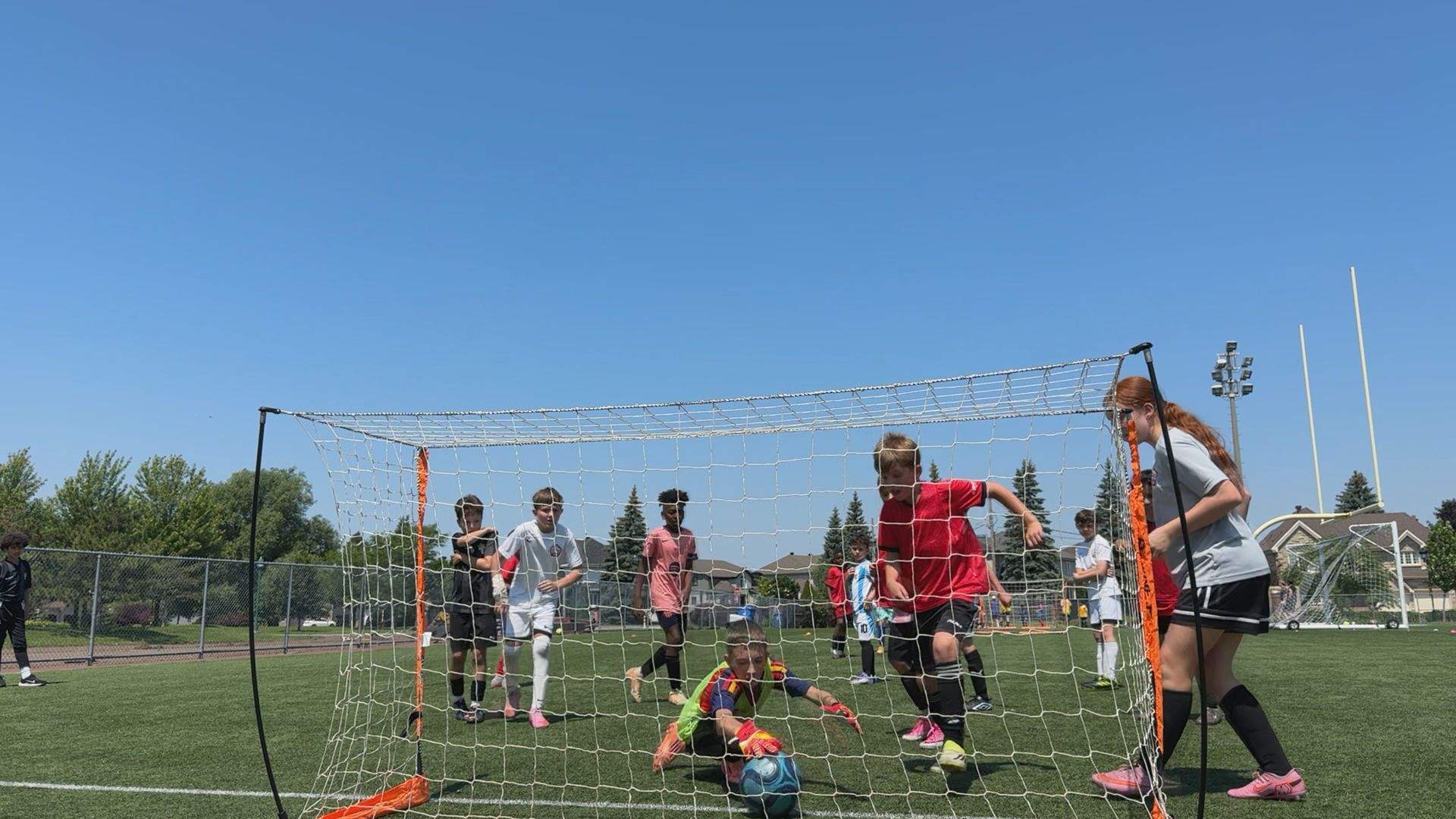
The traditional narrative of international sports achievement relies on a simple, linear assumption: elite national team victories directly cause grassroots participation spikes. This phenomenon, frequently termed the "World Cup Effect," treats the inspiration of youth athletes as an automated outcome. Following Canada’s 1-0 victory over South Africa in the Round of 32 at the 2026 FIFA World Cup, mainstream media accounts have focused heavily on qualitative metrics, such as young players wearing national jerseys at local day camps or articulating dreams of playing professional soccer.
However, translating cultural momentum into sustained athletic infrastructure requires analyzing specific operational variables. The baseline interest already exists: according to 2026 data from Canadian Tire Jumpstart Charities, soccer is the top participation sport for Canadian youth, with roughly 50% of children participating and 62% having played at least once in the past three years. The core operational challenge is not generating initial interest, but managing the capacity and conversion mechanics of the youth pipeline when an elite catalyst occurs.
The Three Pillars of Grassroots Capital Conversion
When Stephen Eustáquio scored a 92nd-minute game-winning goal to send Canada to its first-ever Round of 16, the immediate economic and social impact altered the demand curve for local soccer organizations. To evaluate how this demand shifts from temporary entertainment to long-term participation, we must analyze the structural capacity of the grassroots soccer ecosystem across three key inputs.
1. Financial Accessibility and the Cost Function
The primary driver of soccer’s dominance over traditional Canadian sports like ice hockey is its structural affordability. The economic variance between sports determines the size of the total addressable market of youth participants.
- Registration and Equipment Thresholds: The median annual cost to enroll a child in organized youth soccer in Canada is approximately $450, compared to upwards of $3,200 for minor hockey.
- Infrastructure Requirements: The marginal cost of equipment per soccer player (boots, shin guards, ball) remains low, allowing lower-income demographics to enter the pipeline immediately following a major national team event.
2. Human Capital Bottlenecks
While registration demand surges following a major tournament run, the capacity to absorb new players is fundamentally limited by human infrastructure. A youth soccer club cannot scale its player population without a proportional increase in technical staff.
- Volunteer Dependence: Grassroots clubs rely heavily on parent volunteers to coach foundational tiers. A sudden influx of players often leads to an unfavorable player-to-coach ratio, degrading the quality of instruction.
- Certified Coaching Shortages: For players aged nine and older, moving from recreational play to competitive development pathways requires coaches holding formal licensing. The bottleneck shifts from simple supervision to qualified tactical instruction.
3. Geographic and Facility Capacity
The conversion of inspiration into physical practice requires field access, which is subject to strict municipal constraints.
- Field Allocation Limits: Public and private turf and grass fields are fixed resources managed by municipal booking systems. Local clubs cannot easily expand their weekly hours of operation to accommodate new teams.
- Seasonal Volatility: In northern climates, the transition from summer fields to indoor winter facilities represents a significant capital barrier, often cutting participation capacity by more than half between October and April.
The Transmission Mechanism: From Media Consumption to Field Registration
The process by which an eight-year-old child transitions from watching a World Cup match to becoming an active club asset can be broken down into a multi-stage funnel.
[World Cup Media Event] ──> [Peer Reciprocity / Camp Exposure] ──> [Club Registration Attempt] ──> [Retention Phase]
The initial phase relies on a structural visibility anomaly. Due to tournament scheduling dynamics, specific knockout matches occupy exclusive broadcast windows, maximizing the domestic viewing audience. This widespread exposure establishes immediate cultural relevance among youth who may not actively follow domestic professional leagues.
The secondary phase involves peer-group amplification. When localized entities, such as community day camps, experience high concentrations of children replicating professional match behaviors (e.g., repeating specific goal celebrations or wearing national kits), the sport gains social capital. This peer reciprocity lowers the social friction of entry for non-participants.
The final bottleneck occurs at the registration interface. If local associations fail to capture this interest within the immediate 60-day post-tournament window, the conversion rate decays exponentially. Families encounter operational frictions—such as waitlists due to field capacity or a lack of administrative staff—which divert the prospective athlete to alternative activities.
Systemic Vulnerabilities in the Canadian Talent Pipeline
While the national team's success creates immediate consumer enthusiasm, the structural linkage between grassroots participation and elite development remains fragile. The current Canadian model exhibits a clear operational disconnect. High participation at age six does not automatically yield high-quality professional prospects at age eighteen.
The primary limitation of the current infrastructure is the lack of standardized talent identification systems. Unlike European academies that integrate local clubs into a tiered scouting hierarchy, North American youth sports are heavily decentralized. Wealthier families can afford private academy fees and travel teams, creating a socio-economic selection bias that excludes high-potential players from lower-income brackets. This dynamic undermines the cost advantage of the sport.
The second limitation is the geographic distribution of elite training centers. A disproportionate amount of federal and corporate investment is concentrated in major metropolitan hubs like Toronto, Vancouver, and Montreal. While the federal government allocated $300,000 for cross-country youth engagement and proposed $755 million over five years starting in 2026 to modernize National Sport Organizations, the deployment of these funds faces execution challenges in rural and remote territories. A child inspired in Whitehorse faces drastically different structural limitations regarding coaching and competition than a child in Montreal.
Tactical Recommendations for Club Administrators
To systematically capitalize on the present surge in consumer interest, regional soccer associations must shift from passive enrollment models to aggressive capacity optimization strategies.
- Implement Tiered Voluntarism Programs: Mitigate the coaching bottleneck by offering formal, subsidized coaching certification courses to parents during the registration off-season. This builds a qualified human capital reserve before peak registration cycles.
- Optimize Facility Utilization via Micro-Field Structuring: Address fixed field constraints by adopting Small-Sided Games (SSGs) frameworks. Dividing a standard 11v11 field into four smaller playing zones quadruples the capacity of a single facility rental hour and increases individual player touches.
- Establish Cross-Industry Partnerships with Municipal Schools: Secure priority access to school gymnasiums and sports fields outside of standard school hours to lower the fixed cost of indoor winter training space.