The media wants you to panic. Every travel desk in Fleet Street has spent months hyperventilating over biometric scanners, the Entry Exit System, and the impending arrival of digital pre-authorisations. The lazy consensus says you should cancel your weekend breaks, stockpile extra hours at Dover, and treat a trip to Alicante like an amphibious military landing.
They are entirely missing the point.
The real friction of modern travel has never been about the bureaucratic machinery at the border. It has always been about your inability to adapt to systems designed to strip away human variance. The digital transformation of the Schengen Area is not an existential threat to your holiday. It is an automated sorting mechanism for amateurs. If you understand how data flows through modern infrastructure, the new European protocols are nothing more than background noise.
Let us look at the mechanics. The Entry Exit System replaced physical passport ink with facial recognition and fingerprint data. Millions of travellers treated this like an affront to their civil liberties. I have watched corporate road warriors throw tantrums at self-service kiosks because a scanner failed to read an oil-slicked thumbprint, blowing blood pressure gaskets over a thirty-second delay. This is amateur hour.
When you approach a heavily automated border, fighting the machine is a losing strategy. The technology relies on deterministic parameters. If your passport is within three months of expiration, or if you cannot cleanly scan your index finger because of dry skin or poor hardware maintenance, the machine rejects you. The fix is not writing angry letters to your MP or complaining on consumer forums. The fix is structural hygiene. Renew your passport twelve months early. Keep your travel documents unblemished.
Then there is the upcoming digital authorization layer, mirroring the American ESTA framework. Commentators love to scream about the administrative creep and the nominal fee. They act as though a small digital charge is a barrier to entry. It is not a barrier; it is a filter. Governments use micro-fees and mandatory digital pre-screening to drop transaction overhead and weed out low-intent travellers who clutter the queues.
If you view these changes as an obstacle, you will suffer. If you view them as an API handshake between your passport and a sovereign database, you will breeze through.
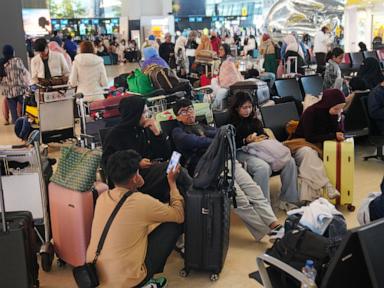
Consider a scenario where you arrive at a major transit hub during peak congestion. The terminals are choked with tourists who ignored every digital warning, failed to register their biometrics ahead of peak windows, and expected legacy processing speeds. They are the ones standing in four-hour queues. Meanwhile, the seasoned operator treats the terminal like an airport lounge, passing through pre-cleared automated gates that require zero human intervention.
Stop looking at the transition as a punishment for crossing a border. It is an efficiency test. The rules are public, the timelines are published, and the hardware is standard. If you are still getting caught out by digital border gates, the problem is not Brussels. The problem is your lack of preparation.
Do not check your passport expiration date the night before your flight. Do not assume minor administrative updates do not apply to you because you have flown the route a dozen times.
Clean your data, respect the algorithms, and stop reading travel warnings written by people who haven't left Heathrow since 2018.