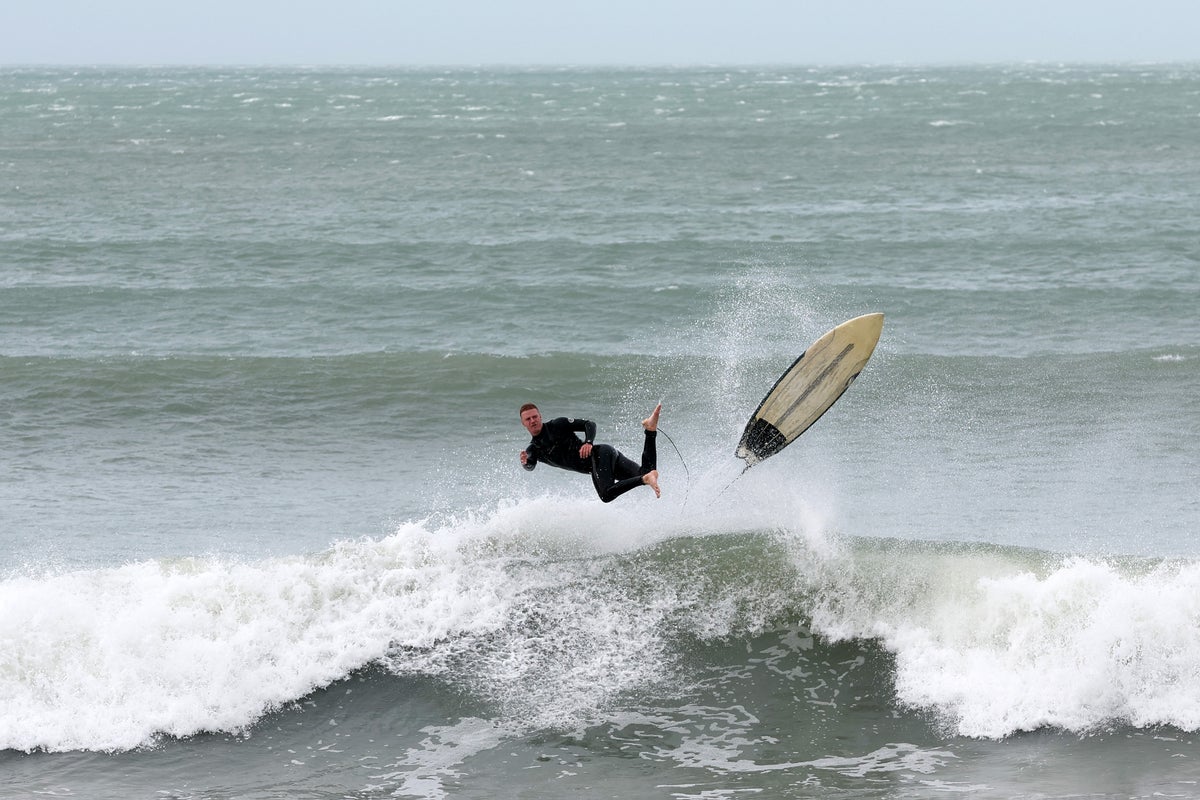
The World Surf League just paused its New Zealand event because a photographer bumped into something weird in the water, and the entire surf industry immediately wet its collective wetsuit.
Mainstream sports desks are running frantic headlines about "unknown sea creatures" and "unprecedented marine threats." They are painting a picture of a sport under siege by the deep ocean. Learn more on a related issue: this related article.
It is a comforting narrative for a risk-averse corporate board. It is also completely wrong.
The decision to halt the competition is not about athlete safety. It never is. This is a calculated, panic-driven move by an organization that has spent the last decade trying to gentrify an inherently wild sport into a sterile, predictable television product. By treating the ocean like a malfunctioning stadium rather than an unpredictable ecosystem, the WSL is alienating its core audience and ruining the very soul of professional surfing. More journalism by CBS Sports highlights related perspectives on the subject.
The Myth of the Controlled Arena
Surfing is not basketball. You cannot sweep the floor, turn on the air conditioning, and guarantee a uniform experience.
When the news broke that an unidentified marine animal disrupted a shoot off the coast of New Zealand, the corporate machinery did exactly what it always does: it panicked. They pulled the plug to protect sponsorships, insurance premiums, and liability clauses.
The ocean is not a tennis court. Risk is the baseline, not an anomaly.
For decades, professional surfers shared lineups with apex predators, shifting sandbars, and elements that could kill them at any moment. That raw edge is exactly why people watch. When you strip away the unpredictability, you are left with nothing but synchronized swimming on fiberglass boards.
Halting an entire global event over an unverified encounter sets a dangerous precedent. What happens next time? Do we cancel the entire Western Australia leg because someone saw a shadow from a drone? Do we pack up J-Bay the second a bait ball moves within a mile of the lineup?
Dismantling the Panic Economy
Let's look at the actual data surrounding marine encounters in competitive surfing, rather than the emotional hyperbole driving the current news cycle.
According to the International Shark Attack File maintained by the Florida Museum of Natural History, the statistical probability of a surfer being bitten by a marine predator is infinitesimal. Even in high-activity zones, the numbers do not justify shutting down multi-million-dollar operations.
| Event Location | Historical Incident Rate during Competition | Standard Protocol | Modern Reaction |
|---|---|---|---|
| Jeffreys Bay (SA) | Extremely Low (1 Major Incident, 2015) | Clear the water, restart same day | Indefinite postponement |
| Margaret River (AUS) | Low | Monitor via jetski | Event cancellation threats |
| New Zealand Breaks | Negligible | Local consultation | Immediate global media blackout |
I have spent twenty years covering professional water sports, and I have seen executives blow millions of dollars chasing a zero-risk environment that does not exist. The moment you try to guarantee absolute safety in the open ocean, you are no longer running a surf contest. You are running a water park.
The "lazy consensus" among sports journalists right now is that the WSL acted responsibly. They praise the quick deployment of jetskis and the medical protocols. But they fail to ask the fundamental question: What are we actually protecting here?
If a photographer takes a scrape from a curious seal, a large pelagic fish, or yes, even a shark, that is a Tuesday in New Zealand. It is not a理由 to freeze a global tour.
The Real Threat is Not in the Water
The true predator facing professional surfing is the erosion of its authenticity.
The WSL has been desperately trying to manufacture a predictable, broadcast-friendly format. They built the Surf Ranch in the middle of a California valley precisely because they hate the ocean's inconsistency. They want loops, repeating waves, commercial breaks that hit exactly on the hour, and zero variables.
This New Zealand incident gave the suit-and-tie crowd exactly the excuse they wanted to push their narrative: The ocean is too dangerous, too variable, too wild. We need more pools. We need more control.
Consider the mechanics of a real ocean lineup. The local surfers in New Zealand—the ones who actually know those reefs—were not panicking. They know that when you surf in temperate, nutrient-rich waters, you are swimming in a soup of biodiversity. You handle it with local knowledge, not corporate mandates issued from a boardroom in Santa Monica.
How to Handle the Wild Without Killing the Sport
If the organizers actually wanted to solve this problem without destroying the integrity of the competition, they would change their entire philosophy. Stop trying to sanitise the environment. Instead, lean into the reality of the sport.
- Deploy localized, non-invasive acoustic monitoring: Trust the telemetry data from local marine science divisions, not just panicked visual sightings from a jet ski driver.
- Establish a hard threshold for restarts: A sighting or minor contact is a yellow flag, not a red cancellation. If there is no active pursuit or clear predatory behavior, the jerseys go back on within sixty minutes.
- Put the decision back in the hands of the athletes: Surfers know the risks better than any commissioner. If the competitors want to paddle out, let them ride.
The downside to this approach is obvious: it increases corporate liability. A major brand might pull its logo from the broadcast if a graphic incident happens live on feed. That is a real financial risk. But the alternative is far worse—the slow, boring death of a sport reduced to a corporate PowerPoint presentation.
Stop treating the ocean like an enemy that needs to be managed out of the equation. Pack up the safety committees, put the athletes back in the lineup, and let the ocean dictate the terms. That is what surfing is, or at least, what it used to be.