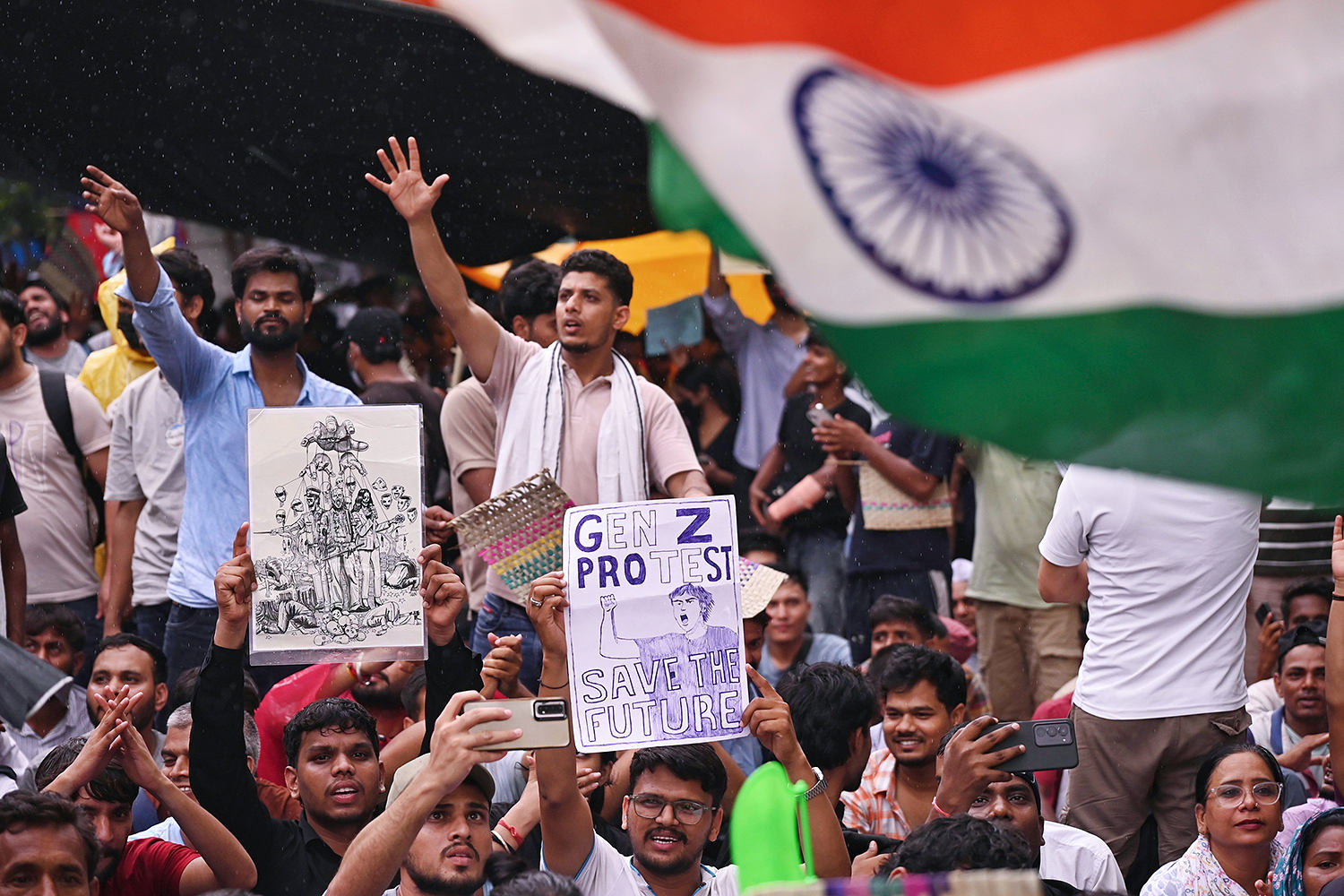
The global commentary on India’s recent civil unrest is reading off a script written in the 1990s.
When activists end high-profile hunger strikes and crowds march under the banner of the "Cockroach" movement, mainstream media immediately defaults to its favorite archetype: a noble, grassroots David standing up to a monolithic, authoritarian Goliath. They paint a picture of pure moral crusade, framing the cessation of a fast as a triumph of democratic pressure. If you enjoyed this post, you should read: this related article.
It is a comfortable, lazy consensus. It is also dead wrong.
What Western headlines and superficial analyses call a spontaneous moral victory is, in reality, a masterclass in tactical political positioning and structural media manipulation. If you look past the emotional photography and the dramatic headlines, you do not see a fragile government caving to civil society. You see a calculated recalibration of power where both the activists and the state got precisely what they wanted, while the structural economic issues driving the unrest remain entirely untouched. For another perspective on this story, see the recent update from USA Today.
Stop reading civil movements as morality plays. Start reading them as incentive structures.
The Hunger Strike Myth: Sacrificial Weapon or PR Exit Strategy?
Mainstream coverage treats a political hunger strike as an act of absolute selflessness—a moral force so potent it forces leviathan institutions to bend. Having advised strategy groups across international policy corridors, I have watched this play out dozens of times. The reality is far more cynical.
A fast is not designed to run until death. It is designed to create a ticking clock that forces media saturation before public attention decays.
When a prominent activist calls off a fast, the press writes it as a concession by the state. Look at the mechanics:
- The Attention Peak: Public sympathy follows a predictable logarithmic curve. Beyond day seven or eight, diminishing returns set in, health risks spike exponentially, and the media cycle risks moving on to the next crisis.
- The Face-Saving Exit: Ending the fast under the guise of "responding to the people's plea" allows the leader to preserve their life, lock in their newly inflated political capital, and pivot to institutional bargaining.
- State Compliance Shielding: The government offers vague, non-binding committee reviews—the classic bureaucratic delay tactic—allowing them to diffuse immediate public anger without altering a single line of legislation.
Calling this a victory for public protest misunderstands basic political leverage. The activist did not force the state's hand; the activist cashed in their attention equity before it devalued.
Why the "Cockroach" Symbolism Is Misread
Media outlets obsess over the imagery. They treat the adoption of the "cockroach" label—a term initially lobbed by critics as an insult, then reclaimed by protesters—as an unmitigated triumph of populist branding.
Reclaiming a slur is a classic political trope, but it carries a severe, unacknowledged strategic downside that traditional commentators completely miss.
When a movement embraces a dehumanizing label, even ironically, it unintentionally lowers the threshold for state intervention. It plays directly into the psychological framing that security apparatuses use to justify escalation.
| Strategy Element | The Mainstream View | The Insider Reality |
|---|---|---|
| Label Reclaiming | Empowers marginalized groups through solidarity. | Creates a stark "us vs. them" binary that alienates the quiet middle class. |
| Street Mobilization | Demonstrates overwhelming public mandate. | Signals a failure to secure actual legislative or institutional allies. |
| Media Saturation | Drives global sympathy and pressure. | Accelerates outrage fatigue, shortening the movement's viable lifespan. |
By leaning into hyper-polarizing, disruptive branding, the movement guaranteed high visibility at the direct expense of broad-based political coalition-building. The quiet middle class—the demographic required to actually flip electoral outcomes or force structural policy changes—doesn't join movements that define themselves through total societal disruption. They turn off the news, secure their property, and vote for whoever promises to restore order.
The Policy Reality Behind the Noise
Strip away the street clashes, the chants, and the emotional press conferences. What is actually happening to the underlying grievances?
Nothing.
While the press focuses on the theater of fasts being broken and crowds dispersing, the core economic drivers—labor deregulation, agricultural pricing shifts, and regional infrastructure disputes—remain completely frozen. The state did not repeal its core initiatives; it simply bought time.
Governments do not defeat modern protest movements by crushing them with brute force on day one. They defeat them through attrition via concession theater.
- Grant symbolic wins: Offer meetings, set up independent panels, praise the "spirit of democracy."
- Wait out the news cycle: As soon as the hunger strike ends, the camera crews pack up.
- Out-administer the opposition: Quietly enact eighty percent of the original policy six months later through administrative tweaks and secondary regulations when no one is paying attention.
If your strategy relies on keeping thousands of people in the streets indefinitely, you have already lost. The state has an infinite payroll and endless time. The public has jobs, families, and outrage fatigue.
How to Modernize Political Analysis
If you want to understand where civil unrest in emerging markets actually leads, ignore the rhetoric and watch three specific indicators instead:
1. Legislative Tracking Over Street Attendance
Count votes in parliamentary committees, not heads in a town square. Mass gatherings create great television, but three unspectacular amendments in a subcommittee room carry ten times the structural impact of a hundred thousand people marching down a boulevard.
2. Capital Flight and Market Volatility
Watch how local institutional investors react. If the domestic stock index doesn't flinch during massive protests, the market knows something the pundits don't: the state's structural economic direction is in zero actual danger. Capital is cold, rational, and immune to political performance art.
3. The Institutional Pivot
Has the movement created a viable political party, or is it remaining an amorphous street coalition? History is uncompromising on this point: unstructured movements without clear electoral or legal arms get absorbed, outmaneuvered, or forgotten.
Stop celebrating the theater of dissent and start measuring the mechanics of power. Until civil movements trade symbolic outrage for structural leverage, the cycle will repeat endlessly: high-profile fasts, dramatic street standoffs, triumphant press conferences, and zero actual policy shift.
The activists got their headlines. The state kept its policy. The public got a show. Plan your strategy accordingly.