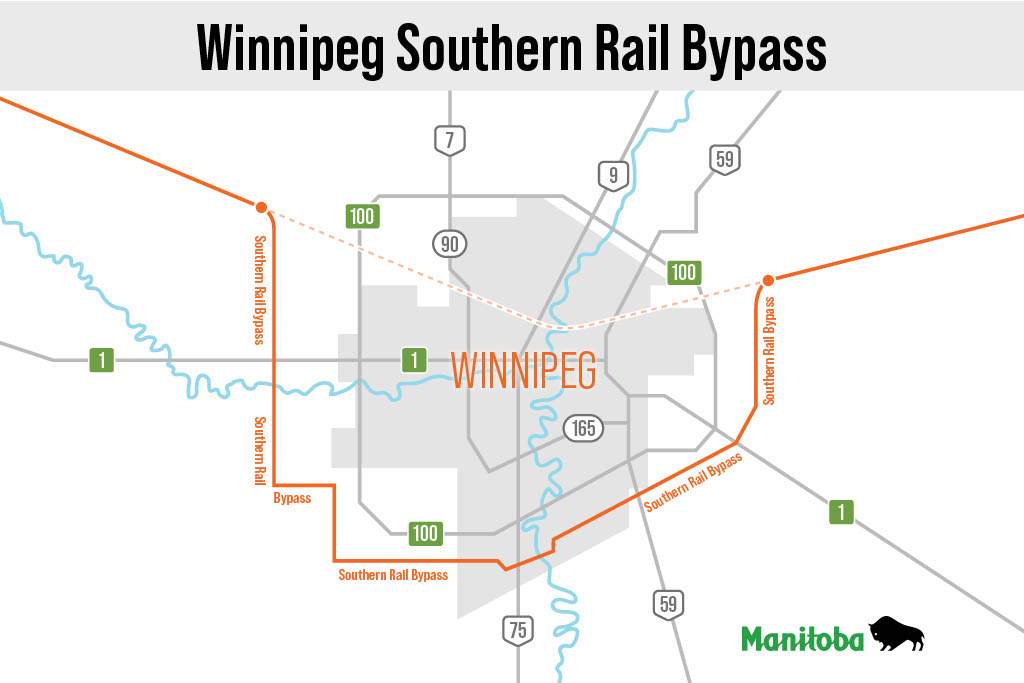
Another day, another grand political daydream. The Manitoba government wants you to believe that freight trains are packing their bags and moving south of the Perimeter Highway. Lead by heavyweight political nostalgia and a fresh 90-day feasibility study chaired by Lloyd Axworthy, officials are pitching a southern rail bypass running along existing Manitoba Hydro transmission corridors.
Premier Wab Kinew admits it will take at least twenty years. What he fails to mention is that twenty years is code for political purgatory, infinite cost overruns, and a project that will quietly die long before a single spike is driven into the prairie soil. You might also find this related story useful: Structural Mechanics of the 2026 BRICS Chairship Alignment.
Stop buying the fairy tale. The lazy consensus says a southern bypass will magically unshackle Winnipeg from its industrial past, clear out the urban core, and save motorists from waiting at endless level crossings. It sounds wonderful at a press conference. In reality, it misunderstands how North American freight networks operate, how railways calculate return on investment, and why moving tracks does not mean moving the actual economy.
The Geography of Convenience Versus Corporate P&L
Let us look at the fundamental economics that the planners conveniently gloss over. Class I railways like Canadian National and Canadian Pacific Kansas City do not exist to beautify your morning commute or optimize municipal green space. They exist to move freight from point A to point B at the lowest possible operating ratio. As discussed in detailed coverage by Reuters, the results are worth noting.
Winnipeg is a historic nexus because the convergence of transcontinental rail lines here is not an accidental inconvenience. It is an intentional, highly engineered logistics cluster. Rail yards, intermodal facilities, and local spur lines are tightly integrated with industrial customers who pay millions in freight tariffs.
Imagine a scenario where a multi-billion-dollar southern bypass is somehow funded, built, and opened through the Hydro corridor. Do you seriously believe CN and CPKC are going to abandon their massive capital investments in urban yards, transfer facilities, and localized connections just because a provincial report called it a historic opportunity?
They will not. Shifting interchange points outside the city adds transit time, burns extra fuel, and complicates crew changes. Railways are famously allergic to friction. Forcing them to route miles out of their way to appease suburban traffic grievances introduces massive operational drag. Without federal mandates and mountainous federal subsidies—neither of which are guaranteed—the private sector will treat this grand vision as a polite suggestion they can safely ignore.
The Crown Land Fallacy
Proponents love to lean on the fact that the proposed southern route utilizes an existing Manitoba Hydro transmission corridor on Crown land. This is supposed to solve the land acquisition and expropriation nightmare that usually kills these projects.
It is a clever talking point, but it falls apart under basic engineering scrutiny. Transmission corridors are engineered to hold high-voltage power lines safely away from heavy industrial vibration and high-density hazardous material transport. Running heavy freight rail—including tank cars carrying crude oil, chemicals, and grain—directly beneath or alongside critical electrical transmission towers introduces severe regulatory and infrastructure protection hurdles.
You cannot simply drop a multi-track main line into a utility corridor without massive civil engineering modifications. You have to relocate pylons, manage electromagnetic interference, upgrade drainage, and construct grade separations where the bypass intersects rural and municipal roads. The savings on land acquisition are instantly swallowed by the sheer complexity of retrofitting a utility corridor into a heavy-haul freight artery.
What Real Urban Optimization Looks Like
If the goal is to stop traffic bottlenecks and modernize urban logistics, a twenty-year pipe dream about a southern bypass is an expensive distraction. The real solutions are unglamorous and local.
Instead of waiting two decades for a mega-project that relies on political stars aligning across multiple federal and provincial administrations, the city and province should focus on targeted grade separations, intelligent rail traffic control systems, and optimizing existing urban corridors. Build the overpasses where they are needed most. Modernize switching yards to minimize blocking times.
Winnipeg does not need a radical relocation of its entire industrial skeleton. It needs pragmatic operational discipline.
The next time a politician stands in front of a map promising a futuristic greenbelt and a liberated urban core, check your wallet and remember how many decades have been wasted chasing transit mirages. The trains are staying where they are. It is time to build policy around reality instead of waiting for a miracle south of the Perimeter.