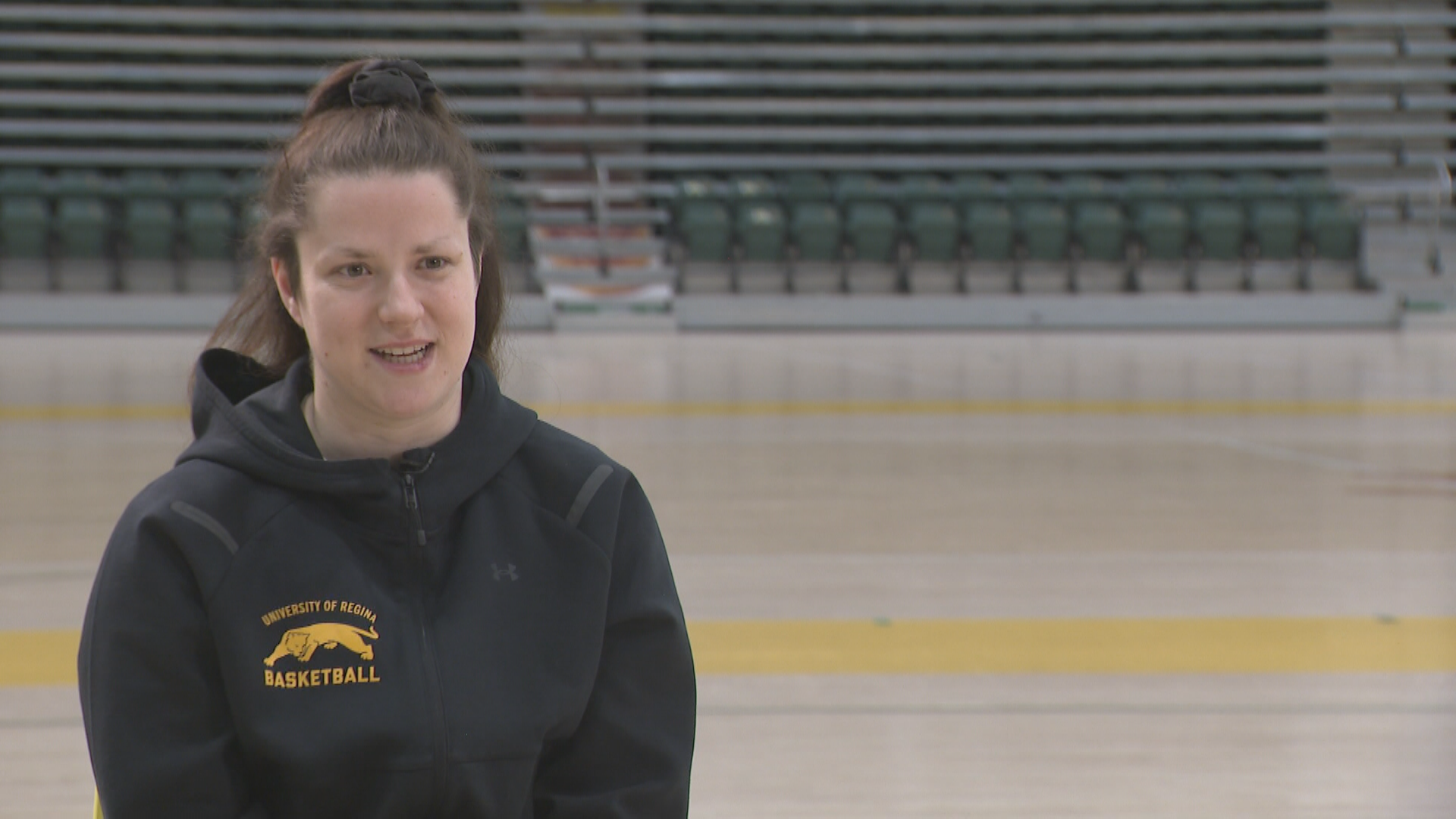
The air in a college gymnasium has a specific weight. It smells of floor wax, stale sweat, and the electric tension of a scoreboard ticking toward zero. For Dave Kleisinger, that air was his oxygen for nearly two decades. Then, in the heat of a June afternoon, the doors to the University of Regina’s basketball court didn’t just close; they seemed to vanish.
When the university announced that Kleisinger was out as the head coach of the Cougars women’s basketball program, the press release was a study in clinical detachment. It spoke of a "personnel matter." It cited a "third-party review." It offered the kind of bureaucratic vagueness that leaves a vacuum, and in sports, vacuums are quickly filled by whispers. For months, the program he built—the one that defined his professional existence—moved on without him.
But history is rarely a straight line. Sometimes, it’s a circle.
The Weight of the Silence
To understand why this reversal matters, you have to look past the win-loss columns. Coaching is an intimate, brutal profession. You are a tactician, a mentor, and a lightning rod for criticism. When a long-tenured coach is suddenly removed pending a "conduct review," the community doesn't just wait for facts; they begin to mourn or to judge.
Imagine a young recruit sitting in her childhood bedroom, staring at a jersey she thought she’d wear for the man who promised to help her grow. Imagine the alumni, women who spent their twenties sprinting until their lungs burned under Kleisinger’s watch, wondering if the memories they cherished were suddenly tainted by an unseen shadow. This is the human cost of the "administrative process." It isn't just a file on a desk; it's a fracture in a foundation.
The University of Regina had initiated a formal review following complaints about the team’s culture. In the modern era of collegiate athletics, this is the necessary, agonizing standard. Accountability isn't a suggestion; it's a requirement. For months, the silence from the athletic department was deafening. Kleisinger was a ghost in the halls he used to haunt.
The Anatomy of a Reversal
Then came the pivot that no one saw coming. On a Tuesday that felt like any other, the university didn't just provide an update—they flipped the script. The third-party investigation, led by an outside law firm, had concluded. The result? Dave Kleisinger was coming back.
The university’s statement was a rare admission of complexity. They acknowledged that while the review was prompted by "concerns," the findings did not warrant a permanent separation. They didn't just open the door; they handed him back the keys.
This isn't just a story about a coach getting his job back. It’s a story about the terrifying fragility of a reputation. In our current culture, the "review" is often seen as the preamble to the "exit." To see a major institution pause, look at the evidence, and decide that the best path forward is a return to the status quo is a radical act of procedural integrity. It suggests that the truth was more nuanced than a headline could capture.
The Locker Room Reality
What does it feel like to walk back into a room of twenty young women who have spent the last quarter-year reading rumors about you?
That first practice back isn't about X’s and O’s. It isn't about the transition defense or the three-point percentage. It is about the eyes. Every coach-player relationship is built on a fragile contract of trust. When that contract is litigated in public, the ink becomes blurred. Kleisinger isn't just returning to a clipboard; he is returning to a laboratory of human emotions.
He has to prove that the "culture" the university investigated is one worth saving. He has to address the players who felt unheard and reassure the ones who felt lost without him. The stakes are no longer just about making the playoffs. The stakes are about whether a leader can bridge the gap between a "personnel matter" and a personal connection.
The Invisible Scars of the Process
The university stated that they are "committed to a safe and inclusive environment." It’s a phrase used so often it has almost lost its teeth, but for the athletes at the U of R, those words are now the yardstick. The investigation likely revealed what many already knew: college sports is a pressure cooker. The line between "tough coaching" and "toxic environment" is a wire that coaches walk every single day.
By reinstating Kleisinger, the University of Regina is betting on his ability to adjust his stride. They are betting that he can take the findings of a cold, legalistic report and turn them into a warmer, more resilient team dynamic.
They are also acknowledging the human fallibility of the system itself. Sometimes, we move too fast to condemn. Sometimes, the review process works exactly as it should—by finding that the path forward isn't away from the person, but through the conflict with them.
The Long Walk to the Bench
There is a specific kind of quiet that precedes a comeback. It’s the sound of a man who has had his life’s work scrutinized under a microscope and was told he could keep it.
The critics will still be there. The internet doesn't have an "undo" button for skepticism. Every time Kleisinger raises his voice on the sidelines or pushes a player to run one more suicide drill, there will be someone in the stands watching with a sharpened eye. That is the new reality. He is coaching in the afterglow of an investigation, a light that never really turns off.
But for the man who spent eighteen years building the Cougars into a regional powerhouse, the discomfort of the spotlight is likely a small price to pay for the sound of the whistle.
The ball is back in his hands. The game has changed, the players have changed, and he has undoubtedly changed. But as the lights dim in the Kinesiology Building and the first whistle of the new season echoes off the rafters, one thing is certain.
The score has been reset to zero, and the hardest game of Dave Kleisinger’s life is about to begin.