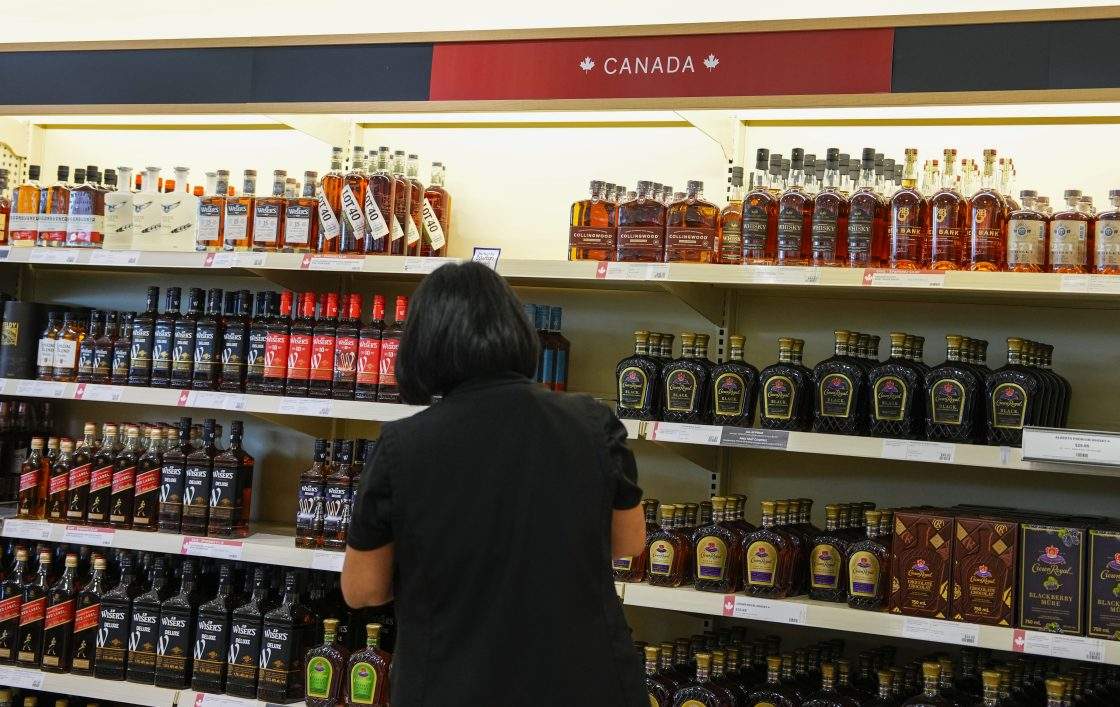
The United States government announced a sweeping import ban on Canadian alcoholic beverages, motorcycles, and specific dairy products, taking effect on September 29. This aggressive maneuver follows hard on the heels of Ottawa enacting twenty billion dollars in retaliatory tariffs against American goods. Decades of frictionless commerce across the world's longest undefended border have dissolved into a bureaucratic trade war.
The Mechanism of Retaliation
Washington invoked Section 338 of the Tariff Act of 1930, an obscure legal instrument designed to punish foreign commercial discrimination. The White House justified the prohibition by pointing to provincial liquor boards in Ontario, Quebec, and British Columbia pulling American alcohol products from shelves.
Yet, treating this as a simple administrative dispute misses the structural reality. The underlying friction stems from the sudden collapse of bilateral trade negotiations last month, which immediately preceded the implementation of fifty percent U.S. tariffs on roughly twenty billion dollars of Canadian exports.
Canadian Prime Minister Mark Carney responded by accelerating a long-term economic pivot away from the United States. Carney's administration chose to absorb short-term commercial pain rather than yield to unilateral pressure. This strategy treats economic decoupling as a matter of national sovereignty rather than a temporary negotiating posture.
Economic Fallout Across Sectors
The scope of the U.S. ban targets distinct supply chains. Most Canadian beers, wines, whiskies, and spirits are now barred from entry. Specialized manufacturing inputs, including certain whey proteins and industrial molasses, along with Canadian-built motorcycles, face absolute exclusion.
At the same time, the administration expanded fifty percent tariffs onto additional categories, including specific European and Canadian cheeses, paper goods, and furniture. These duties function as a tax on domestic consumers and manufacturers who rely on cross-border inputs.
Producers caught in the middle face sudden market evaporation. A craft distillery in Ontario or a component manufacturer in Quebec cannot simply reroute complex supply chains overnight. Distribution networks take years to build. Severing them overnight creates permanent structural scars.
Political Calculations and Public Sentiment
Domestic political incentives drive both capitals. In Washington, the administration uses protectionist measures to signal unwavering support for domestic industrial and agricultural producers. Yet, broader public support for these measures remains thin. Polling indicates that only a small fraction of the American electorate favors new tariffs on Canadian goods, viewing Canada through the lens of a trusted neighbor rather than a commercial adversary.
In Ottawa, the dynamic is inverted. Standing up to American economic coercion has provided a rallying point for a government that came to power on promises of national resilience. By framing the conflict around independence, Canadian leadership has transformed economic hardship into a test of national resolve.
Beyond the immediate bans, the viability of the United States-Mexico-Agreement remains under severe strain. When foundational trade architectures are treated as disposable leverage, long-term corporate capital investment grinds to a halt. Companies cannot plan five-year production cycles when customs rules change via executive proclamation from week to week.
The border is no longer merely a checkpoint for goods. It has become a permanent administrative barrier, rewriting the rules of North American industry for a generation.