The Flaw of the "Record Violence" Narrative
International bodies love a clean metric. When the UN releases reports decrying "record high" settler violence in the West Bank, the global media machine copies and pastes the data without a second thought. The narrative is comforting in its simplicity: a spreadsheet of incidents, a rising line graph, a clear villain, and an easy headline.
It is also completely wrong.
By treating complex geopolitical friction as a mere accumulation of criminal offenses, international observers miss the actual mechanics of Area C. I have spent years analyzing security data in conflict zones, and if there is one universal truth, it is this: when bureaucracy replaces strategy, the analysis rots.
The current consensus treats every confrontation between Israeli settlers and Palestinian residents as an isolated act of ideological aggression. This is lazy. It ignores the structural reality of land warfare in the West Bank, where both sides are locked in a sophisticated, grey-zone battle for strategic depth. The UN counts the friction; they completely misread the spark.
The Asymmetric Real Estate War
To understand the West Bank, you have to ignore the emotional rhetoric and look at the topography. Under the Oslo Accords, Area C makes up about 60% of the territory. It is the only contiguous landmass connecting major hubs, and it is where the entirety of the Israeli settler population resides alongside thousands of Palestinians.
The international community views Area C as a static legal vacuum. The actors on the ground view it as a chessboard.
+-------------------------------------------------------------------+
|                   THE AREA C STRATEGIC CHECKBOARD                 |
+-------------------------------------------------------------------+
| Israeli Strategy:             | Palestinian Strategy:             |
| Strategic outposts, agricultural | Agricultural expansion, European- |
| grazing, and high-ground dominance| funded construction, legal delay  |
| to secure transport corridors.   | tactics to create de facto facts. |
+-------------------------------------------------------------------+
What the UN labels as a sudden spike in ideological violence is actually the inevitable friction of two competing, aggressive land-use strategies.
- The Palestinian Strategy: Backed by European NGOs and foreign funding, Palestinian communities have shifted from urban centers into Area C through strategic agricultural expansion. By planting crops and building infrastructure in specific corridors, they prevent the expansion of Israeli state land.
- The Settler Strategy: Recognizing that formal settlement expansion is choked by international diplomatic pressure, the younger generation of settlers has pivoted to "agricultural outposts." A single family and a herd of sheep can claim hundreds of acres of strategic high ground far more effectively than a concrete housing development.
When a settler shepherd clashes with a Palestinian farmer, it is not an random hate crime. It is a tactical border skirmish between two entities executing deliberate territorial doctrines. Calling it "record violence" is like calling a naval skirmish over disputed maritime borders a "boating accident." It fundamentally misdiagnoses the event.
Dismantling the UN's Data Problem
How does the UN arrive at these "record" numbers? By utilizing a flawed methodology that violates basic data science principles.
The Problem of Definition
The UN Office for the Coordination of Humanitarian Affairs (OCHA) aggregates "settler-related incidents." This category is incredibly broad. It includes everything from severe physical assaults and property destruction to verbal altercations, trespassing, and defensive actions taken during stone-throwing incidents. By flattening the severity scale, minor altercations are given the same analytical weight as major operations.
The Reporting Bias Trap
The data relies heavily on self-reporting and local NGO networks. In data analytics, we call this selection bias. If one side has a highly incentivized, well-funded infrastructure dedicated to documenting every single point of friction for international consumption, while the other side operates outside standard reporting channels, the dataset tilts automatically.
Ignoring the Reactive Loop
The standard narrative implies that settler violence occurs in a vacuum—unprovoked attacks on peaceful villages. This ignores the reality of low-level guerrilla warfare. Ideological violence does not scale up without a catalyst. The rise in settler radicalization is directly correlated with the collapse of Palestinian Authority security control in the northern West Bank, specifically around Nablus and Jenin. When state security fails, non-state actors step into the void.
The Dangerous Myth of the Monolithic Settler
The lazy media consensus treats the half-million Israelis living across the Green Line as a single, uniform entity moving in ideological lockstep. This blind spot makes accurate prediction impossible.
The settler movement is deeply fractured. The vast majority live in suburban bloc communities like Modi'in Illit or Ma'ale Adumim. These people are commuters, not combatants. They care about property values, school districts, and traffic.
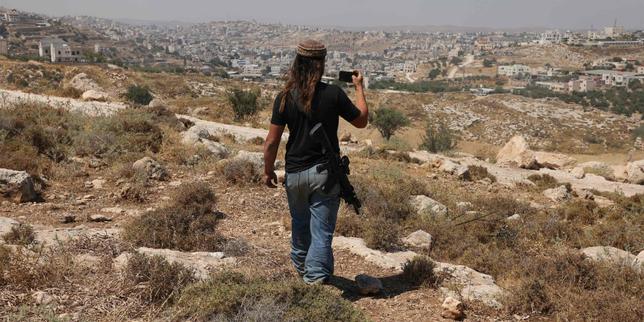
The friction is driven by a tiny, hyper-radicalized subculture known colloquially as the "Hilltop Youth."
          [ THE SETTLER SPECTRUM ]

  +---------------------------------------+
  |  Consensus Blocs (85%)                | -> Suburban, apolitical commuters
  +---------------------------------------+
  |  Ideological Towns (13%)              | -> Religious Zionists, institutional
  +---------------------------------------+
  |  Fringe Outposts (2%)                 | -> Radicalized, anti-state actors
  +---------------------------------------+
These radicals do not just fight Palestinians; they actively fight the Israeli state. They view the Israel Defense Forces (IDF) as an occupying force when it dismantles unauthorized outposts. By lumping the actions of a few hundred ideological anarchists with the broader settler population, international observers create a flawed diagnosis that leads to useless policy prescriptions.
Why Western Sanctions Fail
In response to these "record" numbers, Western governments have begun issuing direct sanctions against specific extremist settlers and outposts. It is a classic example of virtue signaling masking a total lack of strategic leverage.
Sanctions work against global elites who hold assets in London banks and want to vacation in Miami. They do not work against a radicalized 19-year-old living in a wooden shack on a barren hillside who believes he is fulfilling a divine covenant.
In fact, external pressure achieves the exact opposite of its intended goal:
- It reinforces the siege mentality. External condemnation validates the radical narrative that the entire world is inherently hostile, driving the fringe deeper into extremism.
- It breaks internal leverage. When Western governments bypass the Israeli legal system to issue unilateral sanctions, it alienates the Israeli mainstream. It turns a domestic law-enforcement issue into a nationalist rallying point.
- It creates a shadow economy. Sanctioned outposts do not disappear; they adapt. They rely on localized crowdfunding, cash economies, and decentralized networks that are completely immune to Western financial surveillance.
The Brutal Reality Nobody Admits
If you want to stop the friction in Area C, you have to stop pretending it is a law-enforcement problem. It is a sovereignty problem.
The current chaos is the direct result of deliberate ambiguity. The Israeli government refuses to formally annex the territory because of the diplomatic fallout. The Palestinian Authority cannot assert control because it lacks the military capability and the legal mandate. The international community insists on a two-state framework that has been structurally obsolete for twenty years.
This structural vacuum guarantees conflict. When the state refuses to draw hard lines on a map, the populations on the ground will use their bodies, their fences, and their livestock to draw those lines themselves.
Stop looking at the incident counters. Stop tracking the spreadsheets. The violence is not a statistical anomaly; it is the natural, predictable calculus of an unresolved war over physical space. Until the underlying territorial ambiguity is resolved, the friction will continue to scale, regardless of how many UN press releases are issued.
Pick a map and enforce it, or get out of the way and watch the land divide itself by force.


