The train from Tachikawa pulls into the station at dawn, exhaling a long, weary sigh of gray steam into the crisp autumn air. Kenji steps onto the platform, adjusting the strap of his worn leather briefcase. He is fifty-four years old. For twenty-eight of those years, he has designed the internal wiring harnesses for advanced radar systems destined for Japan’s southwestern island chain—the defensive arc stretching down toward Taiwan like a row of teeth.
He knows every micro-ampere of current that flows through those circuits. But lately, when he looks at the blueprints, he does not see copper or silicon. He sees empty chairs.
In the design bureau where Kenji works, half the drafting tables are vacant. The young engineers simply are not arriving. They graduate from Tokyo University or Tokyo Institute of Technology and walk straight into software startups or multinational tech firms offering triple-digit salaries and remote work options. Why spend your twenties wrestling with the bureaucratic procurement bottlenecks of the Acquisition, Technology & Logistics Agency when you can build generative AI or mobile applications in Shibuya?
Japan is building a shield. Everyone agrees it is necessary. But the hands meant to hold that shield are vanishing.
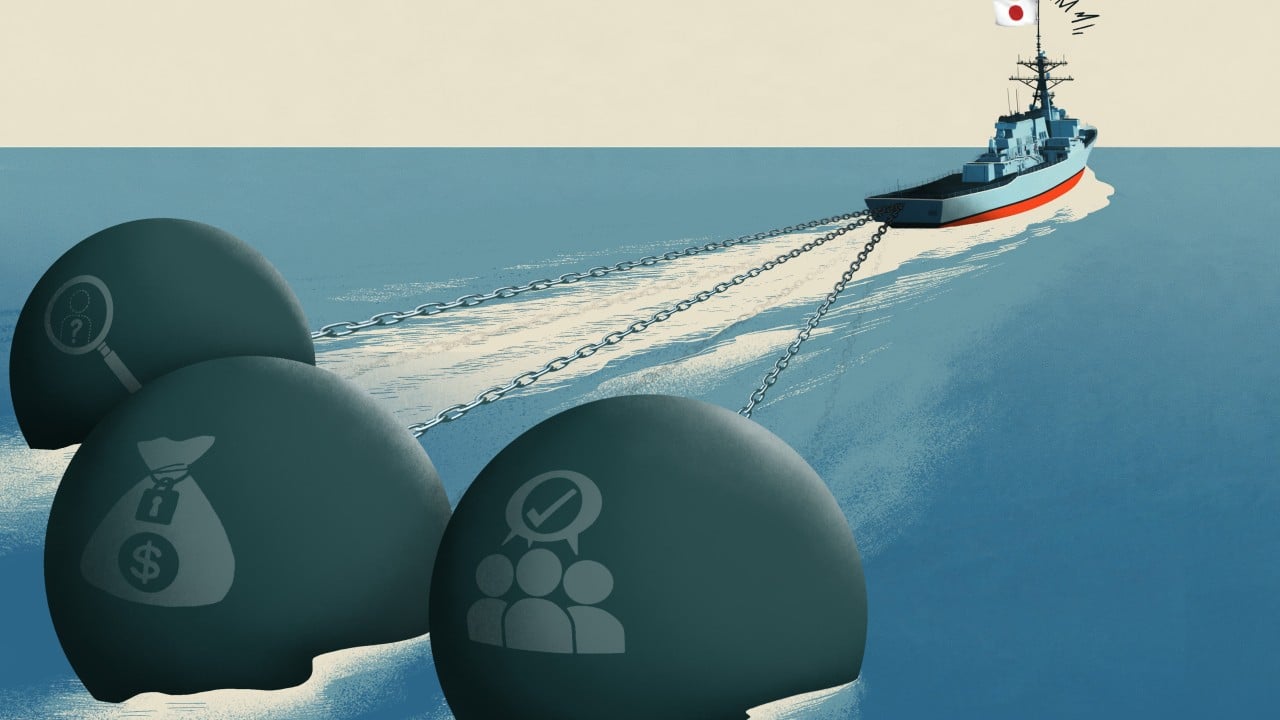
Walk through the narrow streets of Yokosuka or Kure, and you will hear the low, persistent hum of heavy industry. Dry docks echo with the sharp staccato of riveting hammers. New frigates rise against the skyline like pale monoliths. Prime Minister Shigeru Ishiba and his predecessors have committed to a historic transformation, promising to double defense spending toward two percent of gross domestic product, pushing Japan toward a posture capable of projecting retaliatory power.
It sounds resolute on paper. It sounds like an unambiguous line drawn in the sand.
Reality is far messier. Reality smells of stale coffee, aging concrete, and the damp dust of municipal archives where recruitment targets are missed month after month.
Consider the arithmetic of a shrinking nation. Japan’s population is not merely aging; it is hollowing out from the bottom. The pool of citizens aged eighteen to twenty-six—the traditional demographic for military enlistment—has contracted relentlessly for decades. The Self-Defense Forces face a persistent shortfall, operating at roughly ten percent below their authorized personnel strength. You can purchase all the advanced surface-to-ship missiles money can buy, but missiles do not maintain themselves. They require technicians. They require logistics officers. They require human beings to monitor telemetry screens through long, silent night shifts.
When the recruitment office in Tachikawa posts flyers featuring cheerful anime mascots holding missile batteries, teenagers walk past without glancing up. They are looking at their phones, scrolling through job portals. The social contract that once bound young citizens to public service has frayed under the weight of decades of economic stagnation and changing cultural values.
Then there is the quiet friction of the treasury.
To fund this unprecedented military build-up while coping with the world's highest debt-to-GDP ratio, Tokyo faces agonizing fiscal arithmetic. Every yen funneled into defense electronics and hypersonic glide research is a yen pulled away from elder care, healthcare subsidies, and regional revitalization.
(Note: This structural trade-off between social welfare and national security spending is a central theme highlighted in recent defense white papers and economic analyses from major Tokyo financial research institutes.)
Finance Ministry bureaucrats sit in windowless rooms downtown, staring at spreadsheets that resemble flatlined heart monitors. They know the geopolitical storm gathering across the East China Sea is real. They also know that pensioners in rural Tohoku cannot eat anti-ship missiles. The political tightrope is impossibly thin. Tip too far toward fiscal austerity, and the nation's defense posture remains an unfunded aspiration. Tip too far toward military expansion, and the domestic economy strains under the pressure of higher borrowing costs and diverted tax revenues.
Local politics adds yet another layer of jagged gravel to the road.
On the southwestern islands—Ishigaki, Yonaguni, Miyako—the military build-up is not an abstract debate on a Sunday morning talk show. It is the sound of heavy bulldozers clearing red earth behind local elementary schools to install electronic warfare outposts.
Fishermen whose families have harvested mackerel from those waters for generations watch as gray naval auxiliary ships anchor in their pristine bays. They are told it is for protection. They wonder if it is an invitation for conflict.
During a recent town hall meeting in a coastal village on Okinawa’s periphery, an elderly fisherman stood up. His hands were calloused, his skin weathered by decades of salt and sun. He did not shout. He simply asked a question that hung in the humid air like a physical weight: "If the shield is here, why do I feel less safe than I did twenty years ago?"
The officials from the Defense Ministry nodded sympathetically. They spoke of deterrence. They spoke of the security environment. But they had no answer that could wash the anxiety from the old man's eyes.
This is the hidden cost of the pivot. It is not just measured in trillions of yen or thousands of missing recruits. It is measured in the quiet erosion of social cohesion, the friction between national strategy and local survival, and the exhausting burden placed on a generation of workers who are being asked to secure the future while their own present crumbles around them.
Back in Tachikawa, the fluorescent lights in the engineering office hum softly.
Kenji traces a line on his blueprint with the tip of a mechanical pencil. He thinks of his daughter, who works in digital marketing across town and has never once asked him what he builds in this room. He thinks of the headlines from Beijing and Washington, loud and urgent, dictating a pace of history that ordinary human lives can barely sustain.
He takes a deep breath, reaches for his calculator, and gets back to work. Outside the window, the autumn dusk settles over the tracks, turning the steel rails the color of ash.