The rain in North Yorkshire does not fall; it drives sideways, a relentless gray sheet that blurs the distinction between the horizon and the sodden earth of Catterick Garrison. On days like this, the mud takes on a living, breathing malice. It clings to combat boots, cakes the tracks of armored vehicles, and seeps through the seams of standard-issue Gore-Tex.
For the young men and women of the Royal Lancers, this bleak expanse is just Tuesday. They are accustomed to the damp chill that settles into the bones, the deafening roar of diesel engines, and the sharp, metallic tang of gun oil. What they are less accustomed to is the sight of a seventy-seven-year-old grandfather, who happens to hold the sovereign keys to the kingdom, stepping out into the deluge with a grin plastered across his face.
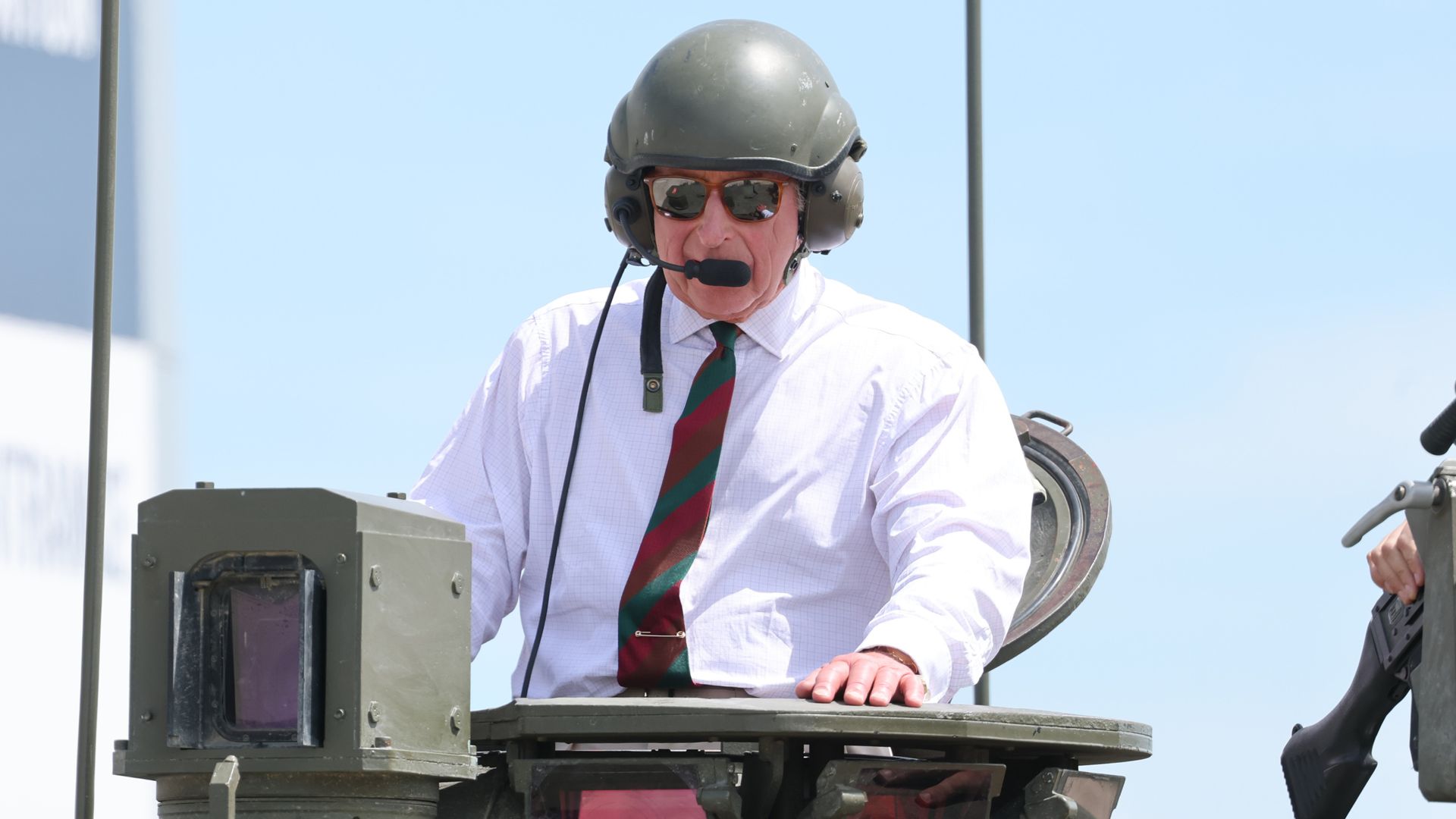
King Charles III did not come to sit on a velvet throne today. He came to climb into a multi-ton war machine.
To understand the scene is to understand something fundamental about the strange, enduring theater of the British monarchy. It is easy to look at the photographs beaming across global news feeds—a monarch in multi-terrain pattern camouflage, peering out from the hatch of a combat vehicle—and see nothing more than a carefully orchestrated public relations exercise. A photo opportunity designed to inject a bit of martial vigor into a modern crown.
But look closer at the faces of the soldiers standing in the downpour. Look at the mud on the royal boots. There is an unspoken dialogue occurring here, one built on a shared understanding of duty, aging, and the quiet burdens of service.
The Ghost of the Regiment
Every military unit is haunted by its own history. The Royal Lancers (Queen Elizabeths Own) carry a particularly heavy lineage. Their cap badge features a skull and crossbones with the motto "Or Glory"—a stark reminder of the nineteenth-century cavalrymen who rode into the jaws of death at Balaclava.
When Charles took over as their Colonel-in-Chief, he wasn't just inheriting a title. He was stepping into shoes once filled by his late mother, a woman whose connection to the military was forged during the dark days of the Second World War. For the soldiers lining the parade ground, the transition from Queen to King is not merely a change of lyrics in the national anthem. It is a shift in the gravity of their leadership.
Consider a hypothetical trooper, let’s call him Miller. Miller is twenty-two, hails from a working-class town in the North East, and spends his days maintaining vehicles that require constant, brutal physical labor. To Miller, the royal family is usually an abstraction, something seen on television screens during grand pageants or national celebrations.
Then, the abstraction arrives in a helicopter, gets mud on its trousers, and asks about the specific tension of the tank’s track pads.
The disconnect vanishes. In its place emerges a strange, uniquely British reality where the highest authority in the land is standing in a puddle, listening intently to a teenager explain how to clear a jammed machine gun.
The Cold Metallic Reality of the Jackal
The centerpiece of the visit was not a polished presentation inside a warm briefing room. It was a hands-on, bone-rattling demonstration of the Jackal 2, a high-mobility weapons platform designed for deep reconnaissance. It is not built for comfort. It has no luxury trim. It is a skeletal cage of armored steel, built to survive ambushes and traverse terrain that would swallow a conventional vehicle whole.
Seeing an aging monarch negotiate the awkward choreography of climbing into the commander’s seat of a combat vehicle is an exercise in vulnerability. There is no grace in a tank hatch. It requires a certain stripping away of royal dignity. You have to haul yourself up by sheer upper-body strength, swing a leg over rough steel, and drop into a cramped, dark space that smells of old sweat, grease, and exhaust fumes.
Charles did it without hesitation.
Inside the hull, the world changes. The ambient noise of the wind is replaced by the low, subterranean thrum of the engine vibrating through the floorboards. The air is thick. Space is a luxury. For a man who spent his life surrounded by the vast, high-ceilinged galleries of Buckingham Palace and Windsor Castle, the interior of an armored vehicle must feel like a different planet.
Yet, this is where the connection happens. Monarchy survives because it adapts, but more importantly, because it shows up. The physical presence of the King inside the machine is a signal to the regiment that their daily, grueling reality is recognized at the very top of the chain of command.
A Language Written in Mud
There is an old military adage that if it ain't raining, it ain't training. The weather during the tour provided the perfect, unvarnished backdrop for a regiment that prides itself on operating in the harshest conditions imaginable.
The interaction between the King and the crews wasn't marked by the stiff, rehearsed protocol of a state banquet. Instead, it possessed the easy, slightly irreverent warmth that exists among veterans. Charles, who served in both the Royal Navy and Royal Air Force, understands the specific language of service. He knows how to ask about the quality of the rations, the reliability of the equipment, and the morale of the families left behind during deployments.
He met with families in the community center later that afternoon. Away from the steel and the mud, the stakes became even more human. Here were the spouses and children who watch the news with a knot in their stomachs whenever the regiment is deployed abroad.
One young mother held a toddler who tried to grab the King's medals. Charles laughed, leaning down to meet the child at eye level. In that moment, the grand narrative of geopolitical strategy and military readiness dissolved into something far simpler: a grandfather connecting with a family that sacrifices its peace of mind so the nation can keep theirs.
The Quiet Burden of the Uniform
We live in an era deeply skeptical of institutions. Trust is a scarce commodity, easily eroded by scandals and the relentless noise of the digital age. The monarchy is not immune to this skepticism. Arguments about its relevance, its cost, and its place in a modern democracy happen daily in newspapers and online forums.
But out on the training areas of Catterick, those arguments lose their sharp edges.
The relationship between a Colonel-in-Chief and their regiment is not political. It is tribal. The soldiers do not fight for a political party or an abstract ideology; they fight for each other, for the history of their unit, and for the crown that sits on their cap badges. When the person wearing that actual crown comes to stand with them in the mud, it validates that sacrifice in a way that no politician’s speech ever could.
The visit concluded not with a grand fanfare, but with a traditional three cheers from the gathered troops. Their voices echoed across the bleak Yorkshire landscape, cutting through the sound of the wind.
As the royal vehicle pulled away, leaving fresh tracks in the deep mire, the soldiers turned back to their vehicles. There were weapons to clean, tracks to grease, and endless maintenance to perform before the day was done. The King was gone, back to the world of high statecraft and red boxes.
But the mud remained on his boots, and a piece of the regiment's fierce, stubborn pride went with him.