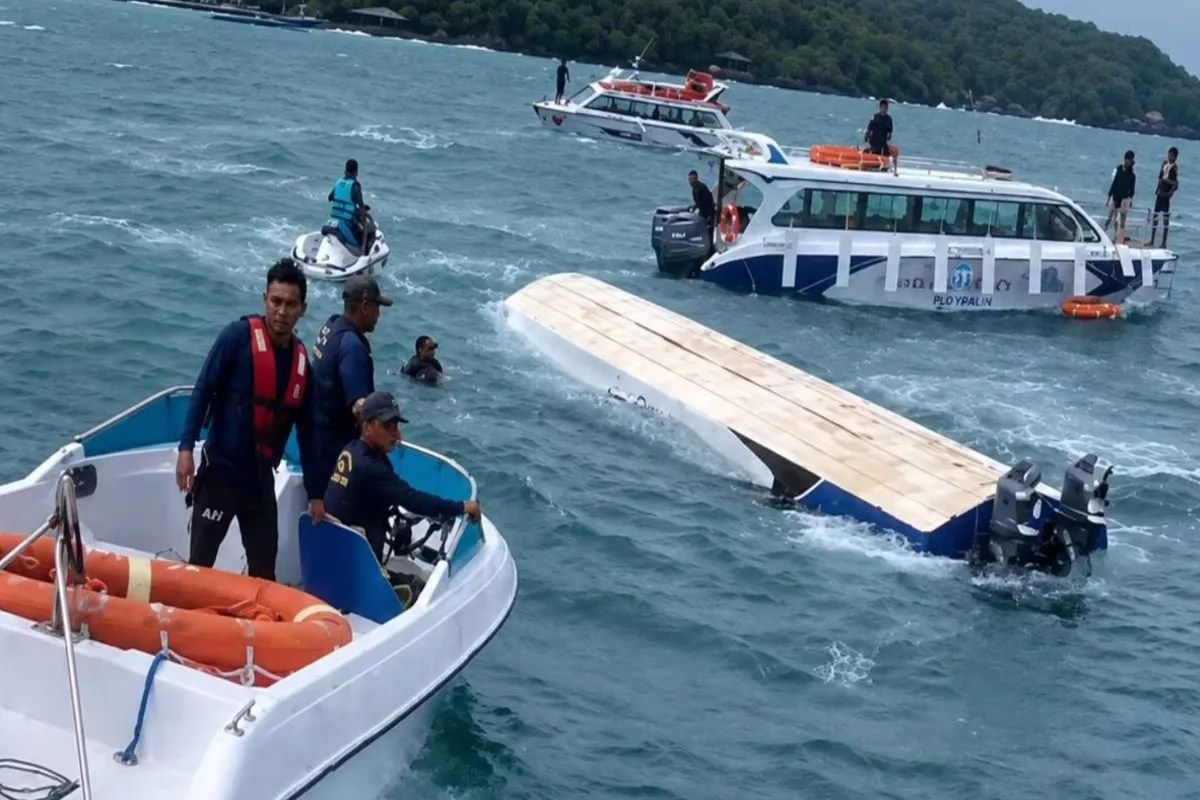
The water of Ha Long Bay does not look like a graveyard. In the late afternoon, it wears a shade of emerald so deep it feels structural, a solid floor of jade locked between towering limestone karsts. For decades, postcards have sold this image to the world. It is the definitive dream of Southeast Asian escape. Warm air, the gentle thrum of a wooden boat engine, and the promise of a sunset that dissolves into a velvety purple night.
Thirty-two Indian tourists stepped onto that water expecting a postcard. They left with a tragedy that exposes the brittle reality hidden beneath the global tourism boom.
When a tour boat capsizes, the initial reports are always skeletal. The dry dispatch of the wires noted that fifteen lives vanished beneath the surface when the vessel rolled over, leaving families shattered and a rescue operation scrambling through the dark. But statistics do not drown. People do. To understand what happened in those chaotic, terrifying minutes, one must look past the numbers and into the anatomy of a holiday gone wrong.
The Weight of an Unseen Modern Gold Rush
Travel is no longer just an activity. It is a currency of modern identity. The rise of affordable international flights has democratized the exotic, turning places that once required a year of planning into weekend getaways. Vietnam, with its sweeping coastlines and rich history, has become a primary beneficiary of this migration.
But rapid growth creates blind spots.
Imagine a local captain. Let's call him Minh, a composite of the many operators working these waters. Minh has spent his life on the sea, but the sea he knows is changing. Ten years ago, he ferried sacks of rice and local fishermen. Today, he ferries human expectations. The pressure to maximize every tide, every square foot of deck space, and every hour of daylight is immense. When the demand spikes, safety margins often shrink.
The boat carrying the thirty-two passengers was a traditional wooden cruiser, a design meant for steady, predictable conditions. Yet, the sea is rarely predictable. A sudden shift in weight, an unexpected gust channeled through the limestone canyons, or a wake from a larger vessel can instantly turn a stable deck into a vertical wall.
When the tilt began, it likely happened in seconds. Total silence, followed by the terrifying sound of shifting wood and rushing water.
The Anatomy of Sudden Chaos
Survival in the water is not about fitness. It is about psychology.
Consider the environment of a crowded tour boat. Passengers are taking photos, laughing, adjusting their bags. They are in a state of hyper-relaxation. Their guards are entirely down. When a vessel capsizes, the transition from comfort to survival is so violent that the brain struggles to process it.
First comes the disorientation. The sky is suddenly where the floor was. Cold, murky water floods the senses, cutting off vision and replacing the warm tropical air with a suffocating weight. In these moments, the absence of a simple piece of foam and nylon—a life jacket—becomes the dividing line between life and death.
Reports suggest that many on board were caught unprepared. In the holiday mindset, life vests are often treated as seatbelts on a commercial flight: an annoying formality to be ignored once the safety briefing ends. Some use them as cushions. Others leave them buried under benches. But when the hull flips, retrieving a jacket from an enclosed cabin becomes nearly impossible. The trapped air turns the cabin into an underwater cage.
For the fifteen who did not return, the paradise they traveled thousands of miles to find became an inescapable trap. For the survivors, the emerald water will forever be stained by the memory of screaming into the void, reaching for hands that were slipping away.
The True Cost of Cheap Wonders
We live in an era of hyper-optimization. We search for the cheapest flight, the most highly rated budget tour, the itinerary that packs the most experiences into the fewest days. We trust that because an experience is listed on a sleek smartphone app, it has been vetted by an invisible hand of global standards.
That trust is an illusion.
Regulatory oversight in rapidly developing tourist hubs is a patchwork quilt. Laws exist on paper, but enforcement varies wildly from port to port. A boat might be certified for twenty people but loaded with thirty-two because the operator cannot afford to turn away paying customers. The infrastructure of safety—routine hull inspections, stable ballast calculations, mandatory passenger manifests—often lags years behind the marketing campaigns that draw the crowds.
This is the hidden tax of the modern travel boom. We pay it in risk.
It is easy to blame the captain, or the local port authorities, or the unpredictable weather. But the systemic failure belongs to a global culture that prioritizes access over security. We want the adventure without the friction, forgetting that the wild places of the world remain inherently wild.
The Long Ripple After the Wave
The rescue boats have returned to the docks. The international headlines will inevitably fade, replaced by the next breaking news cycle. But in fifteen homes across India, the silence left behind by this disaster will never lift.
Suitcases will be returned packed with unworn clothes, souvenirs meant for friends, and cameras holding photos of a morning that felt entirely safe. The tragedy of the Vietnam boat accident is not just that lives were lost, but that they were lost in pursuit of joy. A family vacation is a vulnerability; it is a time when we lay down our defenses and allow ourselves to wonder. To have that wonder weaponized by negligence is a profound cruelty.
The next time you step onto a boat in a far-flung corner of the world, look past the beauty of the scenery. Look at the lines. Look at the crew. Demand the life jacket, not as a bureaucratic chore, but as a recognition of the thin line separating an unforgettable journey from an unforgettable tragedy.
The emerald waters of the world will continue to beckon, beautiful and indifferent, long after the damp wood of a overturned hull has drifted out to sea.

.webp)