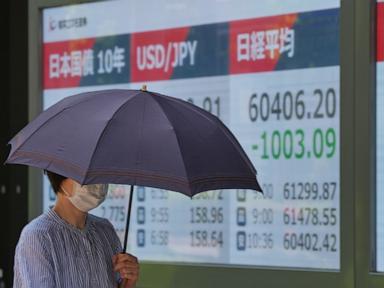
The trading floor doesn't scream anymore. The chaotic, paper-strewn pits of the twentieth century have long been replaced by rows of silent servers and rows of traders staring into the soft blue glow of multi-monitor setups. But the silence is deceptive. Panic in the modern age doesn't sound like shouting; it sounds like a sharp intake of breath, a sudden, synchronized clicking of mice, and the violent, jagged red lines plunging across a Bloomberg terminal.
On a seemingly ordinary Tuesday, that silence shattered.
It started with a phrase that was less of a diplomatic statement and more of a ticking mechanism. From the White House, the warning to Iran was clear, sharp, and laced with existential finality: The clock is ticking.
To the untrained eye, it was just another volley in a decades-long geopolitical chess match. To the global markets, it was a match dropped into a dry forest. Within minutes, billions of dollars shifted hands. Wealth didn't vanish; it transformed, fleeing from the optimistic, fragile world of equities and diving headfirst into the heavy, dark reality of crude oil.
This is the story of how a few words spoken in Washington change the price of a gallon of milk in Ohio, decide whether a family in Madrid can afford to heat their home, and send algorithms into a feeding frenzy that leaves everyday investors picking up the pieces.
The Microsecond Metamorphosis
Consider a hypothetical trader named Marcus. He sits in a high-rise in Manhattan, a half-eaten sandwich on his desk, his eyes tracking the S&P 500. He isn't thinking about grand political ideologies or the historical nuances of Middle Eastern diplomacy. He is thinking about risk.
When that headline flashes across his feed, Marcus doesn't have minutes to analyze it. He has milliseconds. More accurately, the automated algorithms his firm spent millions to develop have microseconds.
The word "Iran" triggers a cascade of pre-programmed commands. If conflict escalates, the Strait of Hormuz—the world’s most vital oil transit chokepoint—could see disruptions. If oil supplies choke, energy prices skyrocket. If energy prices skyrocket, corporate profits evaporate because it suddenly costs vastly more to manufacture products and ship them across oceans. Therefore, sell stocks. Buy oil.
Marcus watches the screen turn into a bloodbath of crimson numbers. The Dow Jones Industrial Average drops three hundred points in the blink of an eye. Apple, Microsoft, Amazon—the titans of the modern economy—are dragged down by the gravity of geopolitical fear.
Meanwhile, across the room, the energy desk is on fire. Brent crude and West Texas Intermediate (WTI) are spiking. Numbers that were hovering quietly in the mid-seventies are suddenly marching relentlessly toward eighty dollars a barrel, then higher.
This is the invisible machinery of global finance. It is cold. It is unfeeling. It takes the terrifying possibility of human conflict and translates it instantly into a profit-and-loss statement.
Why the Market Cringes When Oil Soars
It feels counterintuitive at first. Why should a tech company in Silicon Valley lose value just because tensions rise thousands of miles away?
The answer lies in the fundamental physics of the global economy. Oil is not just a commodity; it is the lifeblood of everything we touch, eat, and consume. It is the fuel in the container ships bringing electronics from Asia. It is the fertilizer used to grow crops in Iowa. It is the plastic casing on your smartphone.
When the cost of that foundational element rises, every single business faces an immediate squeeze. A company can choose to absorb that cost, which causes their earnings to drop and their stock price to fall. Or, they can pass that cost onto you, the consumer.
But consumers only have so much money. If you are spending twenty dollars more every time you fill up your gas tank, that is twenty dollars you aren't spending on a new pair of shoes, a dinner out, or a subscription service. Consumer spending slows down. The economy grinds.
The markets are a giant, forward-looking machine. They aren't reacting to what is happening today; they are trying to price in the chaos of three months from now. The moment the phrase "the clock is ticking" echoed through the press briefing room, the market didn't see words. It saw stranded tankers, closed straits, and a sudden, violent contraction of global trade.
The Human Toll Behind the Ticker Symbols
It is easy to get lost in the abstraction of percentages and index points. We talk about the market "losing value" as if it is an ethereal cloud drifting through the sky. But that cloud is anchored directly to human lives.
Think of someone like Elena. She is fifty-eight, living in Chicago, and planning to retire in seven years. She doesn't own an oil well. She doesn't trade options. She has a modest 401(k) managed by a mutual fund that tracks the broader market.
When the market takes a dive because of a diplomatic standoff, Elena's retirement fund shrinks. She logs into her account at night, feeling a familiar, hollow knot in her stomach. She watches months of hard-earned gains wiped out by a single news cycle. She wonders if she will have to work an extra year. She wonders if her savings are truly safe anywhere.
This is the psychological tax of geopolitical volatility. It creates a pervasive, ambient anxiety that alters how real people behave. When people feel insecure about their financial future, they stop spending. They hoard cash. The very fear of an economic slowdown can actually manifest one.
On the other side of this equation is the cost at the pump. For a long-haul trucker or a rideshare driver, a sustained spike in oil prices isn't a statistical variance on a chart. It is a direct pay cut. It is the difference between making a profit for the week or barely breaking even.
The Illusion of Control
We like to believe that the financial systems governing our world are rational, stable structures built on rock-solid fundamentals. We analyze price-to-earnings ratios, study labor reports, and dissect corporate balance sheets.
But the truth is far more fragile. The markets are built on human psychology, and human psychology is easily terrified.
When a superpower issues a stark warning to a major oil-producing nation, it introduces an variable that no algorithm can perfectly calculate: the unpredictable nature of human ego and political miscalculation. History is littered with conflicts that nobody truly wanted, sparked by rhetoric that escalated beyond anyone's ability to contain.
The markets know this. They remember the oil shocks of the 1970s. They remember the sudden market panics of the early 2000s. They understand that peace is a fragile veneer, and global trade relies entirely on that veneer remaining intact.
The sudden pivot from stocks to oil is an act of economic self-preservation. It is the financial world putting on its body armor and retreating to the bunker. Money flees the speculative, hopeful future of technology and retreats to the brutal, tangible present of fossil fuels.
The Unseen Equilibrium
Eventually, the initial shock waves always begin to subside. The human mind, and by extension the market, cannot maintain a state of peak panic indefinitely.
Traders take a deep breath. Analysts look past the headline to assess the actual physical reality on the ground. Are the tankers still moving? Are the wells still pumping? If the answer is yes, a slow, tentative stabilization begins.
The red lines on the screens level off. The steep climb of oil prices slows to a halt, perhaps retracing a few cents. The market adapts to the new baseline of tension, building a "risk premium" into the price of everything, waiting for the next word, the next tweet, the next movement of troops.
But the scar tissue remains. Every time these geopolitical tremors occur, they leave behind a world that is slightly more cautious, slightly more expensive, and significantly more uncertain.
The next time you hear a political leader use the language of ultimatums, look past the political theater. Don't just listen to the ideology. Look at the numbers shifting silently in the background. Watch the way wealth migrates across the globe in a desperate attempt to find high ground before the storm hits.
We live in a world where a whisper in a Washington corridor can instantly reorder the value of human labor and ambition across the globe. The clock is indeed ticking, but it isn't just ticking for diplomats and generals. It ticks in the grocery aisles, at the gas stations, and in the quiet anxieties of millions of people wondering how much a few words will cost them tomorrow.