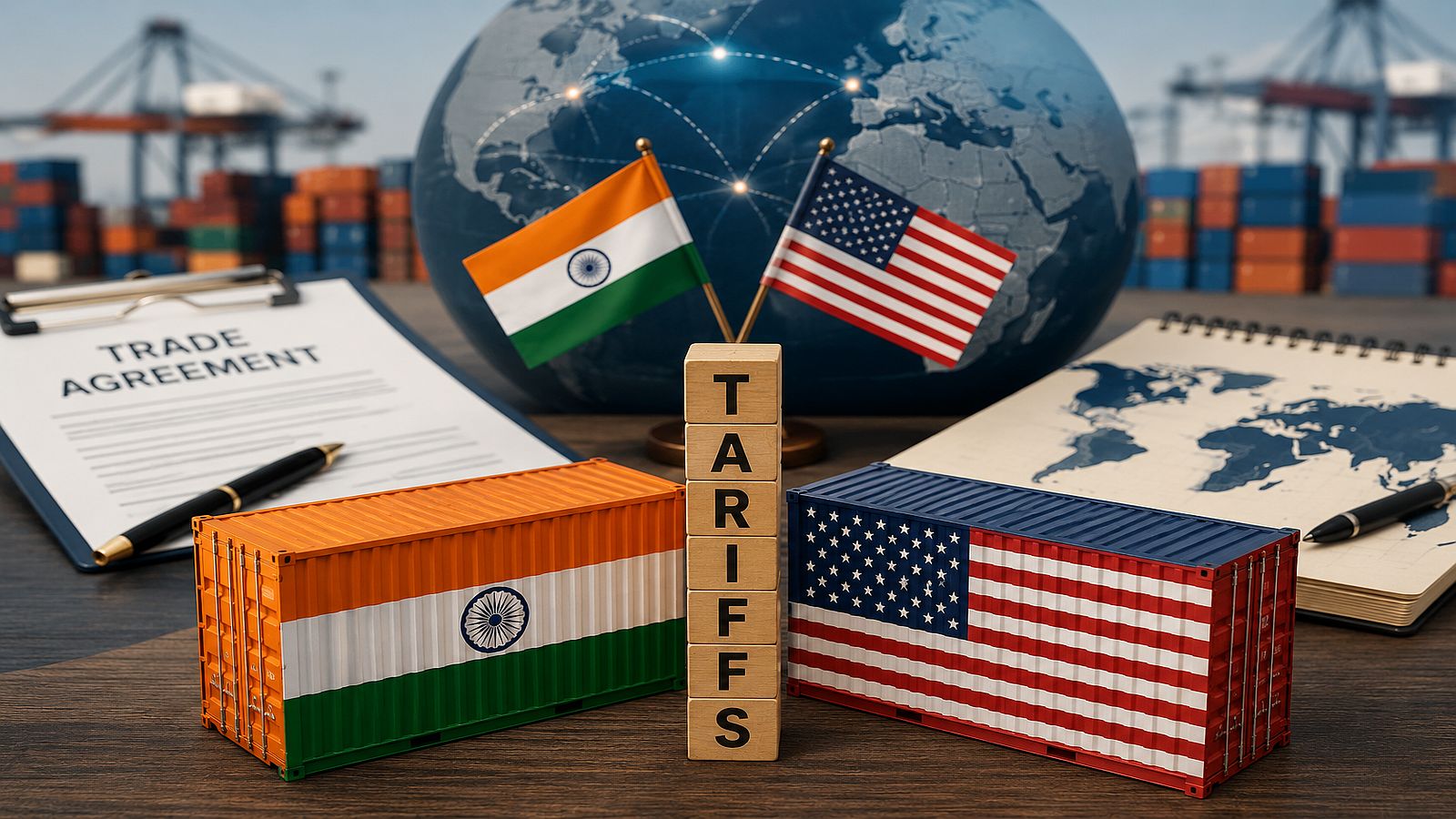
Every financial desk in New York and London just lost its collective mind over a single data point. Russia’s share of India’s crude imports hitting forty-eight percent is dominating the financial press. The consensus panic is predictable. The pundits scream that New Delhi is thumbing its nose at Western hegemony, that secondary sanctions are locked and loaded, and that a hundred percent tariff hammer from Washington is about to crush the trade corridor.
They are missing the entire architecture of global energy flows.
I have spent the last decade watching crude traders panic over headlines while ignoring the plumbing of the financial system. The lazy consensus assumes India is acting as a rogue state thumbing its nose at international rules. The truth is far more boring and far more brutal. New Delhi is not defying the West; New Delhi is cleaning up the West's dirty laundry while keeping its own industrial base alive.
The Arithmetic of Refined Compliance
Let us look at the numbers the financial press refuses to process. The United States and the European Union did not ban Russian oil because they suddenly developed a moral compass. They banned direct imports to score domestic political points. But energy is an inelastic commodity. If you pull three million barrels a day of Russian crude off the market entirely, global prices spike to two hundred dollars a barrel, and every Western government gets voted out of office by angry motorists within a month.
Enter India.
Refiners like Reliance Industries and Nayara Energy take discounted Urals crude, process it, and turn it into diesel and jet fuel. Under the rules of international trade, once crude is refined into a petroleum product in a third country, its origin legally resets. That diesel is then legally exported to Europe and the United States.
Imagine a scenario where India stops buying discounted Russian barrels tomorrow. Global crude supplies tighten instantly. Brent spikes. European diesel inventories evaporate. The Western politicians threatening tariffs know this better than anyone else. If Washington actually slaps a hundred percent tariff on Indian goods linked to Russian oil feedstock, they are essentially sanctioning their own transport and manufacturing sectors. It is economic self-harm disguised as foreign policy posture.
The Currency Fiction
Another favorite narrative from the compliance armchair is the de-dollarization myth. Every time India pays for Russian oil in dirhams, rupees, or yuan, breathless analysts write essays about the imminent death of the greenback.
Wake up.
No major commodity exporter wants to accumulate billions of rupees that can only be spent buying Indian IT services or pharmaceuticals. The liquidity simply does not exist at scale. What is actually happening behind closed doors is a massive, opaque clearing operation where those non-dollar receipts are quickly funneled back into Western debt instruments or triangulated through third-party financial hubs. The dollar remains the undisputed king of transaction friction because no one else has the depth of capital markets to absorb sovereign-sized surpluses.
When you look at the ledger, India is not abandoning the dollar. India is using temporary currency workarounds to arbitrage a broken sanctions regime, while the underlying financial architecture remains stubbornly American.
The Geopolitical Leverage Trap
Washington’s threat of heavy tariffs assumes India is economically vulnerable enough to fold under pressure. This is a profound misread of twenty-first-century geopolitics. India is the swing state of the global economy.
If the United States alienates New Delhi over Russian energy imports, Washington hands a massive victory to Beijing in the ongoing competition for Asian alignment. India knows this. Prime Minister Narendra Modi’s administration is not playing a clever game of multi-alignment out of moral neutrality; they are extracting maximum economic rent from a fractured superpower dynamic.
The real risk is not that India gets crushed by Western tariffs. The real risk is that the discount on Russian crude narrows, squeezing Indian refining margins. When Urals trades at parity with Brent, the incentive to absorb the compliance headache disappears. Until then, the trade continues because it serves everyone involved, including the Western consumers burning Indian-refined diesel in their tanks.
Stop reading the press releases. Start looking at the tanker tracking data. The trade is not stopping. It is just getting better at hiding in plain sight.