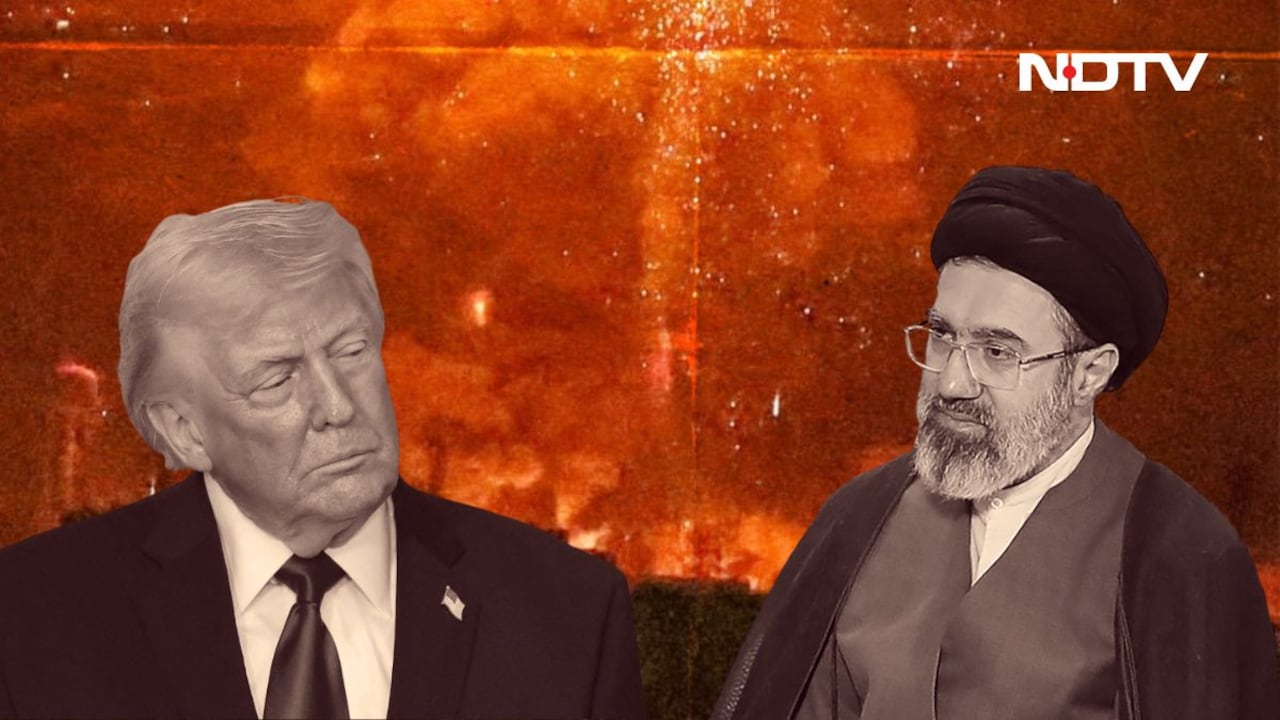
Every time Tehran drops another cinematic trailer about the depths of hell or asymmetrical retaliation, Washington reacts like an amateur card player shown a flash of a marked deck. Headlines scream about new strategies, hidden tunnels, and apocalyptic proxy doctrines.
It is theater. Expensive, highly produced theater designed for domestic consumption and foreign exhaustion.
The lazy consensus in mainstream security reporting treats every Iranian press release as a masterclass in covert engineering. Commentators point to asymmetric warfare as an impenetrable wall, assuming that because a state can bleed an adversary through proxies, it possesses a stable, forward-looking grand strategy. That is a fundamental misread of structural reality.
I have watched defense analysts burn millions of hours tracking phantom capabilities while missing the rotting foundation beneath them. When an economy is shrinking under hyperinflation and institutional corruption, aggressive rhetoric ceases to be a prelude to a brilliant campaign. It is a desperate distraction mechanism.
Let us look past the fog machines.
The Myth of Asymmetric Omnipotence
For decades, the standard talking point across foreign policy circles has been that Iran holds a monopoly on asymmetric conflict. The narrative claims that by decentralizing command to regional militias, Tehran has built a foolproof deterrent against conventional force.
This is backward. Decentralization is not just a tactical choice; it is an admission of systemic vulnerability.
When a central military apparatus lacks the industrial base, fiscal health, and supply chain integrity to sustain a modern conventional force, it resorts to cheap substitutes. Proxies are not super-weapons. They are economic band-aids. They cost less to maintain than a blue-water navy or a modern air force, but they come with a catastrophic cost to central command and control.
Imagine a scenario where a corporation cannot afford R&D, so it hires a network of fragmented freelance contractors to throw rocks at its competitors. It creates noise, sure. It disrupts the market momentarily. But does it build a sustainable enterprise? Absolutely not. It breeds warlordism, internal friction, and a chronic inability to execute coordinated, strategic maneuvers.
When we analyze the actual logistics of these proxy networks, the veneer of tactical genius cracks. Communications are intercepted with terrifying regularity. Supply lines rely on porous borders and black-market smuggling that can be choked off by basic maritime interdiction. The strategy is brittle. It shatters the moment an adversary stops playing defensive tag and starts targeting the financial arteries feeding the network.
The Domestic Illusion and Economic Reality
The missing variable in every breathless warning about new confrontation strategies is domestic friction. Foreign policy hawks love to analyze missile specs while ignoring bread prices in Tehran.
States that rely on constant external crisis management do so because their internal social contract is broken. When a government cannot deliver clean water, stable electricity, or a currency worth holding, it must manufacture an external demon to justify the secret police and the defense budget.
This is not a position of strength. It is a cornered animal snarling at its own shadow.
The threat matrix changes entirely when you shift your focus from what regime officials say on state television to what citizens whisper in the bazaars. Capital flight out of the country has reached astronomical levels over the last decade. Brain drain is hollowing out the engineering and medical sectors. You cannot build a sustainable geopolitical hegemony when your best and brightest minds are buying one-way tickets to Istanbul or Toronto.
Yet, Western media continues to treat the regime as a chess grandmaster playing four-dimensional poker. We treat every rhetorical escalation as a stroke of genius rather than a desperate attempt to change the subject before the domestic populace demands accountability for crumbling infrastructure.
Why the Deterrence Model Is Broken
The traditional deterrence model relies on rational actors calculating costs and benefits. If you strike us, we strike your oil tankers. Simple.
That model fails when applied to a system where the ruling elite conflates regime survival with national survival. For these actors, a bad economic deal that saves the ruling class is preferable to a great economic deal that empowers a domestic middle class.
This creates a perverse incentive structure. Escalation dominance is not about who has more missiles; it is about who cares less about collateral damage to their own people. When an administration operates without domestic accountability, it can absorb economic pain that would trigger immediate regime change in a transparent democracy.
This is why traditional containment strategies keep stalling. Western diplomats arrive at the table expecting a rational ledger of trade-offs, while the opposing side views the negotiation table simply as a prop for domestic propaganda.
To break this loop, we have to stop treating their threats as technical blueprints and start treating them for what they are: political theater designed to freeze Western decision-making through intimidation.
Dismantling the Fear Industry
The industry of threat assessment is built on worst-case scenarios. If an analyst predicts peace and stability, nobody funds their think tank. If they predict an imminent apocalyptic showdown orchestrated by shadowy tactical masterminds, they get a prime-time cable slot.
We need to inject a heavy dose of empirical skepticism back into security studies.
Look at the actual hardware. Much of the boasted domestic defense manufacturing relies on reverse-engineered components from decades ago, patched together with commercial off-the-shelf electronics that fail under electronic warfare pressure. The operational readiness rates of heavy armor and aviation fleets are abysmal due to sanctions-induced parts shortages.
When you strip away the parade footage and the computer-generated graphics released by state media, you find a hollowed-out conventional military trying to compensate with high-volume, low-precision deterrent messaging.
Stop trembling at the press releases. Stop projecting sophisticated grand strategy onto tactical survival mechanisms.
The deepest depths of hell are not waiting to be unleashed upon the West. They are already consuming the institutional, economic, and social fabric of the regimes threatening to build them.