Stop crying about the carbon footprint of a cruise missile.
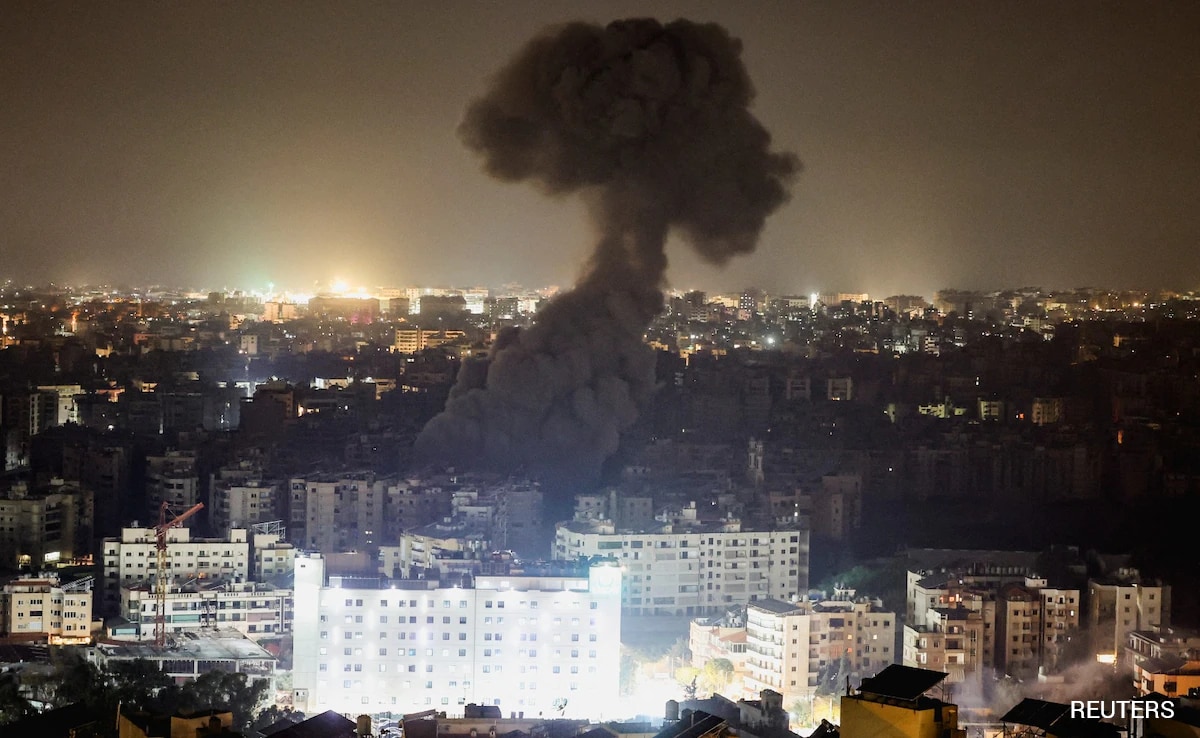
The standard media narrative regarding conflict in the Middle East follows a predictable, lazy script: war happens, bombs fall, and the environment becomes a "silent victim." This perspective is not just reductive; it is intellectually dishonest. It treats the environment as a fragile museum piece rather than a dynamic, resilient system that often finds its only breathing room when human industry is ground to a halt by kinetic force.
The "Environment as Casualty" trope assumes that a state of peace is inherently green. It isn't. In the Middle East, "peace" usually means the unhindered expansion of carbon-intensive desalination plants, massive concrete urban sprawl, and the relentless extraction of hydrocarbons. When we talk about the ecological cost of war, we ignore the ecological cost of the status quo.
The truth is far more uncomfortable. War is a localized environmental disaster that often prevents a global systemic catastrophe by disrupting the very industrial machines we claim to hate.
The Myth of the Green Peace
Environmental journalists love to cite the CO2 emissions of fighter jets. Yes, a Boeing F-15E Strike Eagle burns roughly 25 gallons of fuel per minute. It’s a localized spike in emissions. But compare that to the alternative: the uninterrupted operation of a regional economy built on the "growth at all costs" model.
Consider the reconstruction cycles. The "lazy consensus" argues that war is bad because we have to rebuild everything. They miss the nuance of what is being rebuilt. War acts as a violent, involuntary "Urban Renewal" project. When a 50-year-old, inefficient, leaking power plant is taken offline by a strike, it is eventually replaced—out of necessity—with modern, more efficient infrastructure.
We see this in the data of post-conflict zones. Efficiency gains in the decade following a conflict often outpace the slow, bureaucratic crawl of "green transitions" in peaceful nations. Peace breeds complacency and the preservation of "legacy" (read: dirty) systems. Conflict forces an immediate, brutal pivot to resilience.
Nature Thrives in the Dead Zone
If you want to see a thriving ecosystem, look where humans are afraid to go.
The Demilitarized Zone (DMZ) between North and South Korea is a premier example of "War-Induced Rewilding." Because humans are busy pointing guns at each other, the Red-crowned crane and the Korean tiger have a sanctuary they would never have if a shopping mall or a soy farm were built there.
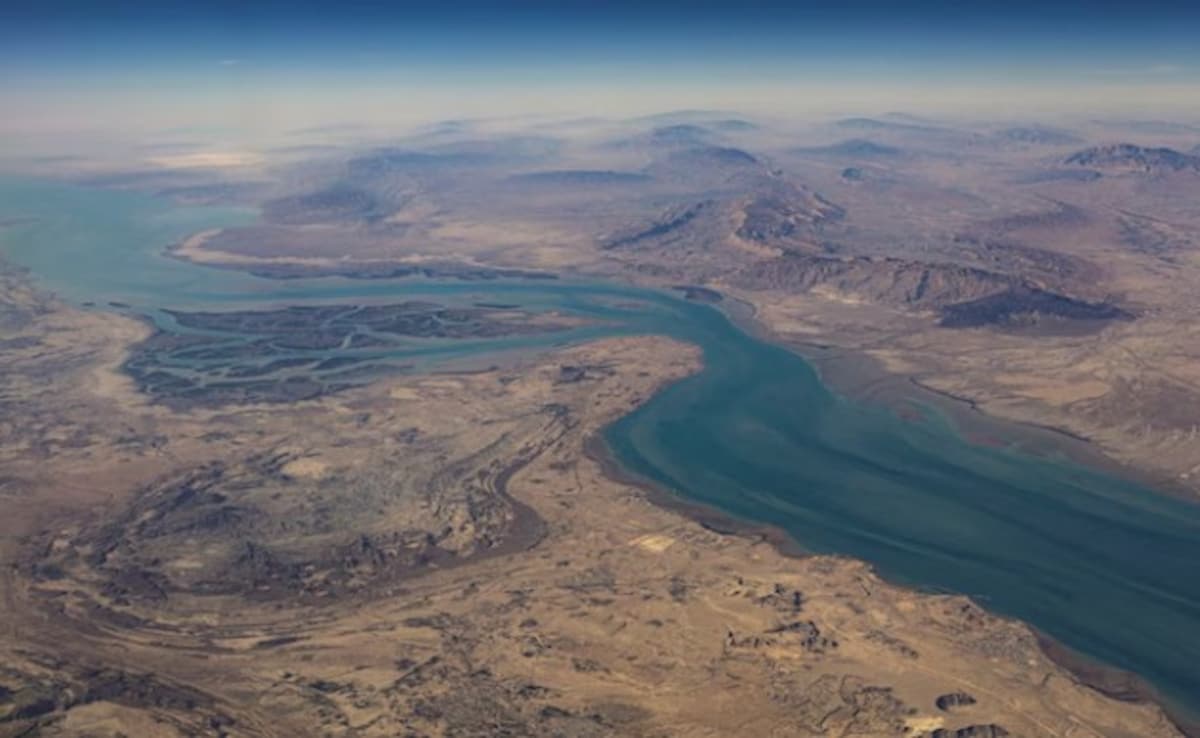
In the Middle East, conflict zones often create "involuntary parklands." When farming becomes too dangerous, the soil rests. When fishing boats are grounded by blockades, marine stocks recover. We saw this during the Tanker War of the 1980s; when commercial traffic slowed, the pressure on the Persian Gulf's fragile coral systems actually dipped.
The argument that war is an "environmental catastrophe" ignores the fact that human "development" is a slow-motion extinction event. War is a sharp, jagged interruption of that event.
The Desalination Delusion
Let’s talk about water. The "People Also Ask" section of your favorite search engine will tell you that war destroys water infrastructure.
True. It does.
But what the "experts" won't tell you is that the Middle East's current water strategy—massive, energy-intensive desalination—is an ecological suicide pact. These plants dump hyper-saline brine back into the Gulf, raising salinity levels to the point of "marine desertification." They are powered by the very fossil fuels that are heating the region toward the "wet-bulb temperature" limit of human survival.
When conflict disrupts these plants, it is a tragedy for the humans living there. I’ve seen the misery of water scarcity firsthand; it is brutal. But from a purely "environmental" standpoint—the very thing these articles claim to protect—the cessation of brine pumping is a net positive for the marine biology of the Red Sea and the Persian Gulf.
We need to stop pretending that an industrial system that is actively killing the planet is "good" just because it isn't currently exploding.
The Logic of the Scorched Earth
Critics point to the burning of oil wells, like the 1991 Kuwaiti fires, as the ultimate environmental sin. They cite the $1.5$ billion barrels of oil lost.
Let's do the math that the environmentalists won't.
That oil was going to be burned anyway. Whether it burned in a wellhead in 1991 or in the engine of a Ford F-150 in 1995, the carbon was destined for the atmosphere. The difference? The soot from the Kuwaiti fires actually had a localized cooling effect by blocking solar radiation.
I am not suggesting we go around lighting oil wells on fire to stop global warming. That is a bad-faith interpretation. I am suggesting that our outrage is misplaced. We are outraged by the "ugly" smoke of war, but we are perfectly fine with the "invisible" smoke of a functioning global economy. It is aesthetic environmentalism, not scientific environmentalism.
Precision Munitions vs. Industrial Sludge
The modern battlefield is becoming increasingly "cleaner" in a way that traditional industry is not.
The move toward precision-guided munitions means we are no longer carpet-bombing entire forests or cities. A single $R9X$ Hellfire—the "Ninja" missile—uses pop-out blades instead of explosives to neutralize a target. It has a "blast radius" of zero.
Meanwhile, the "peaceful" textile industries in the region continue to dump untreated dyes into the Litani River or the Nile. The "peaceful" agricultural sector continues to deplete aquifers that won't be recharged for 10,000 years.
Where is the outcry?
It’s absent because there are no dramatic explosions to film for the evening news. We have been conditioned to believe that violence is the only thing that harms nature, while the "silent" violence of capitalism is just "business as usual."
The Solar Transition of Necessity
In Gaza, Yemen, and Syria, you won't find people waiting for a government-subsidized "Green New Deal." You find the highest density of residential solar panels in the world.
Why? Because the centralized, fossil-fuel-burning grid was destroyed.
War accelerated the transition to renewable energy in these regions by decades. When the "reliable" dirty energy dies, the "unreliable" clean energy becomes the only way to keep the lights on. It is a decentralization of power—literally and figuratively.
This is the "nuance" the competitor article misses. They see a broken grid and cry "Casualty!" I see a broken grid and see the birth of a decentralized, solar-powered future that doesn't rely on a corrupt state or a polluting oil monopoly.
Stop Asking the Wrong Questions
The question isn't "How do we protect the environment during war?"
The question is "Why do we only care about the environment when it’s being blown up?"
If you actually cared about the Middle Eastern environment, you would be protesting the expansion of the NEOM megacity in Saudi Arabia—a project that will require more concrete and energy than a decade of regional skirmishes. You would be attacking the luxury tourism industry in Dubai that builds indoor ski slopes in the desert.
But you don't. You wait for a war so you can feel a sense of moral superiority while ignoring the fact that your "peaceful" lifestyle is the primary driver of the region's ecological collapse.
War is a localized, acute trauma. Peace, as we have currently constructed it, is a chronic, terminal illness.
Stop mourning the smoke. Start questioning the fire that was already burning before the first shot was fired.
Go look at a satellite map of the night sky over the Middle East. The dark spots aren't just where the power is out; they’re the only places where the planet is finally getting some rest.
Build your "green" future on the ruins of the old one, because the old one was never going to let you change it voluntarily.