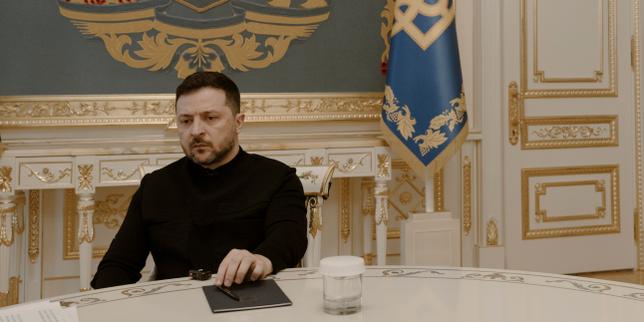
Volodymyr Zelensky isn't backing down, but he's also not closing the door on a face-to-face meeting with Vladimir Putin. He's made one thing very clear lately. He’s willing to sit across from the Russian leader to discuss an end to the war in Ukraine, but you won't find him in Moscow, and he's not expecting the meeting to happen in Kyiv either. It’s a calculated move. By suggesting a neutral location, Zelensky is trying to strip away the home-turf advantage that both sides would cling to in their respective capitals.
The Ukrainian president knows the optics matter just as much as the agenda. A meeting in Moscow would look like a surrender; a meeting in Kyiv might be seen as a trap by the Kremlin. So, we're looking at a third-party site. This isn't just about geography. It’s about creating a space where actual diplomacy has a fighting chance without the suffocating pressure of state-sponsored pageantry.
The diplomatic dance for a neutral venue
Finding a patch of dirt that both leaders agree on is harder than it sounds. You’ve got to think about security, political alignment, and the simple logistics of getting two of the world's most protected men into the same room. Zelensky’s insistence on avoiding the "big two" cities—Moscow and Kyiv—paints a picture of a leader who’s realistic about the deep-seated distrust between the two nations.
Historically, we’ve seen cities like Istanbul or even Jerusalem floated as potential hosts. Turkey has been itching to play the mediator for a long time. Erdogan enjoys the tightrope walk between NATO interests and his working relationship with Putin. Then there's Switzerland, the classic choice for "neutral" ground, though Russia has complained lately that Swiss sanctions have compromised that neutrality.
The choice of venue isn't just a detail. It’s the first negotiation. If they can’t agree on where to sit, they certainly won't agree on where the borders should be. Zelensky is throwing the ball into Putin’s court here. He’s saying, "I’m ready. Are you?" It puts the pressure on the Kremlin to show they’re actually interested in a resolution rather than just more shelling.
Why a face to face meeting remains a long shot
Let’s be honest. Even if they find a nice hotel in Ankara or a palace in Vienna, the obstacles are massive. Putin has spent years delegitimizing the Ukrainian government. Calling for "denazification" makes it pretty awkward to then sit down for coffee with the guy you've been calling a puppet. On the flip side, Zelensky has the weight of his people on his shoulders. After the atrocities in Bucha, Mariupol, and countless other cities, many Ukrainians see any talk with Putin as a betrayal.
Zelensky has to balance the need for peace with the demand for justice. He’s said before that any final agreement would likely need to go to a national referendum. That’s a huge gamble. You don't just sign a treaty and call it a day; you have to sell that treaty to a population that has lost everything.
Meanwhile, Russia’s demands haven't exactly softened. They want Crimea. They want the Donbas. They want a neutralized Ukraine that can never join NATO. Zelensky’s "neutral ground" offer shows he’s willing to talk, but it doesn't mean he's willing to cave. It’s a game of high-stakes poker where the chips are human lives.
The role of international pressure in 2026
The world isn't the same as it was in 2022. By now, the global economy has been reshaped by these sanctions and energy shifts. There's a growing fatigue in some Western capitals, though the military support for Ukraine remains the backbone of their defense. Zelensky knows that he needs to keep the diplomatic momentum alive to ensure that the "Ukraine fatigue" doesn't lead to a forced, unfavorable peace.
By repeatedly stating his readiness to meet, Zelensky maintains the moral high ground. He looks like the rational actor seeking a way out, while Putin often appears isolated in a bunker mentality. This matters for the Global South—countries in Africa, Asia, and South America that have stayed on the sidelines. They want the grain shipments to flow and the fertilizer prices to drop. If Zelensky looks like the one trying to end the war, he wins the PR battle on the global stage.
The "not in Moscow, not in Kyiv" stance is also a security necessity. The threat of assassination or a "special operation" during a summit is a nightmare for intelligence agencies. A neutral country provides a buffer. It allows for international observers and a more controlled environment where the focus can actually be on the map and the ceasefire terms.
What a meeting would actually look like
Don't expect a grand signing ceremony with smiles and handshakes. If this happens, it’ll be cold. It’ll be tense. You’ll have rooms full of lawyers and generals arguing over every comma in a document. The primary focus would have to be a permanent ceasefire and the withdrawal of Russian troops to pre-invasion lines.
Zelensky has mentioned that security guarantees are his "must-haves." He wants a group of powerful nations to promise that if Russia ever attacks again, they’ll step in immediately. It’s basically NATO-lite. Russia, of course, hates this idea. This is the core conflict. How do you give Ukraine safety without making Russia feel "encircled"? It's a riddle that no one has solved yet.
Practical steps for the diplomatic track
While the headlines focus on the two presidents, the real work happens several levels down. Diplomats and advisors are constantly probing for "red lines" and "gray areas." If you're following this closely, watch the movements of officials in countries like Turkey, Saudi Arabia, or China. These are the players who could actually facilitate the logistics of a neutral-site summit.
- Keep an eye on the grain corridor updates. These small, functional agreements are often the "test cases" for larger peace talks.
- Monitor the rhetoric regarding "security guarantees." This is the real sticking point that will make or break a meeting.
- Look for shifts in the Russian state media tone. If they stop the total vilification of Zelensky, it might signal that the Kremlin is prepping the Russian public for a negotiation.
The reality is that Zelensky’s offer is a strategic tool. It keeps the possibility of peace on the table while acknowledging the brutal reality that the two sides are nowhere near each other—geographically or ideologically. He’s ready to talk, but he’s not going to walk into a lion’s den to do it. Peace is a process, and right now, the process is stuck on the "where" before it can even get to the "what."