Vladyslav Heraskevych didn't win a medal at the 2026 Winter Olympics. He didn't even get to slide. Instead of hurtling down an icy track in Cortina at 80 miles per hour, the Ukrainian skeleton racer found himself standing on a stage at the United Nations in New York. It’s a strange trade-off for an elite athlete who spent four years training for a few minutes of glory. But if you ask him, he'll tell you he wouldn't change a thing.
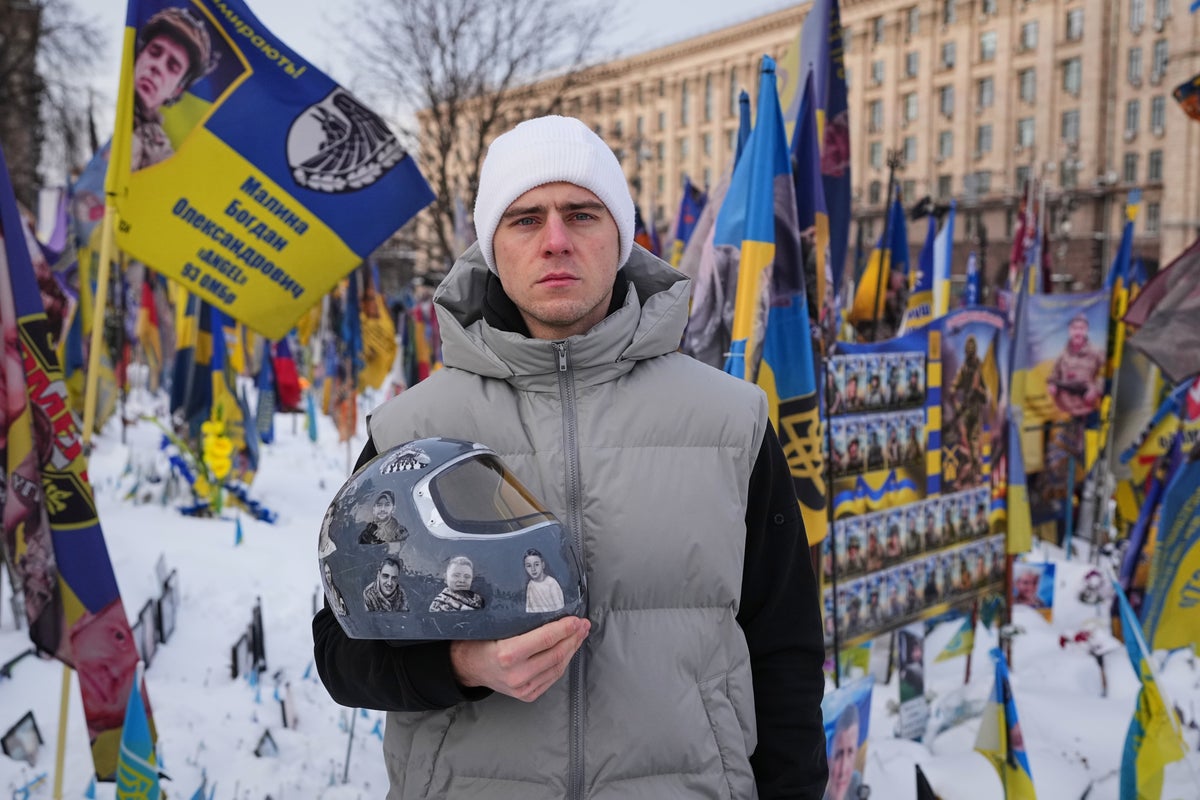
The International Olympic Committee (IOC) effectively erased his athletic season because of a helmet. It wasn't a technical violation or a performance-enhancing cheat. It was a "memory helmet" featuring the faces of 24 Ukrainian athletes and coaches killed since the 2022 invasion. The IOC called it a political statement. Heraskevych called it the truth.
The Helmet That Broke the Olympic Charter
The standoff in Italy wasn't some sudden outburst. It was a slow-motion collision between athlete expression and the IOC’s rigid Rule 50. This rule bans any kind of "political, religious or racial propaganda" in Olympic venues. The IOC’s logic is that the field of play should be a neutral zone.
Heraskevych pushed back. He wore the helmet during training runs without issue. He argued that honoring dead teammates isn't "propaganda"—it's human. The IOC offered compromises: wear a black armband or display the helmet in the media zone after the race. Heraskevych refused. He felt that hiding the faces of the fallen until the cameras were away from the track was a betrayal.
Just 45 minutes before his scheduled heat on February 12, 2026, the hammer dropped. Disqualified. The International Bobsled and Skeleton Federation backed the IOC, claiming the equipment was inconsistent with the charter. While 13 Russian athletes competed as "neutrals" nearby, the man trying to honor the victims of their state’s aggression was sidelined.
From the Icy Track to the UN Floor
Fast forward to late March 2026. Heraskevych is at the United Nations, wearing a traditional Ukrainian vyshyvanka instead of a sleek racing suit. He spoke at the "Change the World Model United Nations," an event designed to teach students about global diplomacy.
His message was blunt. He told the crowd that sports have lost their way if medals matter more than values. He wasn't there to talk about the physics of a skeleton run or how to shave a tenth of a second off a start time. He was there to talk about generators, blackouts, and the two dozen people on his helmet who will never compete again.
What the IOC Got Wrong
The real friction here is the definition of "neutrality." The IOC claims that by banning Heraskevych’s helmet, they're protecting the "sanctity" of the sport. But neutrality isn't a vacuum. When you allow athletes from an aggressor nation to compete—even under a "neutral" teal flag—while banning a victim from mourning his dead peers, you've already taken a side.
- The Double Standard: Italian snowboarder Roland Fischnaller was reportedly allowed to feature a Russian flag on his helmet as a "tribute to past host cities."
- The Human Cost: The names on Heraskevych’s helmet included Yevhen Malyshev, a young biathlete killed in 2022, and Dmytro Sharpar, a figure skater killed near Bakhmut.
- The Financial Ripple: Heraskevych had recently signed a deal with Visa. He knew the risks. He knew he was potentially blowing up his career and his sponsorships. He did it anyway.
More Than a Publicity Stunt
It's easy to dismiss this as an athlete looking for attention. But look at what Heraskevych did after the disqualification. He didn't just go on a media tour. He went back to Kyiv. He’s currently running a foundation with his father that buys generators for a power grid that’s barely holding on.
He even turned a $200,000 gift from Shakhtar Donetsk president Rinat Akhmetov—given to him as a "moral gold medal"—straight into his charitable foundation. He's a trained physicist using his degree to help solve infrastructure problems in a war zone. This isn't a guy looking for Instagram followers.
The IOC tried to silence him to keep their "neutral" bubble intact. Instead, they gave him a much bigger megaphone. By banning him from the track, they landed him at the United Nations. They turned a niche winter sport story into a global conversation about the morality of modern athletics.
The Future of Athlete Activism
We're seeing a shift. The days of athletes being told to "shut up and dribble" (or in this case, "shut up and slide") are dying. Heraskevych proved that an athlete's value isn't tied to their rank on a leaderboard. His 18th-place finish in Beijing 2022, where he famously held up a "No War in Ukraine" sign, is now a footnote. His 2026 disqualification is what people will remember.
He plans to keep sliding. He’s looking at World Cup races later this year and has his eyes on the 2030 Olympics. But he isn't backing down on the helmet. He’s already mentioned he wants to appeal to courts that aren't under the IOC’s thumb. He wants to set a precedent so the next athlete doesn't have to choose between their conscience and their sport.
If you want to support what he's doing, you don't need to watch skeleton. You can look into the "Athletes for Ukraine" initiatives or foundations focused on restoring Ukrainian sports infrastructure. The best way to honor his stand is to recognize that the faces on that helmet were real people with lives as vibrant as any Olympian.
Don't let the technicalities of Rule 50 distract you from the bigger picture. Sports aren't played in a bubble, and they shouldn't be used to mask the reality of what’s happening outside the stadium. Heraskevych chose his country over his career. That’s a win no podium can match.