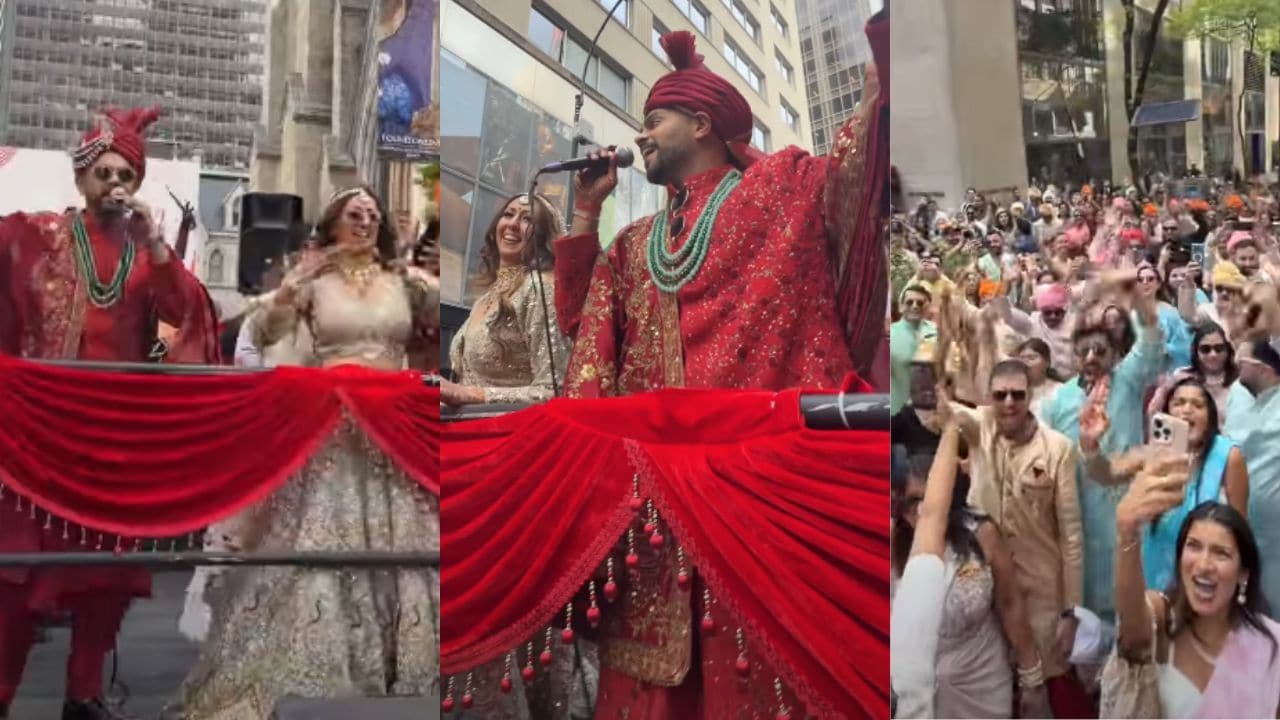
New York City is a beast. You don't just "take over" Fifth Avenue on a whim. Yet, when a high-profile Indian wedding recently turned one of the world's most famous shopping districts into a personal stage, people stopped scrolling. They watched. They shared. And honestly, they got a little obsessed.
You’ve likely seen the clips. Dancers in vibrant lehengas, baraat processions stalling luxury traffic, and that distinct, rhythmic beat of the dhol echoing off skyscrapers. It looked like a movie set. For most observers, this was just another spectacle of wealth. But if you look past the glitter and the viral clips, you'll see a massive shift in how destination weddings function today.
The Logistics Behind the Chaos
Managing a standard event in Manhattan is a nightmare. Doing it on Fifth Avenue isn't just expensive; it's a structural puzzle. People assume these things happen by accident or pure ego. That’s rarely the case. To shut down a street of that magnitude, you need deep pockets, sure, but you also need a small army of permit experts, local law enforcement coordination, and a logistical plan that would make a military general blush.
I’ve worked on events where we needed a simple sidewalk permit. It took months. Now, imagine coordinating a full-scale cultural procession through a prime retail corridor. You aren't just paying for the spectacle; you're paying for the right to disrupt the city. The cost of insurance alone for a stunt like this is staggering.
Most people don't realize that New York City actually has a framework for this. It’s part of the "Open Streets" legacy and the city’s ongoing effort to keep the streets alive after the pandemic shifts. However, the hurdle isn't just money. It’s reputation. If your event causes too much friction, the city shuts you down fast. These couples aren't just booking a venue; they’re negotiating the flow of a city that never stops.
Why Indian Weddings Changed the Destination Map
Ten years ago, a luxury destination wedding meant a beach in Mexico or a villa in Tuscany. Today, the map has expanded. We’re seeing a rise in "Urban Destination Weddings." It’s not about finding a secluded spot anymore. It’s about conquering a landmark.
Why? Because social media demands a backdrop that everyone recognizes. A beach looks like a beach. But a wedding on Fifth Avenue? That’s brand equity. It screams that you’ve arrived.
This trend also highlights the global influence of Indian wedding culture. We’re talking about multi-day affairs that prioritize guest experience, heavy production value, and absolute immersion. The industry call this "maximalism." It’s the total opposite of the small, post-2020 micro-wedding trend. It’s loud, it’s proud, and it’s effectively exporting a culture that values community and color into spaces that are usually gray, corporate, and hurried.
The Cultural Friction
Of course, not everyone loves it. If you’re a tourist trying to get to a museum or a local trying to get to work, a parade in the middle of your commute is annoying.
The backlash is predictable. You’ll hear comments about "excessive spending" or "entitlement." But that’s missing the point of the economic engine at play. These weddings pour millions into the local economy. They employ local florists, caterers, security firms, and event planners. They occupy high-end hotels. For a city like New York, high-net-worth tourism is a primary product. When a family chooses Manhattan over Paris or Dubai, the local economy wins.
What You Can Actually Learn From This
If you’re planning an event—any event—you can take notes from this level of production without having the budget of a billionaire.
- Own the space. You don't need Fifth Avenue to make a statement. You need to pick a location that tells a story and work with the local authorities to make it legally sound.
- Prioritize the guest journey. The reason these weddings go viral is that the guests are fully immersed from the moment they arrive. It’s not just a reception; it’s an experience. Think about the transitions, the music, and the sensory details.
- Hire professionals who know the local terrain. Don't try to navigate city permits or local noise ordinances on your own. It’s the fastest way to have your event ruined by a fine or a police shutdown. Find a planner who has done it before and has the rolodex to make things happen.
The next time you see a headline about a wedding stopping traffic in a major city, remember it’s not just a show of wealth. It’s a complex piece of event engineering. It’s the result of months of negotiation, a massive local economic contribution, and a bold move to make the city a part of the celebration. It’s not going away, so you might as well learn how the gears actually turn behind the curtain. Grab a permit, hire the right team, and if you have the vision, don't let a little city traffic stop you from creating a moment that sticks.