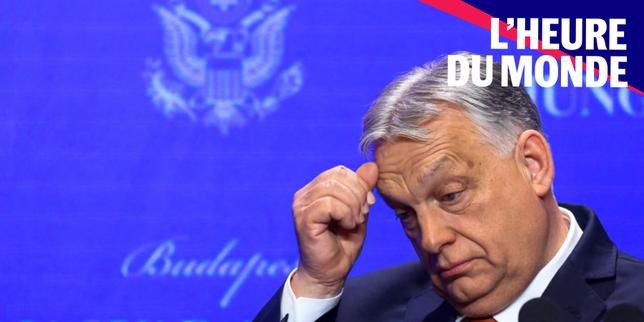
Western pundits are addicted to the "David vs. Goliath" narrative in Budapest. Every four years, the script is dusted off: a ragtag coalition of opposition parties, a charismatic challenger, and a flurry of hopeful op-eds claiming that this time, the illiberal dream is finally curdling. They point to inflation, corruption scandals, or a sudden rift with Brussels as the definitive crack in the armor.
They are wrong. They are asking if Viktor Orban can lose an election. That is the wrong question. The right question is whether the Hungarian state, as it currently exists, can even function without him.
The lazy consensus suggests that Orban’s power rests on simple gerrymandering or control of the media. While those factors exist, they are the symptoms, not the cause. The reality is far more uncomfortable for the liberal elite: Orban has built a "deep state" that is actually deep. He has successfully fused the national identity with his own political survival to the point where "losing" an election would not actually result in a transfer of power. It would result in a constitutional cardiac arrest.
The Myth of the Level Playing Field
Mainstream analysis often obsesses over the "fairness" of the vote. They cite the lopsided media landscape where 90% of outlets echo the government line. They lament the redrawing of electoral districts. But focusing on these mechanics misses the psychological capture of the Hungarian electorate.
I have spent years watching political machines dismantle democracy from the inside. Most autocrats fail because they focus on fear. Orban focuses on ownership. He didn't just buy the media; he bought the middle class. Through a sophisticated system of tax breaks for large families and subsidized mortgages, he has turned the private interests of the average Hungarian citizen into a bet on the longevity of Fidesz.
When a voter enters the booth, they aren't choosing between "democracy" and "authoritarianism." They are choosing between their current 15% flat tax and an uncertain future under a coalition that cannot agree on a lunch order, let alone a fiscal policy. The opposition’s fatal flaw is believing that moral superiority wins over material security. It never has.
The Trap of the "United Opposition"
The most frequent "game-changer" cited by outsiders is the unity of the opposition. The logic is simple math: if everyone who isn't Orban votes together, Orban loses.
This is a mathematical fantasy. Political movements are not blocks of LEGOs you can snap together. In Hungary, this forced marriage requires the far-right Jobbik party to hold hands with the liberal greens and the former socialists. It is a Frankenstein’s monster that smells of desperation.
When you strip away the "Anti-Orban" rhetoric, what is left? Nothing. There is no coherent vision for what Hungary should be, only what it should not be. Voters see through this. They know that a government built on nothing but spite will collapse within six months, leading to even greater instability. Orban doesn't need to be perfect; he just needs to be the only adult in the room. He wins by default because the alternative is a vacuum.
The Sovereign Debt and Brussels Blame-Game
European bureaucrats love to think they hold the keys to Orban’s kingdom. They freeze funds. They trigger Article 7. They talk about "rule of law" mechanisms as if they were precision-guided munitions.
In reality, these sanctions are Orban’s greatest campaign gift.
Every time Brussels cuts funding, Orban frames it as a colonial assault on Hungarian sovereignty. He uses the EU as a convenient scapegoat for every economic hiccup. The "contrarian" truth here is that the EU actually sustains Orban. By providing a clear external enemy, the EU gives Fidesz a permanent "state of emergency" footing.
Furthermore, the Hungarian economy is more resilient than the headlines suggest. While inflation has bitten hard, the government has pivoted toward Eastern capital—Chinese battery plants and Russian energy deals—ensuring that the taps don't run dry just because the European Commission is upset. Orban isn't isolated; he is diversified.
The Architecture of the Permanent State
Imagine a scenario where the opposition actually secures a majority in the National Assembly. On paper, they win. In practice, they are paralyzed.
Orban has spent a decade installing loyalists into "independent" positions with nine-year or twelve-year terms. The Chief Prosecutor, the Constitutional Court, the Media Council, and the State Audit Office are all manned by Fidesz stalwarts. These aren't just bureaucrats; they are the immune system of the Orban era.
An opposition prime minister would find their budget vetoed, their appointments blocked, and their legislation tied up in judicial review for years. To truly "defeat" Orban, a new government would have to dismantle the constitutional order—essentially becoming the very thing they campaigned against.
This is the "Deep State" reality that the competitor article ignores. Power in Hungary is no longer located solely in the seat of the Prime Minister. It is woven into the legal fabric of the country. You can't just vote it out.
The Demographic Fortress
The West looks at Budapest and sees a vibrant, pro-European youth ready for change. They forget that Budapest is not Hungary.
The rural heartlands are Orban’s fortress. In these regions, Fidesz is not a political party; it is the provider of jobs, the protector of the church, and the sole source of information. The opposition has no infrastructure there. They don't have local offices; they don't have local candidates who speak the language of the countryside.
While the urban elite tweets in English about democratic backsliding, the rural voter is seeing a new road, a renovated community center, and a narrative that tells them they are the "true" Hungarians. You cannot win an election when you treat 60% of the territory as an afterthought.
The Competitor's Blind Spot: Cultural Hegemony
The most egregious error in standard political reporting is the belief that this is a struggle over "norms." It’s not. It’s a struggle over culture.
Orban has successfully positioned himself as the last defender of "Christian Europe" against a "woke" West. You might find his rhetoric distasteful, but for a significant portion of the Hungarian population, it resonates. They look at the social upheaval in Paris, London, and Berlin and they see Orban as a necessary, if flawed, bulwark.
The opposition tries to fight this with technocratic arguments about judicial independence. It's like bringing a calculator to a knife fight. Orban is fighting for the soul of the nation; his opponents are fighting for a better credit rating. Until the opposition can offer a compelling, patriotic alternative that doesn't feel like a carbon copy of a Brussels press release, they will continue to lose.
The Cost of Victory
Is there a downside to Orban’s grip? Absolutely. The "brain drain" is real. The corruption is systemic. The reliance on foreign direct investment from autocratic regimes creates long-term vulnerabilities.
But pointing these out doesn't win elections. In the short term, Orban provides a sense of order and identity that the fragmented opposition cannot match. He has mastered the art of "illiberal democracy" by making the "illiberal" part feel like home and the "democracy" part feel like a technicality.
The international community needs to stop waiting for a "Hungarian Spring." It isn't coming. The system is designed to absorb shocks, co-opt dissent, and outlast the short attention span of Western media.
Stop asking if Orban can lose. Start asking what happens when he never has to leave. The structures he has built are designed to survive the man himself. Even if he were to vanish tomorrow, the "Orban System" would continue to hum along, governed by a thousand mini-Orbans embedded in every level of the state.
Victory, for the opposition, would be a nightmare of ungovernability. For Orban, a "loss" would merely be a strategic retreat into the deep state structures he spent twenty years perfecting. He has already won the long game. The election is just theater.
Go ahead, check the polls again. Hope for a miracle. But remember: in Hungary, the house always wins, because the house was built by the dealer.



