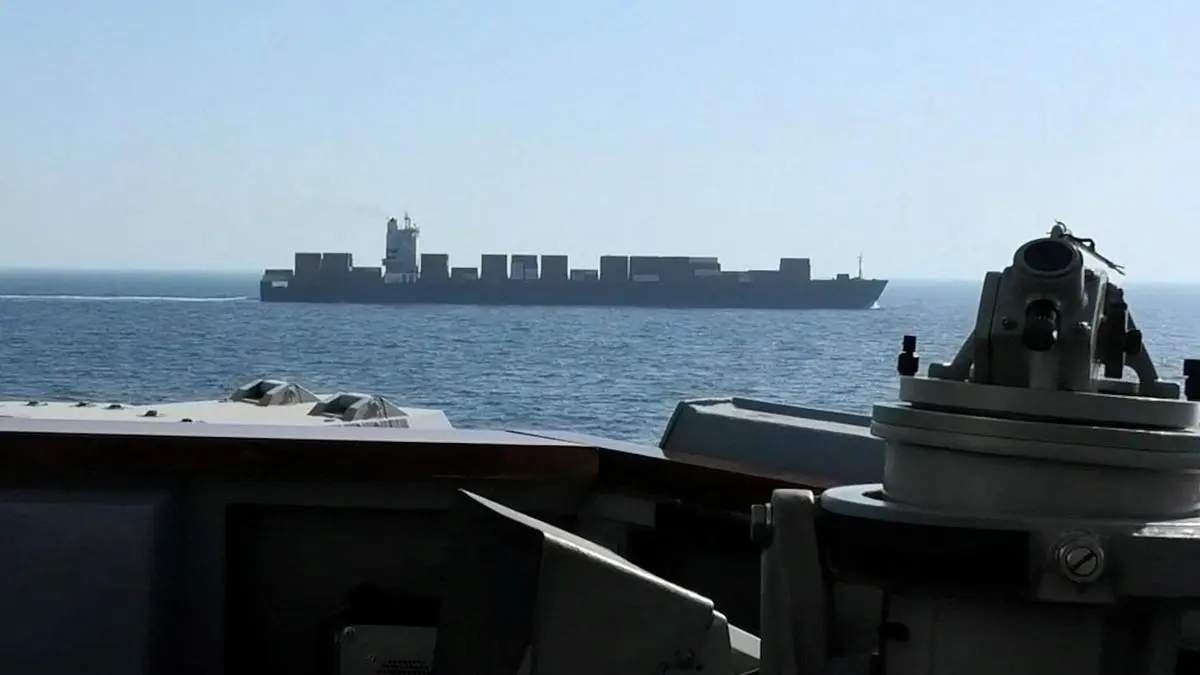
Washington just played right into a trap that has been set since 1979. The headlines are screaming about a "bold move" to secure global shipping lanes, but if you look at the balance sheet of geopolitical power, the United States just handed Iran exactly what it wanted: a valid excuse to walk away from the table and a massive spike in the risk premium of every barrel of oil moving through the Strait of Hormuz.
The mainstream narrative is lazy. It suggests that by seizing a cargo ship, the US is "projecting strength" or "enforcing international law." This is a fundamental misunderstanding of how asymmetric warfare works in the 21st century. In the world of high-stakes maritime chicken, the side that values the status quo loses. The US needs the oceans to be boring. Iran needs them to be a chaotic, expensive mess. By seizing that ship, the US just made the oceans very, very interesting.
The Myth of the "Peace Talk" Leverage
The competitor articles suggest that Iran’s refusal to engage in a second round of peace talks is a "setback." That assumes Iran ever intended to settle on Western terms. Peace talks are not the goal for a revolutionary government; they are a tool for stalling.
When the US seizes a vessel, it provides Tehran with the perfect "out." They can now play the victim to the Global South, claiming Western piracy. More importantly, they avoid having to make actual concessions on their nuclear program or regional proxies. Why negotiate when your opponent is busy doing your PR work for you?
I have watched policy wonks in D.C. make this mistake for a decade. They believe that increasing "costs" for Iran will lead to a change in behavior. It doesn’t. It reinforces the hardliners' internal logic. Every time a US destroyer pulls alongside an Iranian-linked tanker, the price of insurance for commercial shipping ticks upward.
The Economic Backfire Nobody is Talking About
Let’s talk about the math of the "rules-based order" that everyone loves to cite. The US spends billions to maintain a presence in the Persian Gulf. Iran spends thousands on suicide drones and fast boats. When we escalate to ship seizures, we are engaging in a symmetrical response to an asymmetrical threat.
- Insurance Premiums: The moment a cargo ship is seized—regardless of whose flag it flies—Lloyd’s of London recalibrates. The "War Risk" surcharge doesn't just apply to Iran; it hits every commercial vessel in the region.
- Oil Volatility: Stability is the enemy of the speculator but the friend of the consumer. By turning the Gulf into a legal and military battleground, the US is effectively taxing its own allies who rely on that energy flow.
- Legal Precedent: We call it "enforcement." Others call it "interception." When China eventually decides to seize a Philippine-flagged vessel or a Taiwanese cargo ship under the guise of "customs enforcement," they will cite these exact US actions as the legal blueprint.
The Logistics of a Failed Strategy
The US seizure of the cargo ship is often justified by pointing to the cargo—usually sanctioned oil or weapons. But in the grand scheme of the Iranian economy, one ship is a rounding error. Tehran treats these losses like "shrinkage" in a retail store. It’s a cost of doing business.
In contrast, the diplomatic cost to the US is massive. By seizing the ship during a sensitive window of potential negotiation, the State Department has effectively signaled that it has no unified strategy. One hand is reaching out for a deal; the other is grabbing the throat. This isn't "toughness." It's incoherence.
Imagine a scenario where a local police force tries to stop a massive drug cartel by occasionally impounding one of its delivery vans while simultaneously trying to invite the cartel boss to a "community outreach" dinner. The boss isn't going to show up to the dinner. He’s just going to find a different route for the vans and tell his neighbors that the police are the real thugs.
The Strait of Hormuz is Not a Chessboard
Stop thinking of this as a game of chess. It’s a game of "Go." In Go, you don't win by capturing a single piece; you win by controlling territory and making your opponent’s position untenable over time.
Iran understands this. They don't need to win a naval battle against the Fifth Fleet. They just need to make the cost of US involvement so high that the American public eventually demands a withdrawal. Every "bold seizure" by the US Navy adds to that bill.
Why the "Rules-Based Order" is Shaking
We are told that these seizures are about the law. But international law is only as strong as the consensus behind it. Currently, that consensus is shredding. When the US acts as the world’s maritime repo man, it forces neutral powers like India, Brazil, and South Africa to choose sides. Increasingly, they aren't choosing ours.
They see a superpower that ignores international maritime law when it suits its interests (like the freedom of navigation exercises) but enforces it strictly when it wants to squeeze a geopolitical rival. This hypocrisy is the most expensive thing the US exports.
The High Cost of Tactical Wins
Every time a US official stands behind a podium and brags about a successful interdiction, a hardliner in Tehran gets a promotion. We are feeding the very beast we claim to be starving.
The "lazy consensus" says we must respond to Iranian provocation. The nuance is that our response is exactly what the provocation was designed to trigger. We are reacting, not leading.
If you want to actually disrupt the Iranian maritime network, you don't do it with a boarding party in the middle of the night. You do it by making their oil irrelevant through alternative energy dominance and by building a trade coalition that doesn't require the threat of a carrier strike group to function.
Instead, we are stuck in a cycle of 19th-century gunboat diplomacy in a 21st-century digital world. We are winning the battle for the cargo ship and losing the war for the region.
Stop cheering for the seizure. Start looking at the bill.