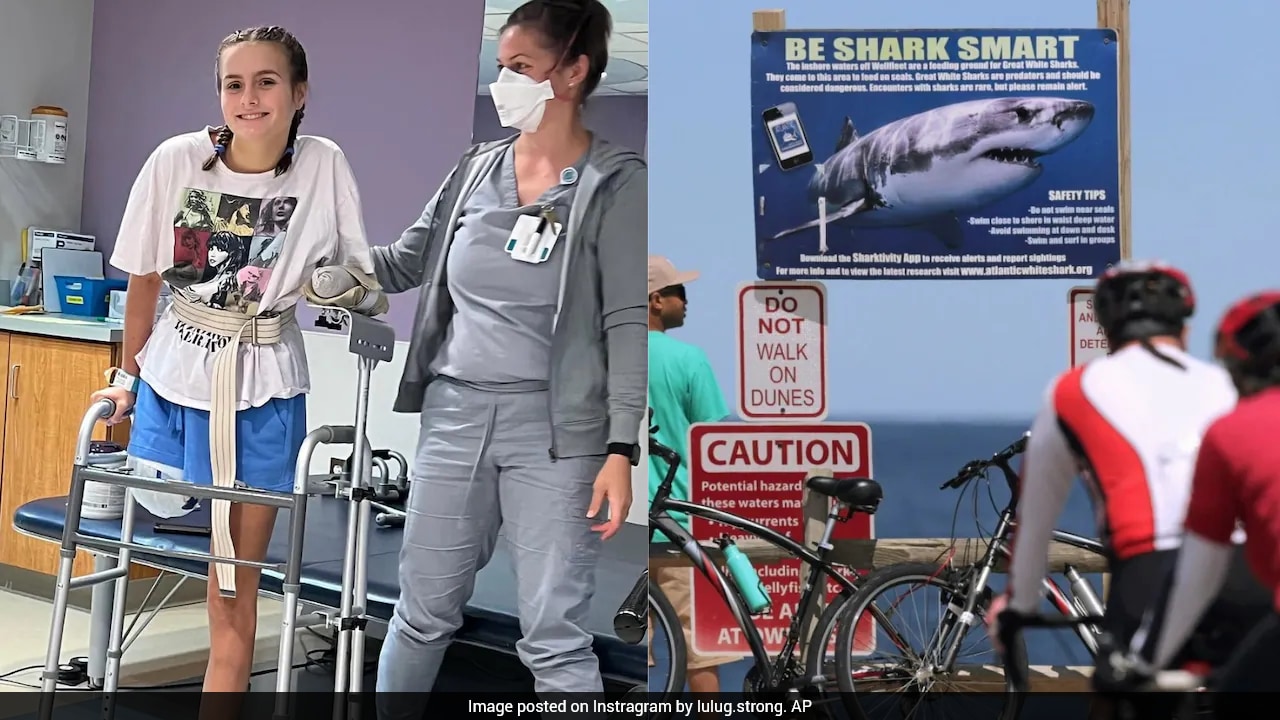
When a fifteen-year-old swimmer named Lulu Gribbin entered the waters off Walton County, Florida, in June 2024, she became the face of a systemic failure in coastal public safety. A bull shark severed her hand and part of her leg, an incident that occurred less than two hours after another swimmer was severely injured blocks away. The tragedy exposed a deadly communication lag that still plagues global coastlines, prompting the development of the Lulu Alert framework to push instantaneous hazard notifications directly to beachgoers. Marine safety infrastructure remains dangerously fragmented, relying on archaic flags and localized police reports while modern communication tools are actively suppressed by the economic fears of tourism-dependent municipalities.
The vulnerability is not the presence of sharks, but the absence of data distribution. When the first attack occurred on that June afternoon, lifeguards and emergency personnel scrambled, yet word did not travel down the coastline fast enough to clear the water at the next beach. Swimmers remained in the surf, entirely unaware that an active predator was moving through the immediate shallows. This gap between detection and warning defines the modern beach safety crisis.
The Architecture of Coastal Silence
Beach safety in most global destinations relies on a visual language developed in the mid-twentieth century. Colored flags flying from stationary stands require a visitor to look up, understand the code, and assume the status has not changed since the lifeguard last walked the beach. Green means low hazard, yellow means moderate, and red means high danger or closed waters.
This system breaks down instantly when facing dynamic, fast-moving marine hazards. A shark can cover miles of coastline in an hour. By the time a lifeguard spots a dorsal fin, blows a whistle, and clears a single grid, the animal has moved into an adjacent jurisdiction where the yellow flag still flies peacefully.
The technical breakdown occurs because beach management is a patchwork of overlapping jurisdictions. A single stretch of sand might be managed by a state park, a county municipality, a private homeowners association, and a federal wildlife reserve. Each entity operates on different radio frequencies, uses different internal reporting protocols, and maintains separate relationships with local law enforcement.
When a sighting occurs, the report often travels through a convoluted chain of custody. A bystander tells a lifeguard, who radios a supervisor, who calls a central dispatch, who then notifies the neighboring district. By the time the neighboring district processes the information and instructs its staff to change the physical flags, ninety minutes can pass. In the water, ninety minutes is an eternity.
The Illusion of Awareness
Many coastal towns point to their active social media presence or local police apps as modern solutions. These platforms offer an illusion of safety while failing the basic test of emergency management, which demands that critical alerts reach the target audience instantly without requiring prior action from the user.
A tourist visiting from another state does not download the municipal police department utility app before stepping onto the sand. They do not monitor the county sheriff's social media feed while swimming in the surf. Push notifications on proprietary platforms only protect the small percentage of locals who already know where to look.
The Lulu Alert concept aims to bypass this friction by integrating marine hazard reports into the Wireless Emergency Alerts system. This is the same infrastructure that broadcasts Amber Alerts and severe weather warnings directly to every cellular device within range of specific towers. If a tornado warning can trigger an intrusive, un-ignorable tone on every phone within a five-mile radius, a confirmed apex predator sighting in a crowded swimming zone should do the exact same thing.
The Hidden Economics of Beach Warnings
The resistance to automated, widespread beach alerts is rarely technical. It is economic. Coastal economies depend entirely on the perception of the ocean as a pristine, safe playground, and municipal leaders face intense pressure to protect the local brand.
A shark attack is an economic disaster for a resort town. Hotel cancellations spike, restaurant revenues plumet, and property values can stagnate. For decades, this reality created a culture of minimization around marine wildlife encounters.
Estimated Economic Impact of Major Beach Closures
+-----------------------+-----------------------+
| Revenue Stream        | Average Daily Loss    |
+-----------------------+-----------------------+
| Hotel Occupancy       | $140,000 - $320,000   |
| Short-Term Rentals    | $95,000 - $180,000    |
| Local Food & Retail   | $60,000 - $115,000    |
| Parking & Beach Fees  | $12,000 - $35,000     |
+-----------------------+-----------------------+
When a system automatically broadcasts a high-level warning to 50,000 people on a beach, the immediate result is an empty ocean and a mass exodus from the sand. Business owners argue that false alarms or over-reporting will desensitize the public and destroy seasonal commerce.
This creates a dangerous conflict of interest. Local officials are tasked with determining what constitutes a verified threat worthy of disrupting a multimillion-dollar weekend economy. Without objective, automated triggers, the decision to sound the alarm remains subject to human hesitation. That hesitation is precisely where tragedies happen.
The Friction of Verification
Transitioning to an automated alert framework introduces a major technical hurdle, which is the problem of accurate verification. A functional emergency network cannot rely on unverified public reports without collapsing under the weight of false positives.
Every summer, panicked swimmers mistake dolphins, cobia, large tarpon, and even floating debris for sharks. If an emergency broadcast triggers every time someone sees a dark shape in the water, the system becomes useless. The public will quickly disable the alerts or ignore them entirely.
To prevent this, an alert pipeline must feature a rapid, multi-tiered verification process that operates in minutes, not hours.
Automated Aerial Surveillance
The most reliable method for verifying marine hazards involves shifting the point of view from the sand to the sky. Drones equipped with specialized computer vision algorithms offer an objective look at what lies just beyond the breakers.
Visual Alert Pipeline
[Drone Sighting] -> [AI Object Identification] -> [Lifeguard Review] -> [Tower Broadcast]
These systems can differentiate between a harmless nurse shark resting on the bottom, a pod of dolphins, and an aggressive bull or tiger shark patrolling the swimming zone. When the software identifies a potential threat, it instantly sends a video clip to a central monitor managed by trained lifeguards.
The human element remains in the loop to confirm the threat, but the software eliminates the delay of manual searching. Once the lifeguard clicks confirmation, the alert system handles the rest, transmitting the data to local towers and triggering the coastal broadcast.
Environmental Sensors and Acoustic Telemetry
Beyond visual confirmation, the integration of acoustic telemetry arrays offers a passive way to track known hazards. Many large sharks are caught, tagged, and released by research institutions worldwide. These tags emit a unique acoustic signature.
By deploying receiver buoys along public beaches, municipalities can detect the presence of a tagged animal the moment it swims within range of the sensors.
- Real-time detection: The buoy captures the acoustic ping from the tag instantly.
- Automated logging: The system matches the tag ID against a global database to determine the species and size.
- Instant routing: The data bypasses the local municipal bureaucracy, sending an automated alert to beach management software.
The limitation of this approach is obvious. It only tracks the animals that scientists have already caught and tagged. The vast majority of marine predators swim completely under the radar, meaning acoustic telemetry can supplement an alert network but can never serve as its sole foundation.
Rethinking the Cost of Public Safety
Implementing a modernized alert network requires a significant shift in how coastal communities allocate funding. For generations, the cost of beach safety was measured by the salaries of lifeguards and the price of fiberglass rescue boards.
Now, public safety must be viewed through the lens of information technology infrastructure. Maintaining safe waters requires investments in high-bandwidth coastal mesh networks, drone fleets, automated sensor buoys, and software engineering.
The true barrier to this evolution is not the cost of the technology itself. The cost of a comprehensive drone and buoy network for a typical county is a fraction of what that same county spends on beach nourishment projects or tourism marketing campaigns. The real barrier is the political will to admit that the old methods are no longer sufficient to protect the public in an era of changing marine migration patterns and warming coastal waters.
The Reality of Shared Waters
The ocean can never be rendered completely safe, nor should it be managed as a controlled theme park. Marine predators are a vital component of a healthy ecosystem, and entering their environment carries an inherent element of risk that no piece of technology can fully erase.
The goal of systems like the Lulu Alert is not to eradicate that risk, but to eliminate the artificial danger caused by bureaucratic silence and technical obsolescence. A teenager swimming in the surf deserves the same access to immediate threat data as a driver on a highway approaching a flash flood.
When a community hides behind flag poles and localized apps to protect its tourism revenue, it trades human safety for economic comfort. The technology to bridge the communication gap exists today, waiting on the sand for municipalities to stop staring at the horizon and start updating their networks.


