Urban planning decisions are traditionally evaluated through the lens of economic output, traffic throughput, and structural durability. Public health outcomes are treated as downstream externalities managed exclusively by clinical healthcare systems. This structural separation ignores a fundamental environmental variable: the spatial distribution of urban tree canopy. Recent empirical work centered on Chicago establishes a direct statistical correlation between high-density urban greenery and suppressed mortality rates. Quantifying this relationship requires moving past superficial appeals to environmental aesthetics and analyzing municipal vegetation as a critical piece of public health infrastructure.
The mechanism linking canopy density to reduced mortality operates through three distinct physical pathways. First, mature trees mitigate the urban heat island effect via direct shading and evapotranspiration. Ambient temperatures in densely built environments regularly exceed surrounding rural areas by several degrees, driving acute cardiovascular and respiratory stress during seasonal heat events. By lowering ambient peak temperatures, canopy cover flattens the mortality spikes traditionally associated with heatwaves.
Second, foliage acts as a particulate filter for ambient air pollution. Particulate matter measuring 2.5 micrometers or less penetrates pulmonary tissue and enters the bloodstream, precipitating chronic inflammatory states, ischemic heart disease, and cerebrovascular accidents. Trees capture these airborne toxins on leaf surfaces, reducing localized concentrations of nitrogen dioxide, sulfur dioxide, and particulate matter. The biological return on investment is immediate: lower pollutant intake translates directly into suppressed baseline systemic inflammation across exposed populations.
Third, the presence of contiguous vegetation alters neuroendocrine pathways. Chronic exposure to urban noise and high-density concrete environments sustains elevated cortisol production, degrading immune competence and accelerating cardiovascular wear over time. Green infrastructure lowers sympathetic nervous system arousal, measured through reduced blood pressure and heart rate variability stabilization. The city ceases to function as a persistent stressor and instead operates within parameters tolerable to human neurobiology.
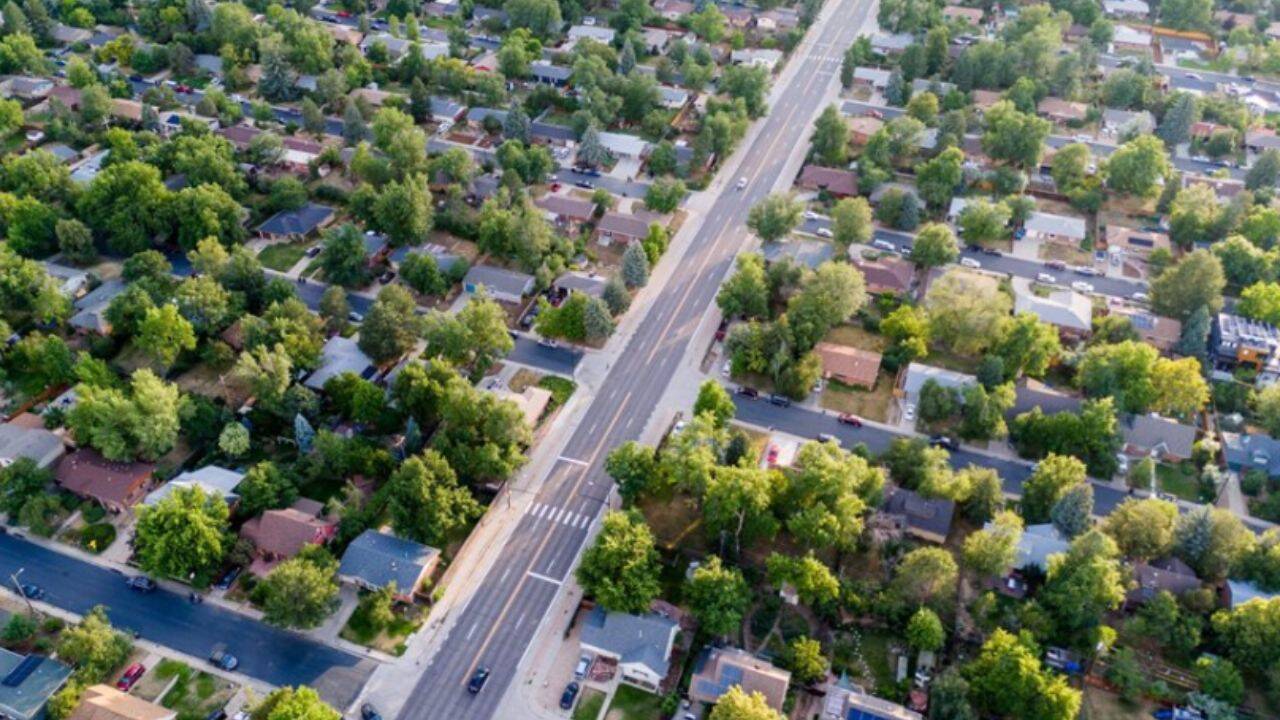
Evaluating the distribution of this infrastructure reveals a systematic failure in municipal resource allocation. Canopy cover does not distribute randomly across urban geographies; it correlates inversely with historical socio-economic stratification. Wealthier neighborhoods maintain mature, continuous canopies planted decades prior, while lower-income districts experience significant canopy deficits. This disparity generates a spatial distribution of health vulnerabilities. Neighborhoods lacking trees absorb higher thermal loads and elevated pollutant concentrations, yielding concentrated zones of elevated baseline mortality.
Addressing this structural deficit requires abandoning the voluntary, beautification-focused models of urban greening. Planting trees cannot remain an afterthought addressed through sporadic community volunteer events or developer offsets. Municipalities must treat canopy density with the engineering rigor applied to water mains or electrical grids. This operational shift demands a quantitative framework based on canopy volume per capita, localized thermal imaging diagnostics, and particulate interception modeling.
The capital allocation strategy must prioritize high-deficit zones based on epidemiological risk rather than property value preservation. Traditional municipal budgeting often directs landscaping funds toward commercial districts or affluent residential sectors to maximize visible aesthetic returns. Maximizing public health utility requires inverting this logic. Investment must target areas exhibiting high population density, low baseline canopy cover, and elevated baseline rates of cardiovascular and respiratory morbidity.
Implementation introduces operational bottlenecks that standard planning documents consistently overlook. Urban sub-surface environments are choked with utility infrastructure, compacted soils, and impervious paving materials that prevent root aeration and moisture infiltration. Simply dropping saplings into concrete cutouts guarantees high mortality rates for the vegetation itself. Effective canopy deployment requires sub-surface engineering: structural soil cells, integrated drainage corridors, and continuous soil volume allocations that allow root systems to mature without disrupting municipal utilities or lifting sidewalks.
Maintenance represents the second major failure point in urban forestry initiatives. Municipalities frequently allocate capital budgets for initial tree-planting campaigns while failing to provision operational expenditures for the critical establishment phase. Young trees require dedicated irrigation, structural pruning, and pest management for the first three to five years of their lifecycle. Without this sustained operational investment, canopy expansion programs stall, resulting in net canopy loss as mature trees age out and die faster than replacements can survive.
Municipal governance structures must also adapt to manage the multi-decadal timeline of tree maturity. Political cycles operate on two- to four-year horizons, whereas urban tree canopy requires decades to reach the biomass threshold necessary for maximum thermal and filtration efficiency. Elected officials routinely favor short-term infrastructure projects yielding immediate ribbon-cutting opportunities over foundational investments whose dividends materialize long after their term in office concludes. Structurally insulating urban forestry budgets from political volatility is a prerequisite for achieving measurable public health outcomes.
The integration of canopy metrics into municipal zoning code provides a scalable regulatory mechanism. Current municipal codes rely on rigid setback requirements and parking minimums that maximize impervious surface area. Rewriting these codes to mandate minimum tree canopy percentages per parcel, coupled with financial penalties for unauthorized canopy removal, forces private developers to internalize the public health costs of vegetation destruction. Zoning adjustments must also restrict large-scale clear-cutting during infill development, preserving existing mature biomass which delivers exponentially higher environmental services than newly planted saplings.
Long-term epidemiological tracking must accompany infrastructure deployment. Municipal public health departments should integrate spatial tree canopy data directly into electronic health record geocoding. Correlating longitudinal health outcomes with micro-scale canopy changes over ten- and twenty-year horizons will refine predictive models and establish precise dosage requirements for urban greening.
Municipal leadership must abandon the false dichotomy between economic development and environmental infrastructure. Tree canopy is a physiological stabilizer that preserves human capital, reduces acute healthcare utilization, and stabilizes vulnerable populations against systemic environmental stressors. The data establishes the baseline mechanism. The operational imperative is transitioning from viewing trees as passive scenery to managing them as active, load-bearing components of the urban survival framework.