The coffee in San José tastes like rain and high-altitude soil. It is a steady, comforting constant in a region where the political weather changes with the violence of a Caribbean hurricane. But lately, a specific kind of silence has settled over the chancery offices in the Costa Rican capital. It is the sound of a dial tone going dead.
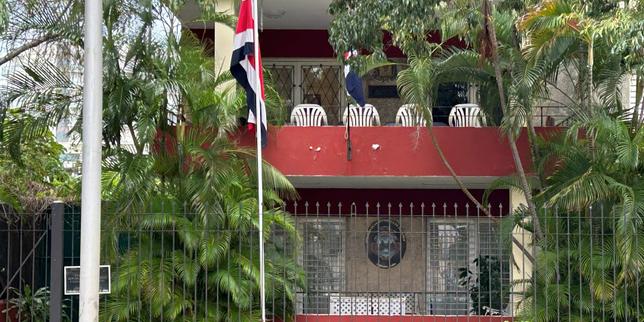
Costa Rica has decided to shutter its embassy in Havana. On the surface, it looks like a line item in a budget report, a dry bit of administrative housekeeping involving spreadsheets and lease agreements. Look closer. You will see the fraying of a thread that has kept two very different Caribbean dreams tethered together for decades.
When a nation closes an embassy, it isn't just locking a door. It is admitting that the conversation has become too expensive, or perhaps, too quiet to justify the electricity.
The Ledger of Empty Rooms
Governments rarely lead with their hearts; they lead with their wallets. The official reason provided by the Costa Rican Ministry of Foreign Affairs is a "strict exercise of fiscal responsibility." The country is tightening its belt, and the Havana mission, it seems, was a notch the government felt it could no longer afford.
Imagine a mid-level diplomat named Mateo. He is a hypothetical composite of the men and women who spend their lives in these wood-paneled rooms. Mateo wakes up in Havana, a city that feels like a beautiful, crumbling movie set. He walks to the embassy, past the vintage American cars and the salt-sprayed Malecón, only to spend his day managing a dwindling flow of paperwork.
The numbers simply stopped adding up. Costa Rica is currently wrestling with a deficit that demands ruthless prioritization. Maintaining a full diplomatic staff, paying for a secure building, and navigating the complex dual-currency gymnastics of the Cuban economy requires a mountain of colones that the San José treasury would rather spend on domestic infrastructure or education.
It is a cold calculation.
If the trade volume between two nations drops below a certain threshold, and the number of citizens requiring consular services can be handled by a laptop and a roving official, the physical building becomes a ghost house.
A History Written in Revolutions
To understand why this closure feels like a heavy sigh, you have to look back at the 1940s. Costa Rica and Cuba once shared a democratic pulse that seemed to beat in sync. But then came 1959. When Fidel Castro’s barbudos marched into Havana, the relationship didn't just chill; it froze solid.
For forty-seven years, there was nothing.
No ambassadors. No formal toasts. No direct lines.
It wasn't until 2009, under the presidency of Oscar Arias—a man who carries a Nobel Peace Prize like a shield—that Costa Rica reached out a hand. Arias believed in "diplomatic realism." He argued that you cannot influence a neighbor if you refuse to acknowledge they exist. He restored ties, hoping that a bridge of commerce and conversation might succeed where decades of isolation had failed.
The reopening of the Havana embassy was a symbol of a new era. It was a bet on the future.
Today, that bet is being cashed in for pennies on the dollar. The closure signals a retreat from that optimism. It suggests that the "bridge" was perhaps more of a pier—stretching out into the water but never quite reaching the other side.
The Human Cost of a Locked Gate
While the politicians talk about "budgetary optimization," the reality hits differently for the people in the visa queues.
Consider a family in Havana. Let's call them the Ferrers. They have a daughter who moved to San José years ago to work in the tech sector. For the Ferrers, the embassy wasn't a symbol of geopolitical strategy. It was the place where they went to get the stamp that allowed them to hug their grandchildren.
When an embassy closes, these people are cast into a bureaucratic wilderness.
- Consular services will now be managed remotely or through a third-party country.
- Processing times for simple documents will likely stretch from weeks into months.
- The "human touch" of diplomacy disappears, replaced by automated email responses and broken web links.
This is the invisible tax of fiscal responsibility. It is paid in anxiety and missed birthdays.
The Geography of Silence
There is a specific loneliness to a shuttered embassy. The flag comes down. The brass plaque is unscrewed from the stone wall, leaving a pale rectangle where the sun hasn't hit for years.
Costa Rica isn't the only one looking at the map and wondering if the cost of presence is worth the price of admission. Across the globe, middle-power nations are realizing that they cannot be everywhere at once. The digital age has convinced some that "presence" is a relic of the nineteenth century. Why pay for a villa in Havana when you can send a PDF from a basement in San José?
But diplomacy is a sensory business. It happens in the margins of cocktail parties. It happens during the "off the record" lunches where a diplomat notices the slight hesitation in a colleague’s voice. You cannot digitize the atmosphere of a country in crisis.
By withdrawing its physical presence, Costa Rica is losing its eyes and ears on the ground in one of the most volatile and influential spots in the Caribbean. They are choosing to fly blind to save a few million colones.
The Ripple Effect
The departure leaves a vacuum. In the world of international relations, nature abhors a void. When a democratic, stable nation like Costa Rica pulls back, it leaves more room for other, perhaps less benevolent, influences to take root.
It is a retreat of the "Soft Power" that Costa Rica has spent decades cultivating. As the "Switzerland of Central America," Costa Rica’s primary export has always been its reputation as a neutral, peaceful arbiter. Every time it closes a window to the outside world, that reputation thins out.
The decision reflects a broader, grimmer trend in Latin American politics: a turn inward. We are seeing a continent where the dream of integration is being cannibalized by the reality of debt. Governments are becoming islands, even when they share a border.
The Last Light in the Hallway
The transition won't happen overnight. There will be a period of "winding down," a slow motion packing of crates and shredding of non-essential memos. The local Cuban staff, who have worked for the Costa Rican mission for years, will find themselves looking for new jobs in an economy that offers very few.
There is a profound irony here. Costa Rica, a country that famously abolished its military to spend money on its people, is now cutting its diplomatic corps for the same reason. It is a reminder that peace and presence are not free. They are expensive, ongoing subscriptions that must be renewed every single year.
As the last Costa Rican diplomat turns the key in the Havana lock, they aren't just ending a mission. They are acknowledging that, for now, the dream of a connected, communicative Caribbean has hit a budgetary wall.
The dial tone is gone. The line is dead.
In the quiet streets of San José and the humid alleys of Havana, the world just got a little bit larger, and the distance between two neighbors just grew by a thousand miles of silence.
The lights are out in the chancery, and no one is sure when—or if—they will ever be flicked back on.