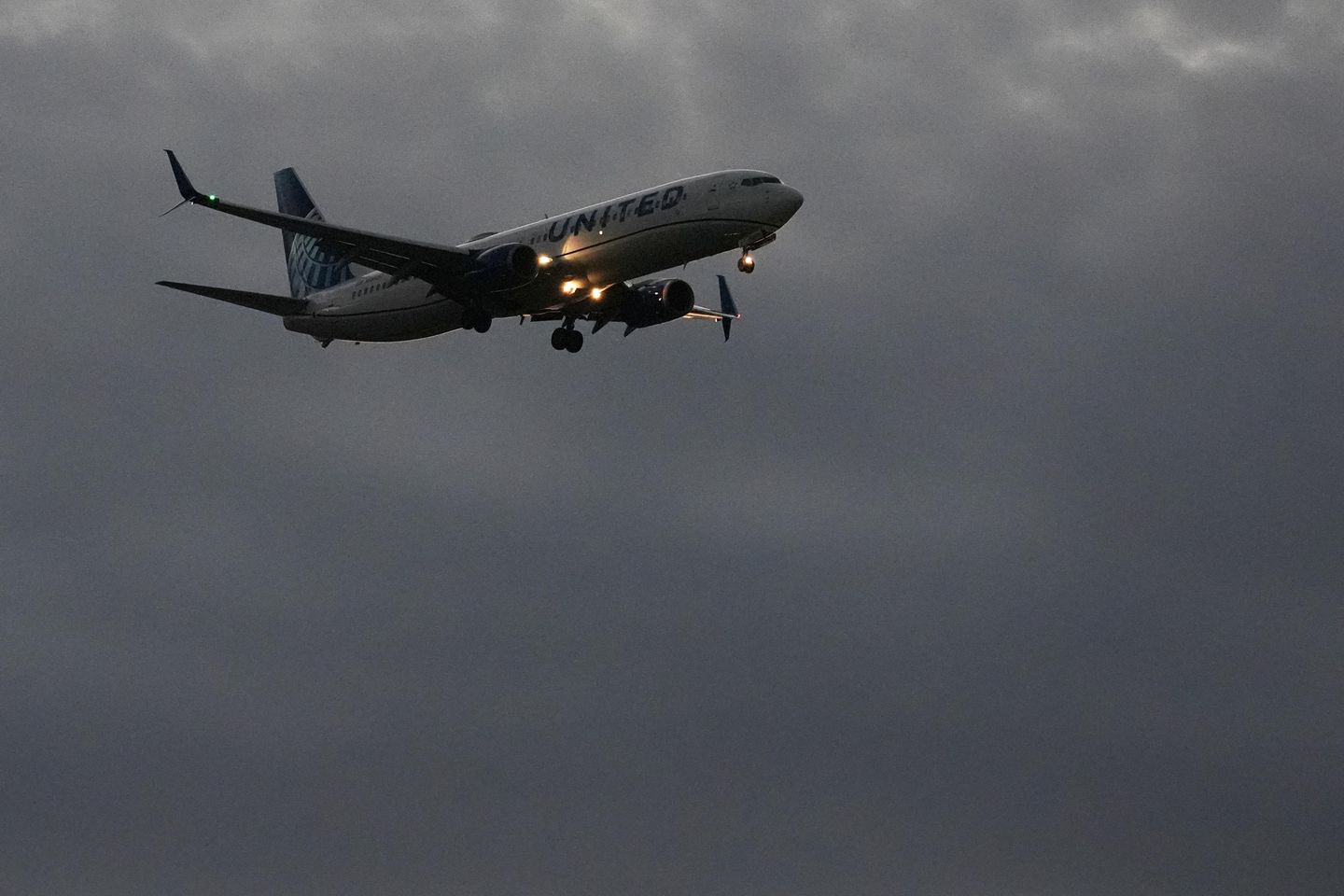
Modern aviation is a marvel of engineering, but it’s surprisingly fragile when it comes to a few pounds of plastic and lithium batteries. A United Airlines flight recently reported a drone strike at 3,000 feet while on approach to San Diego International Airport. It’s a terrifying thought. You’re sitting in 14B, sipping a ginger ale, and suddenly a hobbyist’s toy is potentially lodged in your plane's engine or wing. This isn't just a "near miss" anymore. It's a direct threat to public safety that we've been ignoring for too long.
The incident involved United Flight 451, a Boeing 737-800 coming in from Houston. Pilots reported the impact during their descent. They landed safely. Nobody was hurt this time. But the fact that a drone was cruising at 3,000 feet—well above the legal 400-foot ceiling set by the Federal Aviation Administration (FAA)—shows how little the current rules actually matter to reckless operators.
Why 3,000 Feet is a Danger Zone for Everyone
Most people think drones are just buzzing around parks. They're not. They're increasingly invading the terminal airspace where commercial jets are most vulnerable. At 3,000 feet, a plane is dirty. By "dirty," I mean its flaps are down, the gear might be coming out, and the pilots are hyper-focused on the glide slope. It’s a busy time in the cockpit.
A drone strike isn't like a bird strike. Birds are soft tissue and bone. They’re messy, sure, but engines are designed to ingest them to a certain degree. Drones are different. They carry dense motors, copper wiring, and, most dangerously, lithium-polymer batteries. If a battery is sucked into a jet engine, you’re not just looking at mechanical failure. You’re looking at a potential fire or an uncontained engine failure where metal shards fly through the fuselage.
San Diego’s geography makes this even worse. The approach to Lindbergh Field is notoriously tight. Planes fly low over downtown skyscrapers and residential neighborhoods. There is zero margin for error. If a drone causes a power loss over Little Italy or Balboa Park, the outcome isn't just a headline about a flight delay. It’s a catastrophe.
The Problem With FAA Enforcement
The FAA has plenty of rules. You have to register your drone. You have to stay under 400 feet. You have to keep the craft in your line of sight. Honestly, these rules are basically suggestions for anyone who wants to break them.
The technology to stop this exists, but it’s stuck in a mess of legal red tape. We have Remote ID now, which is like a digital license plate for drones. Every drone produced recently is supposed to broadcast its location and the location of the pilot. But guess what? Older drones don't have it, and tech-savvy jerks can disable it.
I’ve seen the reports. The FAA receives thousands of drone sighting reports every year. Only a tiny fraction lead to fines or arrests. Why? Because finding a guy with a remote control two miles away from an airport is like finding a needle in a haystack if he packs up and leaves before the police arrive. We are relying on the "honor system" for a technology that can bring down a $100 million aircraft.
What Happens When Metal Meets Plastic
Testing by researchers at the University of Dayton Research Institute showed that even a small drone can cause significant structural damage to an airplane wing at high speeds. They used a "chicken gun" to fire a drone at a wing section. It didn't just dent it. It shattered the leading edge and moved deep into the internal structure.
On a Boeing 737, the leading edges of the wings contain vital hydraulic lines and slats. Damage there can make the plane nearly impossible to control at landing speeds. Pilots are trained for "bird strikes," but "drone strikes" are the new, unpredictable variable they never asked for.
Why Geofencing Isn't Enough
Major drone manufacturers like DJI use geofencing. This is software that prevents the drone from taking off in "No Fly Zones" around airports. It’s great in theory. In practice, it’s a Swiss cheese defense.
- Hackers sell software "cracks" to remove these limits.
- Home-built drones (FPV drones) don't have any geofencing at all.
- GPS spoofing or signal loss can sometimes trick the software.
We can't rely on the manufacturer to be the policeman. We need active detection and mitigation at the airport level. Some airports are testing radar systems and radio frequency sensors to spot drones miles away. But until those systems are integrated with Air Traffic Control (ATC) and law enforcement, they're just expensive cameras watching a disaster happen in real-time.
The Real Cost of These Incidents
When a pilot reports a drone, the airport often has to halt operations. Dozens of flights get put into holding patterns. Some divert to other cities. This costs airlines hundreds of thousands of dollars in fuel and labor. It ruins the travel plans of thousands of people. All because one person wanted a "cool shot" for their social media feed.
It’s time to stop treating these incidents as "reports" and start treating them as federal crimes with immediate consequences. If you’re flying a drone at 3,000 feet in an approach path, you aren't a hobbyist. You're a criminal.
Staying Safe as a Passenger or Pilot
If you're a pilot, you're already doing the work. You're scanning, you're reporting, and you're keeping your head on a swivel. But for the rest of us, the passengers, there isn't much we can do once we're in the air.
The real work happens on the ground. If you see someone operating a drone near an airport or flying clearly above the clouds in a residential area, call it in. Don't be "that guy" who ignores it. Law enforcement needs eyes on the ground because their radar isn't always going to catch a four-pound plastic toy.
Immediate Steps for Drone Operators
If you own a drone, you have a responsibility. Most people are great. They follow the rules and enjoy the hobby. But the few who don't are going to get the whole hobby banned or restricted into oblivion.
- Check the B4UFLY app. Every single time you take off. No exceptions.
- Update your firmware. Ensure your Remote ID is functioning.
- Keep it low. There is absolutely no reason for a consumer drone to be at 3,000 feet. None.
- Learn the classes of airspace. If you don't know what Class B airspace is, you shouldn't be flying anything more powerful than a paper airplane.
The San Diego incident ended well. The United flight landed, and the passengers went home. But we shouldn't wait for a wing to fail or an engine to explode before we get serious about drone interference. The sky is getting crowded, and the current "wait and see" approach is a recipe for a tragedy that we can all see coming from miles away.
Educate yourself on the local drone laws in your city and make sure your gear is compliant with the latest FAA standards. If you're traveling, check the rules for your destination before you even pack the drone in your suitcase. San Diego escaped a disaster this week, but luck isn't a safety strategy.


