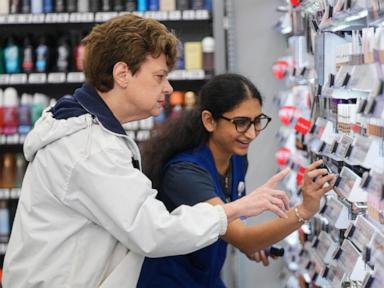
Walmart’s integration of on-site beauty experts and personalized consultation represents a calculated departure from the high-velocity, low-margin model that defined its dominance for half a century. This transition is not an aesthetic upgrade but a structural response to the diminishing returns of pure price-leadership in a digitized economy. By embedding high-touch service into a low-cost infrastructure, Walmart is attempting to capture the "service premium" typically reserved for specialty retailers like Sephora or Ulta, while simultaneously defensive-posturing against the commoditization of its beauty and personal care aisles.
The Margin Expansion Thesis
The primary driver of this shift is the discrepancy between the margins of physical goods and the lifetime value (LTV) of a specialized customer. In a standard "no-frills" model, profitability is a function of volume and supply chain efficiency. However, in the beauty sector, purchase decisions are heavily mediated by discovery and expert validation.
Walmart’s strategy utilizes three distinct economic pillars:
- Basket Composition Optimization: Beauty and personal care products often carry higher gross margins than grocery staples. By increasing the dwell time and conversion rate in these specific aisles through expert intervention, the overall weighted average margin of the shopping trip increases.
- Customer Acquisition Cost (CAC) Amortization: Unlike pure-play e-commerce beauty brands that spend heavily on digital ads to acquire customers, Walmart has a "zero-cost" entry point. The customer is already in the building for groceries or household goods. Converting that existing foot traffic into high-margin beauty spend is a significantly more efficient use of capital than traditional marketing.
- Data-Driven Personalization (The Feedback Loop): Human experts serve as sophisticated data collection nodes. The advice provided in-store generates a proprietary dataset of regional preferences and skin/hair concerns that automated algorithms often miss. This allows for hyper-localized inventory management, reducing the cost of unsold stock (shrinkage and markdowns).
The Friction-Expertise Tradeoff
Historically, big-box retail succeeded by removing friction—self-service, wide aisles, and rapid checkout. Adding "experts" introduces a deliberate point of friction: the conversation. In a strategic context, this is "productive friction."
Specialized advice transforms a commodity purchase (shampoo) into a solution-based purchase (a three-step hair repair regimen). This shift moves the consumer away from price-sensitivity. When a consultant explains why a specific $15 formulation is superior to a $5 generic for a specific skin type, the value proposition shifts from "cheapest" to "most effective."
The success of this model depends on the Expertise-to-Access Ratio. If the experts are perceived as mere sales associates, the model reverts to a standard cost-center. If they provide genuine utility, they become an asset that justifies the higher operational expenditure (OpEx) of their wages.
Operational Mechanics and Labor Strategy
Deploying specialized labor in a generalist environment creates a bifurcated workforce. Walmart must manage two distinct labor functions under one roof:
- Logistics Labor: Focused on stocking, cleaning, and speed. Measured by throughput.
- Consultative Labor: Focused on engagement and education. Measured by conversion rates and basket size.
The second category requires a different incentive structure. To prevent these beauty experts from becoming glorified shelf-stockers, Walmart has to insulate their roles. This creates a "store-within-a-store" ecosystem. The risk here is internal culture fragmentation. If the consultative staff is seen as "elite" or "protected" compared to the logistics staff, it can lead to operational bottlenecks in cross-functional tasks like inventory counts or spill response.
Competitive Displacement and the Mid-Market Vacuum
Walmart is targeting the "Mid-Market Vacuum." For years, the beauty market was split:
- High-End: Department stores and specialty boutiques (High price, high service).
- Low-End: Drugstores and Big-Box (Low price, zero service).
As specialty retailers like Ulta expanded into Target stores, the middle ground—shoppers who want expert advice but don't want to pay department store prices—became the most contested territory. Walmart’s move is an aggressive play to prevent customer leakage to Target and Ulta.
The mechanism at work is Agglomeration Economy. By providing "prestige-lite" services, Walmart keeps the high-intent shopper on-site. This prevents the "split-trip" behavior where a customer buys milk at Walmart but drives to a specialty store for skin care. If Walmart can capture 20% of that specialty spend, the impact on their bottom line is disproportionately large due to the existing infrastructure's sunk costs.
Technical Barriers and Scaling Risks
The primary threat to this strategy is the Consistency-at-Scale Problem. Maintaining expert-level service across thousands of locations is vastly more difficult than maintaining a price point.
- Training Decay: As the program scales, the quality of "personalized advice" may dilute. If a customer receives poor advice, the trust-based model collapses, leaving Walmart with the increased labor costs of the experts but none of the margin benefits.
- Inventory Synchronization: Providing advice on products that are out of stock creates a negative feedback loop. The digital inventory system must be perfectly synchronized with the expert’s recommendations.
- The Amazon Counter-Move: Amazon is increasingly using AR (Augmented Reality) and AI-driven skin analysis to provide personalized advice at zero marginal cost. Walmart’s human-centric approach is more empathetic but significantly more expensive to scale.
The Strategic Play
Walmart must now treat the beauty aisle as a laboratory for service-led retail. The next logical step is the integration of "Service-as-a-Product." This involves linking in-store consultations directly to the Walmart+ membership, creating a tiered experience where members get priority access to experts or advanced digital diagnostic tools.
To win, Walmart must avoid the "Premium Trap"—trying to mimic high-end boutiques so closely that they alienate their core value-conscious demographic. The goal is not to become Sephora; the goal is to provide 80% of the Sephora experience at 100% of the Walmart convenience.
Success will be measured not by the number of experts hired, but by the "Attachment Rate" of beauty services to the standard grocery basket. If the data shows that a customer who talks to an expert also increases their spend in unrelated categories like electronics or apparel, the "Beauty Expert" becomes the ultimate loss-leader for the modern era: a human gateway to a total-store ecosystem.
Focus the next 24 months on the Consultative Conversion Metric. Track the specific SKU uplift in stores with experts versus control stores without them. If the delta in Gross Margin Dollars per Square Foot (GMDP SF) exceeds the increased labor cost by a factor of 2.5x, aggressive national rollout is the only logical path. If the ratio falls below 1.5x, the program should be pivoted into a digital-only advisory service to preserve the low-cost operational base.