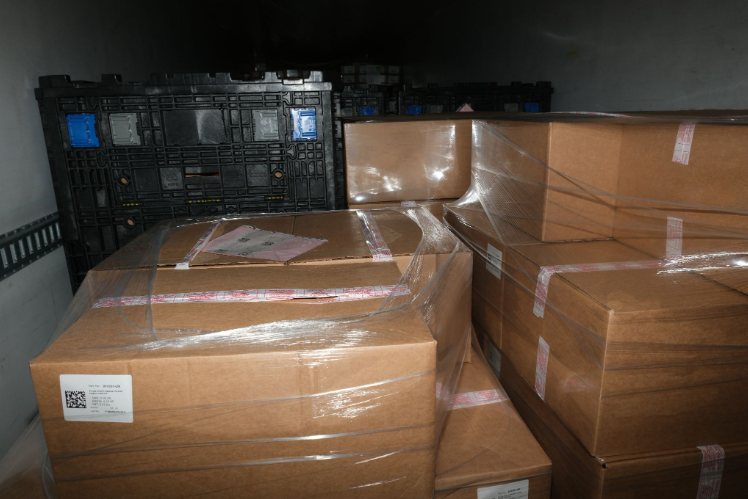
York Regional Police recently dismantled a sophisticated illegal cannabis operation, seizing drugs valued at over $2 million and arresting five men. While the surface-level reports detail a standard bust involving roughly 2,500 plants and 100 pounds of harvested flower, the scale and timing of this seizure point to a much larger systemic failure within the Canadian cannabis market. This wasn't a basement operation. It was a high-yield industrial venture designed to bypass the taxes, testing, and red tape that have made the legal market a nightmare for legitimate producers.
The arrests—targeting individuals from Toronto and Markham—underscore a persistent reality. Despite federal legalization, the black market is not only surviving; it is thriving by adopting the same industrial efficiencies as its legal counterparts, without the crushing overhead.
The Economics of the Shadow Canopy
To understand why a group of men would risk decades of prison time for a crop that is technically legal to buy at a corner store, you have to look at the math. The legal Canadian cannabis industry is currently suffocating under a mountain of excise taxes and "seed-to-sale" tracking costs. When the York Regional Police entered the facility in the York Region outskirts, they weren't looking at a disorganized criminal hangout. They found a high-intensity agricultural site.
Legal producers are currently paying roughly $1 per gram in excise tax, regardless of the quality of the flower. On a $2 million haul, that represents a massive chunk of change that the illegal market simply pockets. When you subtract the costs of Health Canada compliance, security clearances, and mandatory laboratory testing for pesticides and heavy metals, the profit margins for illegal growers become astronomical.
Criminal syndicates have realized that they can undercut legal retail prices by 40% and still make more profit per plant than a licensed producer in Smiths Falls or Leamington. The seized $2 million worth of product represents more than just "street value." It represents a direct siphon of capital away from the regulated economy.
Why the York Bust is a Symptom of a Larger Rot
The York Regional Police "Project Green Sweep" and similar initiatives are playing a perpetual game of whack-a-mole. This specific raid didn't just happen in a vacuum. It occurred because the demand for untaxed, high-potency cannabis remains at an all-time high. Consumers, squeezed by inflation and the rising cost of living, are increasingly returning to "legacy" dealers who don't charge Harmonized Sales Tax (HST) or excise fees.
The five men charged face various counts of cultivation and possession for the purpose of distribution. However, the workers at the bottom of these hierarchies are often expendable. The real architects stay behind a curtain of shell companies and encrypted messaging apps.
The Regulatory Gap
There is a massive loophole in the current system that these operations exploit. It’s called the medical personal-use license. Under current regulations, individuals can be designated to grow cannabis for medical patients. By stacking multiple "designated person" licenses at a single address, criminal organizations can grow thousands of plants under the guise of legal medicine.
Police forces across Ontario have been shouting into the void about this for years. They argue that the lack of oversight on these designated grows creates a "legal-ish" shield that makes it difficult to get a search warrant until the operation becomes too big to hide. In the York case, the sheer volume of 2,500 plants suggests an operation that had moved far beyond any reasonable medicinal excuse.
The Chemical Risk Nobody Mentions
While the headlines focus on the dollar value and the arrests, the real danger of these $2 million seizures is the chemistry. Legal cannabis is tested. It’s boring, and the packaging is ugly, but it won’t give you lung damage from concentrated fungicide.
Illegal grows like the one York police just dismantled are notorious for using Myclobutanil. When heated, this chemical turns into hydrogen cyanide. Illegal growers use it because it kills powdery mildew instantly, ensuring they don't lose their $2 million investment to a mold outbreak. Because they aren't subject to the rigorous testing of a licensed producer, they can pump their plants full of growth regulators and banned pesticides to maximize yield.
- Pesticide Residue: Often 10x higher than legal limits.
- Heavy Metals: Lead and arsenic from cheap, unregulated fertilizers.
- Molds: Improper drying in makeshift facilities leads to aspergillus spores.
When the police haul away 100 pounds of dried flower, they are effectively removing a public health hazard that looks identical to the safe stuff sitting on the shelves of the Ontario Cannabis Store.
Policing an Infinite Perimeter
York Regional Police used thermal imaging and old-fashioned "power-draw" analysis to find this site. Large-scale grows require immense amounts of electricity for high-pressure sodium (HPS) or LED lighting and industrial HVAC systems to scrub the smell of terpenes from the air.
However, as technology improves, these operations are becoming harder to find. Modern LED fixtures emit less heat, making them invisible to some older thermal cameras. The "tell" is no longer the heat; it's the logistics. Shipping containers moving in and out of rural properties, the hum of specialized fans, and the specific chemical scent of concentrated nutrients are the new breadcrumbs for investigators.
The five men—aged between 35 and 62—represent a wide demographic. This isn't just a young man's game. It's an industry of expertise. You need someone who knows how to balance the pH of 2,500 plants. You need someone who knows how to rig a commercial-grade electrical bypass. You need someone who knows the distribution channels to move 100 pounds of product before it goes stale.
The Diversion Reality
A significant portion of the cannabis grown in Ontario's illegal warehouses doesn't even stay in Canada. With the U.S. border still federally closed to cannabis, the price of "BC Bud" or "Ontario Gold" triples the moment it crosses into New York or Michigan. This creates a massive incentive for organized crime to use the York Region as a staging ground for international smuggling.
When York police seize $2 million in product, they are disrupting a supply chain that likely stretches across the continent. The five men charged are just one node in a network that views these busts as a cost of doing business. In a $4 billion national industry, a $2 million loss is a rounding error.
The Fallacy of the Easy Bust
Law enforcement is often criticized for "wasting time" on cannabis when the opioid crisis is killing thousands. But the two are inextricably linked. The profits from these illegal grows frequently fund the importation of precursor chemicals for more dangerous substances. By ignoring the $2 million grow house, the state effectively subsidizes the rest of the criminal portfolio.
The York Regional Police have signaled that they will continue to prioritize these large-scale "industrial" illegal sites. They aren't interested in the person with four plants in their backyard. They are hunting the people who are turning residential and industrial zones into unregulated drug factories.
The legal market cannot compete with a sector that doesn't pay taxes, doesn't test for poison, and doesn't follow labor laws. Until the federal government addresses the excise tax burden and the "medical license" loophole, the York Regional Police will be back at another warehouse next month, and the month after that, hauling away the same green gold.
Investors in the legal space should be watching these police reports with a grim sense of validation. The illegal market isn't disappearing; it’s just getting more professional. The challenge for the authorities is no longer just finding the plants—it’s breaking the financial structures that make the risk of a $2 million seizure worth it for the men involved.
Stop looking at this as a drug bust and start seeing it as a massive, un-audited corporate seizure.